
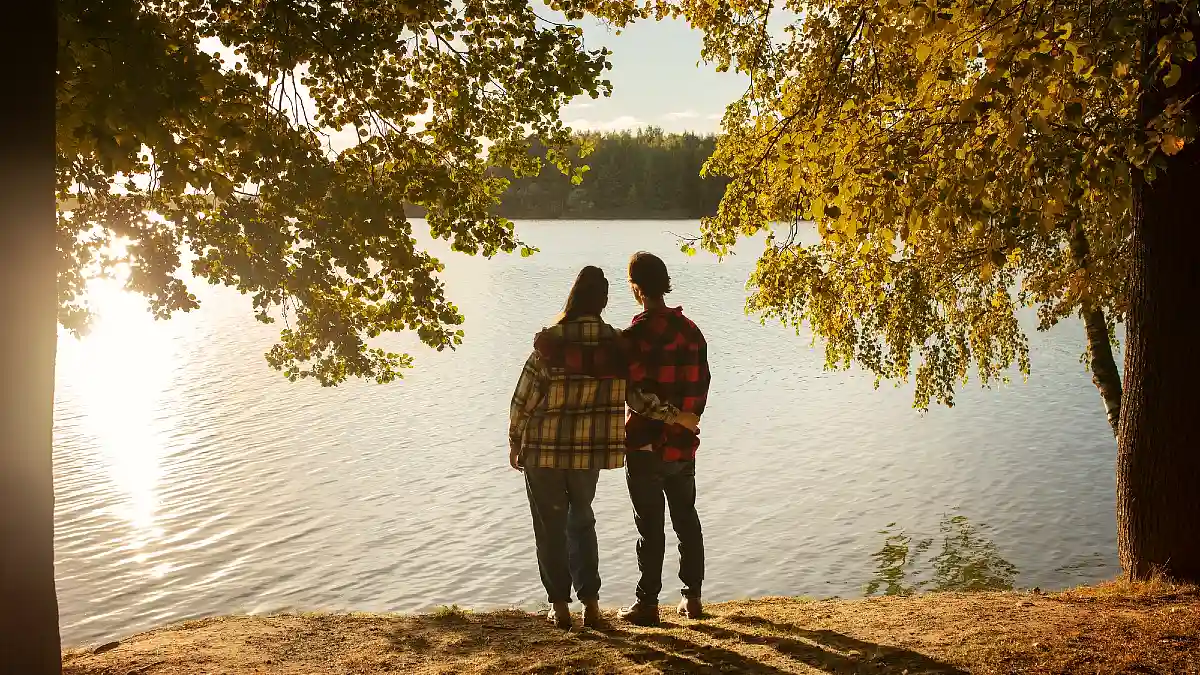
You want the red maples, glowing aspens, mountain ridges, and cool autumn air. What you may not want is a steep six mile trail just to reach the view.
That does not mean you have to stay home. Some of the best national park fall views are beside scenic roads, parking areas, shuttle stops, paved paths, and short boardwalks.
A few even let you enjoy most of the scenery from your car.
The trick is choosing the right viewpoint and the right week. Fall color moves with elevation, latitude, weather, and temperature, so one park may look bright in September while another does not reach its best color until November.
1. See Acadia’s Fall Color From Cadillac Mountain
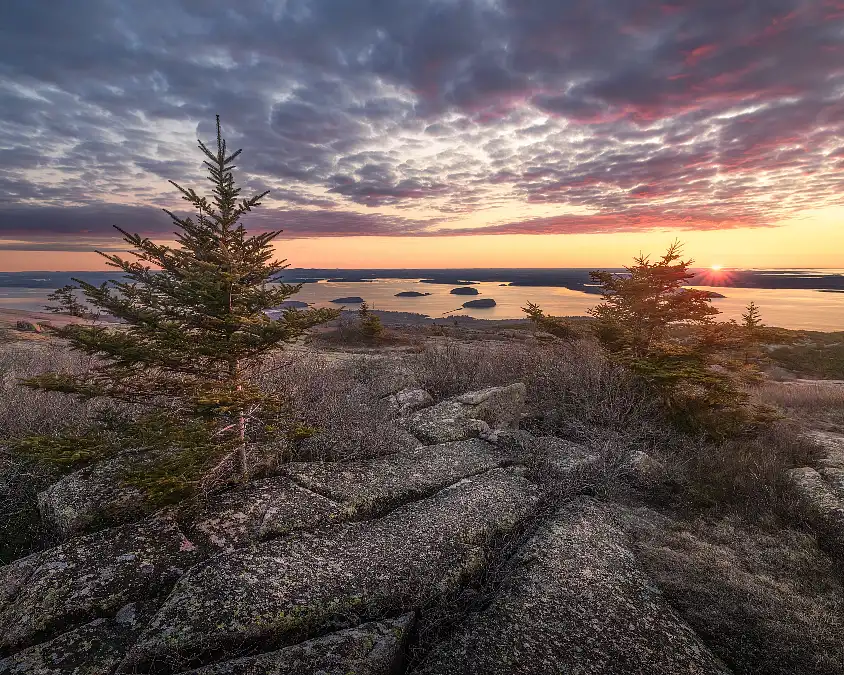
Cadillac Mountain gives you one of the easiest ways to get a high mountain view in Acadia National Park. You can drive Cadillac Summit Road almost all the way to the top instead of climbing the mountain from below.
Parts of the summit walkway are paved, and several viewpoints are close to the parking area. The National Park Service also provides accessible parking near the summit facilities.
Maine’s leaves normally begin changing during September, with Acadia’s stronger color often arriving sometime in October. Exact timing changes each year, so treat any peak date as a guide rather than a promise.
There is one important 2026 detail to plan around. A vehicle reservation is required for Cadillac Summit Road from May 20 through October 25, 2026. The park releases some reservations 90 days ahead and another group two days ahead.
You do not have to chase sunrise either. A daytime visit can still give you wide views over Frenchman Bay, islands, forests, and autumn color with less pressure to arrive in darkness.
Best for: High views with very little walking
Fall window to watch: Late September through October
Main catch: Reserve your vehicle entry before you go
2. Get Smoky Mountain Layers at Newfound Gap
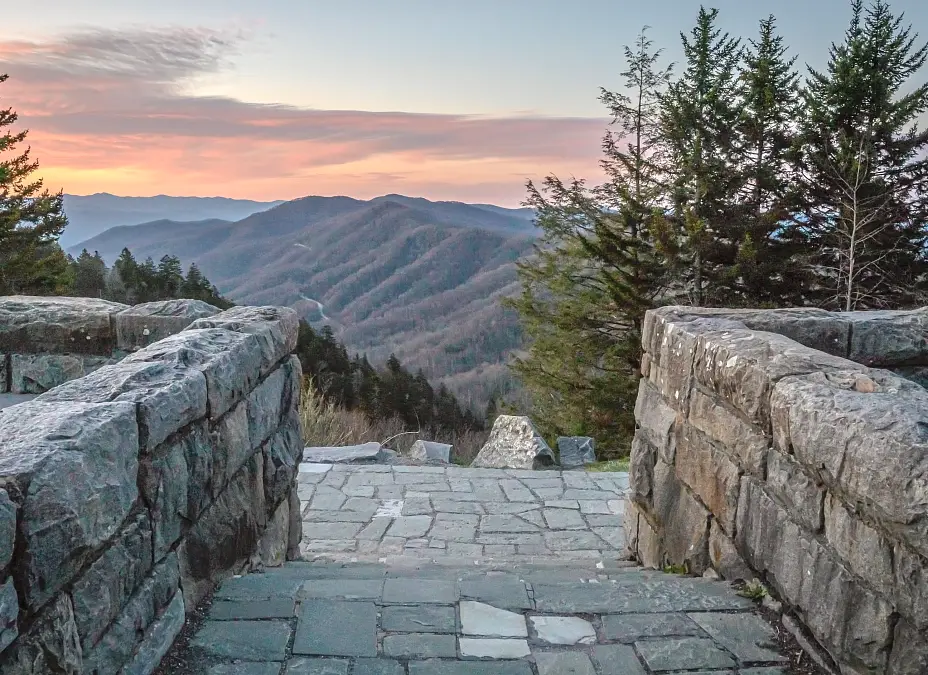
You can see miles of folded Appalachian ridges in Great Smoky Mountains National Park without hiking to a summit.
Drive Newfound Gap Road, also known as US 441, to Newfound Gap Overlook. The overlook sits at 5,046 feet and has vehicle parking plus seasonal restrooms.
This elevation matters in fall.
The National Park Service explains that fall color begins at the higher elevations first. Changes may start in September, while strong color below 4,000 feet commonly develops from the middle of October into early November.
That creates a useful option if your travel dates are fixed. An earlier trip may look better higher on Newfound Gap Road. A later trip may give you stronger color farther down the mountain.
You can also pull into several road overlooks as you drive, though not every small turnout has the same accessibility features. Larger overlooks along Newfound Gap Road may have accessible parking spaces.
Skip the longer Kuwohi climb if your goal is simply a broad mountain view. Newfound Gap gives you the layered Smokies experience with almost no trail commitment.
Best for: Mountain layers and changing color by elevation
Fall window to watch: September through early November
Main catch: October traffic can be very heavy
3. Let Skyline Drive Do Most of the Work in Shenandoah
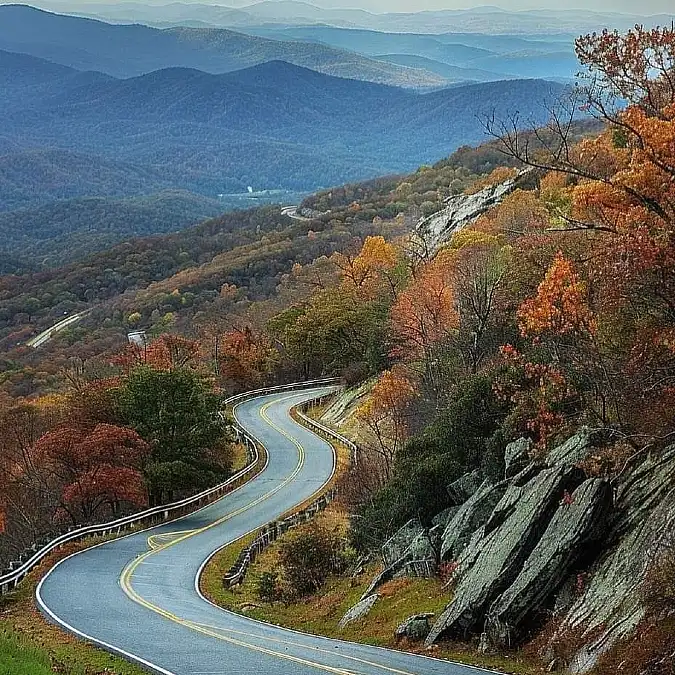
Shenandoah may be one of the easiest major national parks for seeing fall color from a car.
Skyline Drive follows the crest of the Blue Ridge Mountains for 105 miles. The National Park Service says 76 overlooks were built along the road so motorists could enjoy the scenery without hiking into the backcountry.
That changes how you can plan your day.
Instead of picking one trail and hoping the color is good there, you can keep driving until the light, foliage, and visibility line up. Pass Mountain Overlook near mile 30 and Big Run Overlook near mile 81 are two spots the park has used to track seasonal changes.
Some overlooks face the Shenandoah Valley. Others look east across the Piedmont. The changing direction also gives photographers more chances to work with morning or afternoon light.
Skyline Drive is generally open all day, but bad weather can temporarily close parts of it. Check current park alerts before leaving your hotel.
This is one of the strongest choices on the list if your priority is easy national park fall foliage with repeated roadside stops.
Best for: An entire day of roadside foliage
Fall window to watch: October into early November
Main catch: Fall weekends can bring slow traffic
4. See Cuyahoga Fall Color From a Short Boardwalk
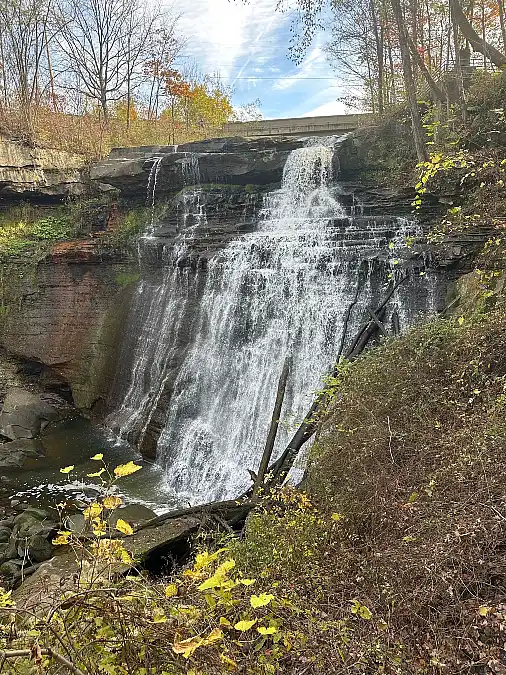
You do not need to hike the full gorge to see Brandywine Falls in Cuyahoga Valley National Park.
A boardwalk leads from the trailhead area to an upper viewing area for the 60 foot waterfall. The upper viewpoint is accessible, while a lower viewing deck requires about 80 steps.
That means you can simply stop at the upper platform and turn around.
The National Park Service highlights October as the period when northeast Ohio normally produces its most dramatic fall color. Other low effort choices include Kendall Lake, Horseshoe Pond, and views around Kendall Hills.
Kendall Lake is especially useful if you want a calmer stop. Its pier is wheelchair accessible and gives you water, trees, and reflections without requiring a trail.
Brandywine Falls is popular, however. Its parking lot can fill, particularly during pleasant weather, so an early or later visit can make the stop easier.
Best for: Waterfall plus autumn leaves
Fall window to watch: October
Main catch: Limited parking at Brandywine Falls
5. Reach New River Gorge Views in About One Tenth of a Mile
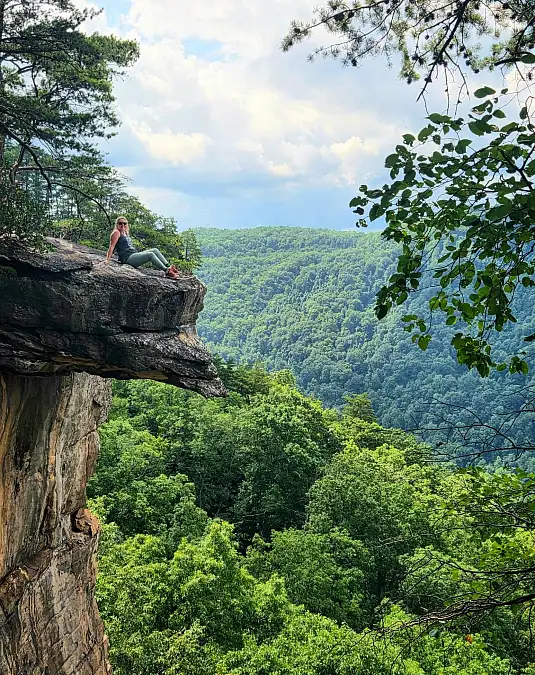
Some overlooks are easy because you park beside them. New River Gorge gives you another good setup: park at the visitor center and follow a very short boardwalk.
The Canyon Rim Boardwalk is about 0.1 mile one way to the first viewing area. The National Park Service describes the approach as an easy, accessible ramp leading to views of the gorge and New River Gorge Bridge.
There is also a lower overlook, but that section drops down 178 steps.
You can skip it.
The upper viewpoint already gives you the broad gorge scene that makes this stop worth adding to a fall road trip. Another option is Grandview, where autumn color adds to the wide panorama during October.
The mix of deep gorge walls, forest, river, and one of America’s best known bridges makes the landscape very different from a mountain summit overlook.
Best for: A huge gorge view after a very short walk
Fall window to watch: October
Main catch: The lower viewpoint adds many stairs, so stop at the upper platform if you want the easier visit
6. Stop at Many Parks Curve Before Rocky’s High Road Closes
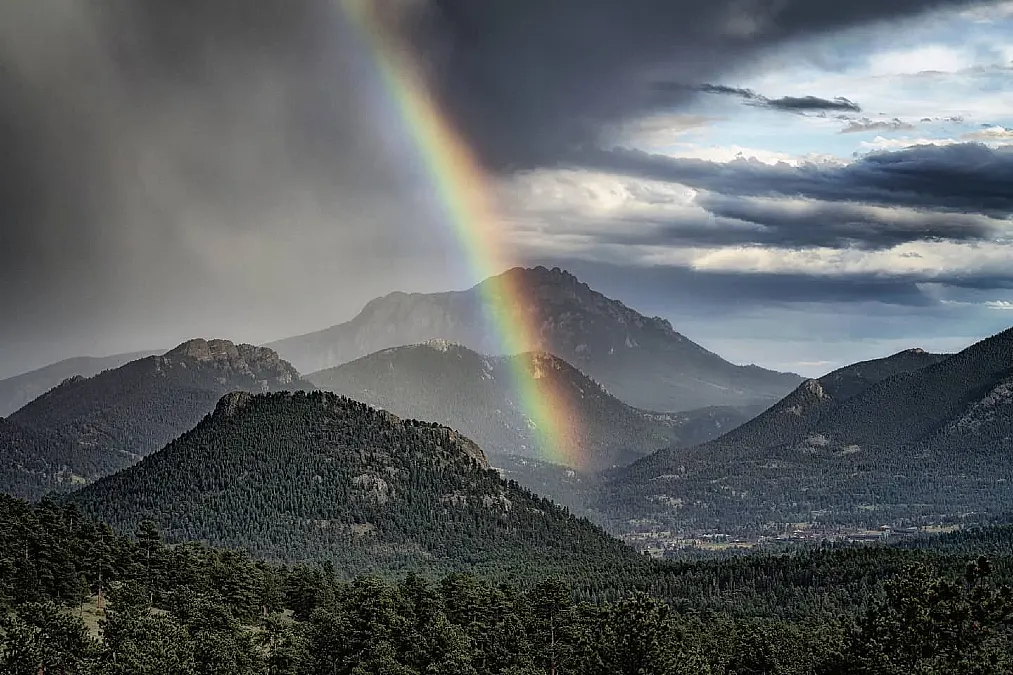
Rocky Mountain National Park can make you think every great view requires a steep alpine trail.
Many Parks Curve proves otherwise.
The overlook sits beside Trail Ridge Road at 9,625 feet. From here you can see Moraine Park, Upper Beaver Meadows, Horseshoe Park, Deer Mountain, and distant high peaks.
The park’s updated 2026 accessibility guide says the lower parking area offers the easier route for visitors with limited mobility. From that lot, the route to the boardwalk is about 76 feet before the longer overlook boardwalk begins.
September is especially interesting here. Aspens lower in the park begin changing to gold, while colder weather can dust higher peaks with early snow. The National Park Service’s September 15, 2026 fall update confirms that autumn color is appearing across the park.
Do not leave this drive too late.
Trail Ridge Road can close temporarily whenever high elevation weather turns bad. The section west of Many Parks Curve normally closes around mid October for the winter season.
Best for: Aspen color with big Rocky Mountain scenery
Fall window to watch: September into early October
Main catch: Snow can change road access fast
7. Photograph Grand Teton Fall Color From Oxbow Bend
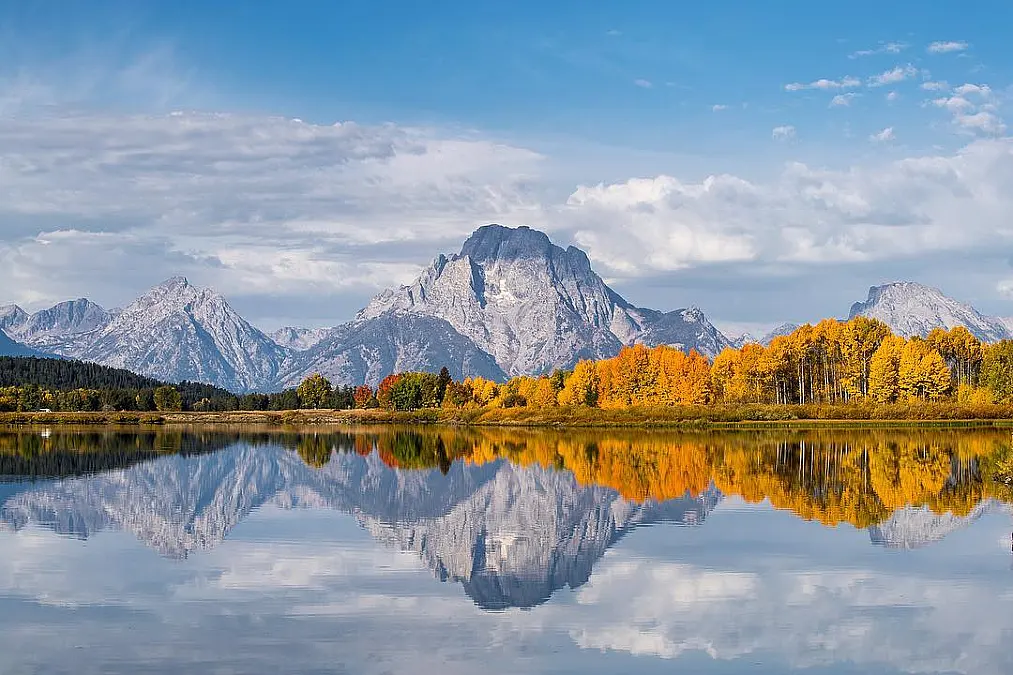
Few fall stops give you such a strong photo with so little walking.
Oxbow Bend is a roadside turnout in Grand Teton National Park. From the viewing area, the Snake River curves through the foreground while Mount Moran rises behind it.
The National Park Service lists the turnout as wheelchair accessible.
Fall also adds color where it matters.
Quaking aspens commonly turn yellow, while narrowleaf cottonwoods can produce strong yellow foliage near water. The park specifically lists Oxbow Bend among the places to look for autumn aspens.
You may also see wildlife in this area, including swans, beavers, otters, or bears. Keep your distance and never approach an animal for a photograph.
A calm morning can give you reflections in the water, but clouds and changing light can make the scene work at other times too.
This is a good example of why a fall park trip does not have to revolve around hiking mileage.
Best for: Photography with almost no walking
Fall window to watch: September into early October
Main catch: Cold weather can arrive early
8. Ride Zion’s Shuttle Into the Fall Color
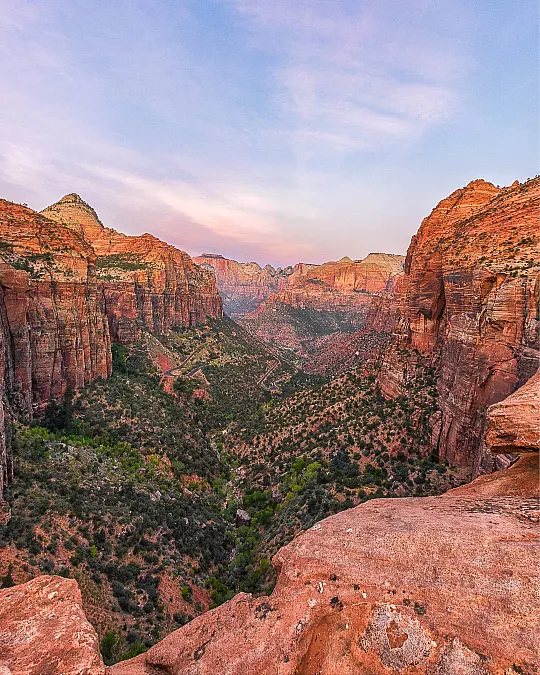
Zion can work well if your fall trip is later than the classic September leaf season.
The National Park Service says color begins at higher elevations first, then works its way into Zion Canyon around the end of October and early November.
Cottonwoods along the Virgin River turn gold, while some maples add red to the canyon. The park has noted that Zion Canyon’s stronger color can continue into November depending on rainfall and temperatures.
During shuttle season, you can let the park bus handle most of the canyon travel. In 2026, Zion says access into the main canyon is generally by shuttle from early March through late November, and the buses are wheelchair accessible.
One simple stop is Court of the Patriarchs. The shuttle drops you near views of the canyon peaks, though the short trail to the formal overlook is steep.
For flatter walking, use part of the Pa’rus Trail near the visitor center. It is mostly paved and follows the Virgin River.
Best for: Late season fall color
Fall window to watch: Late October into November
Main catch: The easiest option may be a shuttle ride plus a short walk rather than a roadside pullout
9. Pair Fruita Orchards With Capitol Reef’s Scenic Drive
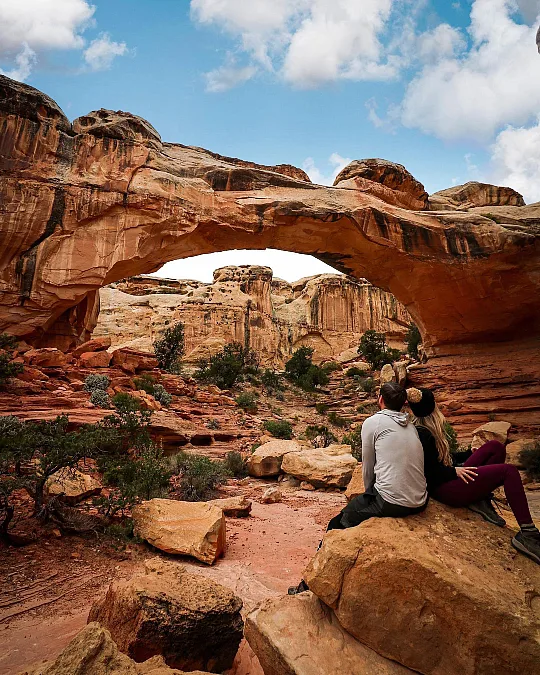
Capitol Reef gives fall color a completely different background.
Instead of endless eastern forest, you get orchards and cottonwoods set against red rock walls.
The park’s paved Scenic Drive runs 7.9 miles and normally takes about 90 minutes for a round trip if you include time for sightseeing. The first part runs through the historic Fruita district and passes old orchards and buildings.
Fruita’s apple harvest can continue from the middle of August into the middle of October, though actual timing changes with the weather.
The surrounding trees also add yellow fall color to an area that already has strong natural contrast.
You do not have to leave the road for the main experience. The National Park Service notes that many scenic overlooks and wayside exhibits in Capitol Reef can be used by wheelchair visitors.
This is an especially useful stop if you want fall scenery but are tired of seeing the same forested mountain picture on every road trip.
Best for: Fall trees against red rock
Fall window to watch: September through October
Main catch: Desert temperatures can swing sharply between morning and afternoon
10. Get Yosemite’s Classic Valley View From the Road
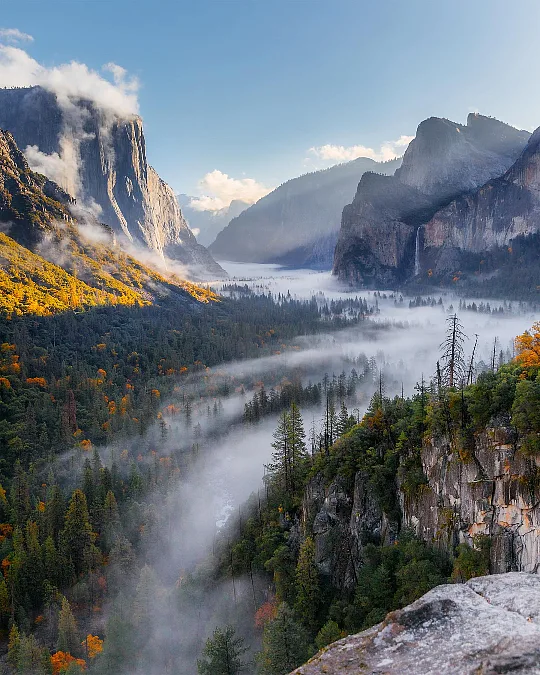
Yosemite is worth including, but for a different reason.
It is not one of America’s strongest broad fall foliage parks. Most of its trees are evergreen. The National Park Service says deciduous maples, black oaks, dogwoods, and other trees still add color around the middle of October.
The huge granite walls do the rest.
Tunnel View is one of the easiest places to combine that autumn color with the classic Yosemite scene. The viewpoint includes El Capitan, Half Dome, Cathedral Rocks, Sentinel Rock, and Bridalveil Fall.
You can see it from the parking area, or use a short paved route to the viewing space.
Valley View is another low effort stop. The National Park Service says the scene can be viewed from the parking area, and the location is reachable by vehicle throughout the year.
Yosemite Valley also remains reachable by car through fall, although snow can cause temporary closures elsewhere in the park.
Best for: Giant scenery with touches of autumn color
Fall window to watch: Mid October into November
Main catch: Come for the granite first and foliage second
11. Use Paradise Valley Road for Mount Rainier Fall Color
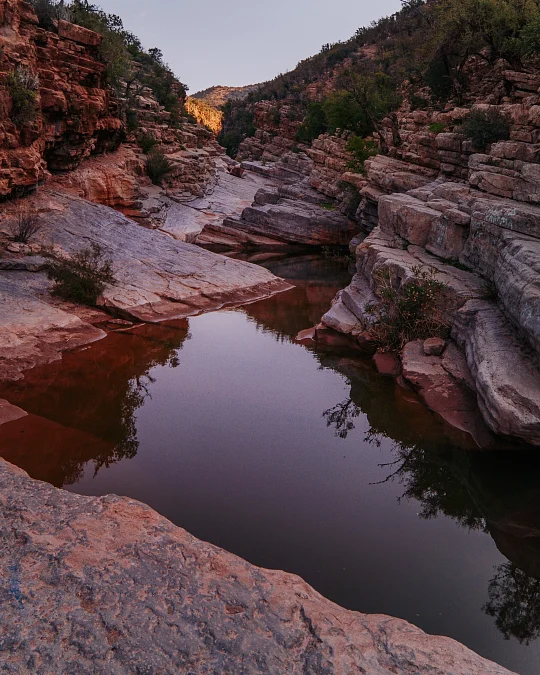
Mount Rainier is one place where checking current conditions really matters in 2026.
The good option right now is Paradise, not Sunrise.
The National Park Service says fall color begins around Paradise during September. It also specifically recommends Paradise Valley Road as a scenic drive for viewing autumn color.
That lets you combine red and gold subalpine plants with one of the biggest mountain backdrops on this list.
Paradise has large parking areas and a visitor center, so you do not need to commit to the steeper trails to enjoy the mountain setting. Many trails around Paradise climb quickly, which makes sticking to the road, parking areas, and immediate visitor center surroundings the better choice for this article.
There is also an important current warning.
As of September 2026, Sunrise Road remains closed to vehicles because of the Grand Park 2 and Wonderland Complex fires. White River Road has reopened, but Sunrise remains closed to vehicle traffic.
That makes Paradise the more practical choice for an easy fall visit this season.
Best for: Early fall color beneath a huge volcano
Fall window to watch: September
Main catch: Weather and fire conditions can change access quickly
The Best Fall View Depends on When You Go
You do not need a long trail to see some of America’s best autumn scenery.
Drive Skyline Drive in Shenandoah if you want one overlook after another. Visit Oxbow Bend for golden aspens beneath the Tetons. Save Zion for later in the season, when cottonwoods begin turning deep inside the canyon.
The timing matters as much as the park.
High mountain parks can start changing in September and may see snow soon after. Lower eastern forests often hold their strongest color into October, while Zion can keep going into November.