
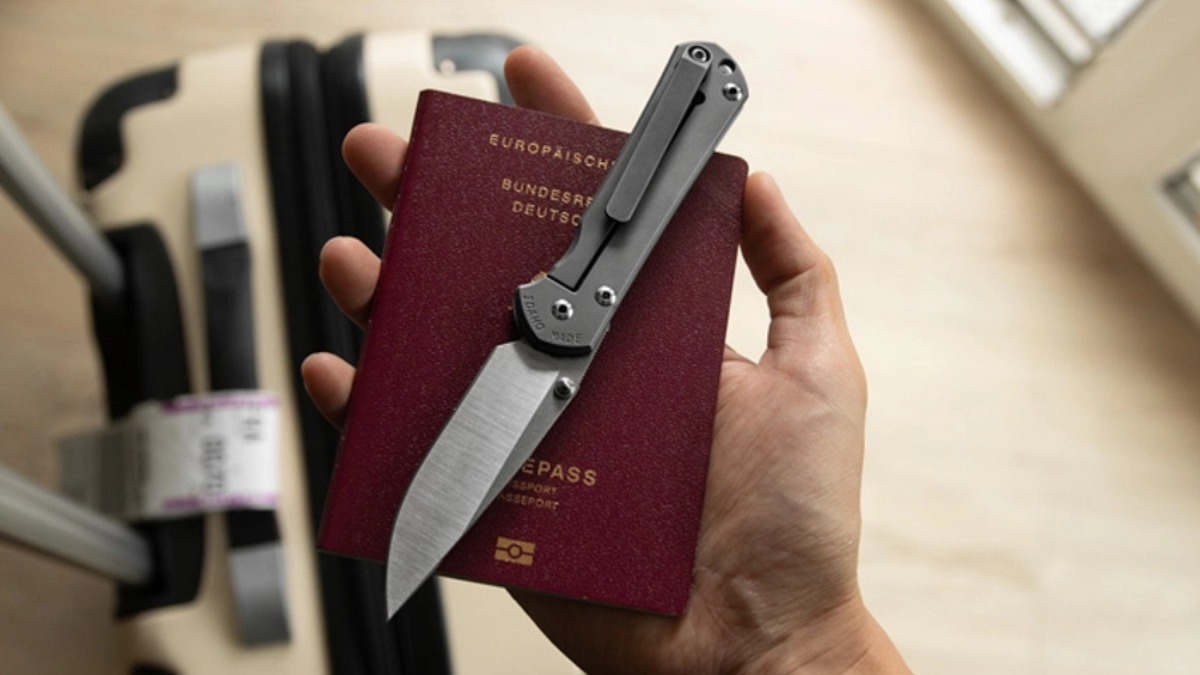
The most dangerous thing in your carry on bag does not always look dangerous. A firearm is an obvious problem. So are explosives. But travelers also get caught with items that seem harmless, such as power banks, pepper spray, realistic toy weapons, large liquids, batteries, food, plants, and certain tools.
That is why checking the rules before you leave home matters. TSA has a searchable list of items that can and cannot go through airport security. The agency also says that the final decision rests with the TSA officer at the checkpoint.
You will learn what the rules say, when an item can go in checked baggage, and when a mistake can lead to confiscation, a civil penalty, or law enforcement action.
18 Carry-On Items That Can Get You Fined or Arrested in 2026!
1. Do Not Put a Firearm in Your Carry On
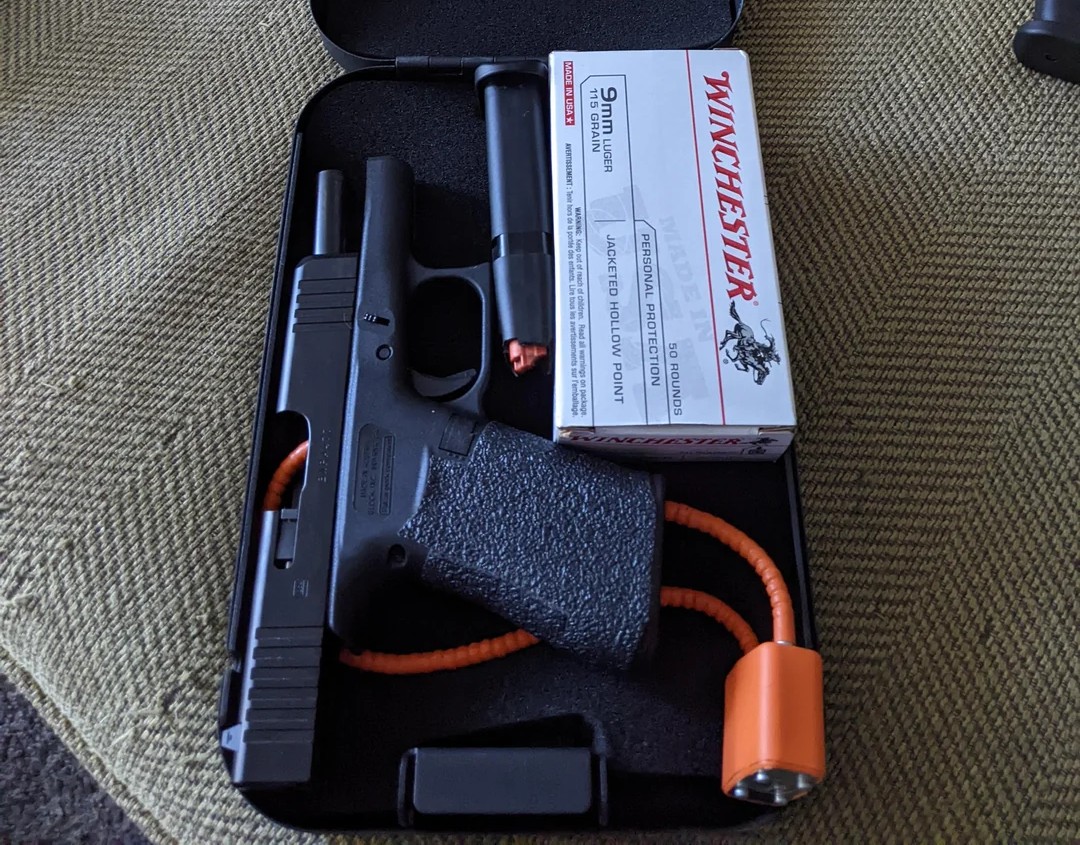
A firearm is one of the clearest examples of something that can create serious trouble at an airport.
TSA does not allow firearms in carry-on bags. Firearms can be transported in checked baggage when the rules are followed. TSA says the firearm must be unloaded, placed in a locked hard sided container, and declared to the airline at check in. Your state and local laws also matter.
TSA also says bringing a gun to a checkpoint can result in a federal civil penalty. In a 2024 TSA announcement, the agency said the penalty for carrying a weapon to a checkpoint can reach $15,000.
What to do: If you need to travel with a firearm, check the airline rules and TSA firearm rules before leaving home. Never put it in your carry on.
2. Do Not Pack Ammunition in Your Carry On
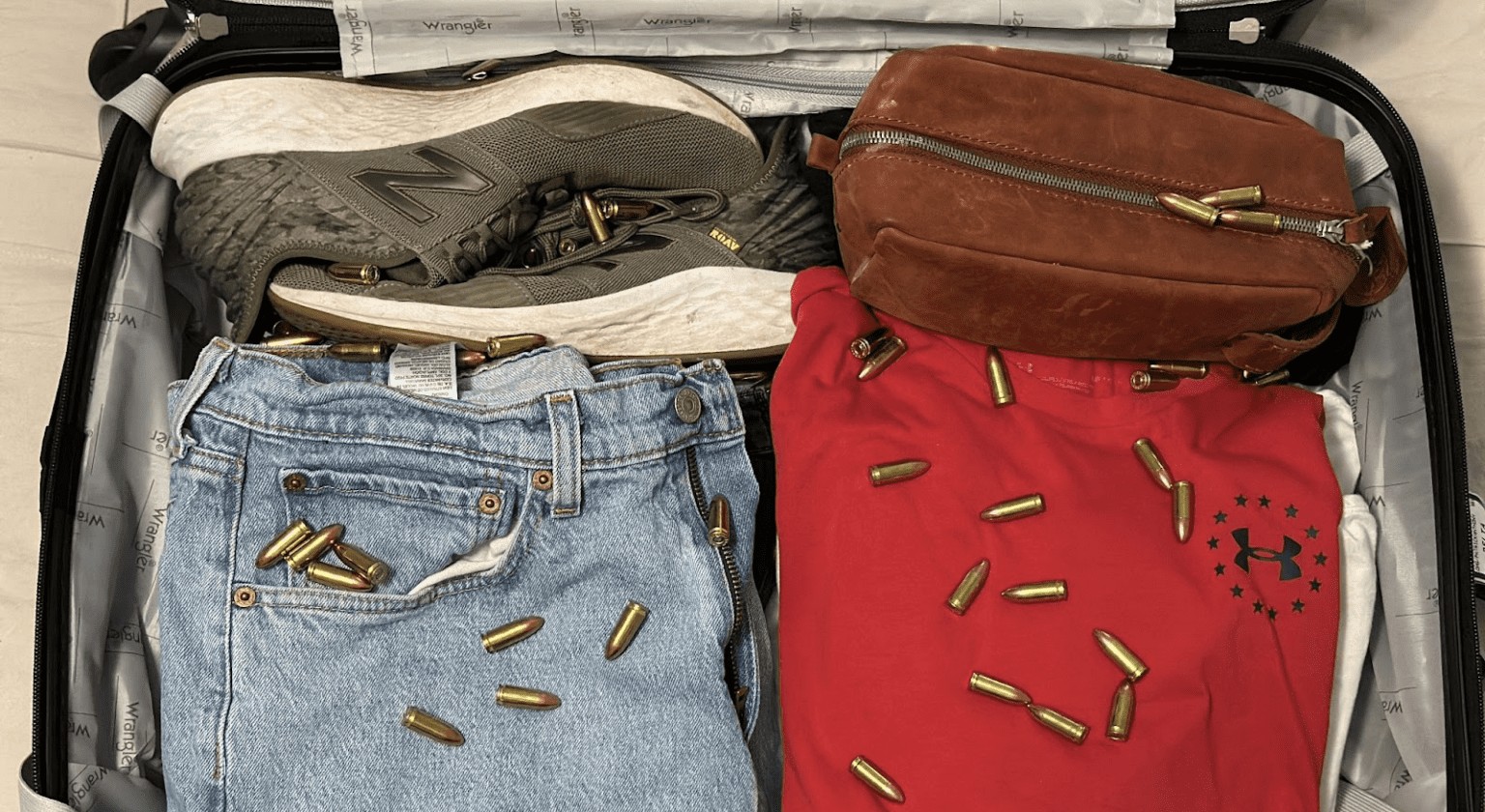
Ammunition is another item that should never be placed casually in your carry on. TSA does not allow ammunition in carry on baggage. Certain small arms ammunition can be transported in checked baggage when the required rules are followed.
The airline may have additional requirements. The fact that your firearm is not in the bag does not make ammunition acceptable in your carry on.
This is an easy mistake to make if you use the same range bag for travel and forget what is inside.
What to do: Check the ammunition rules for your airline and destination before packing it. Never assume that a small box of ammunition is acceptable in the cabin.
3. Check Your Bag for Firearm Parts
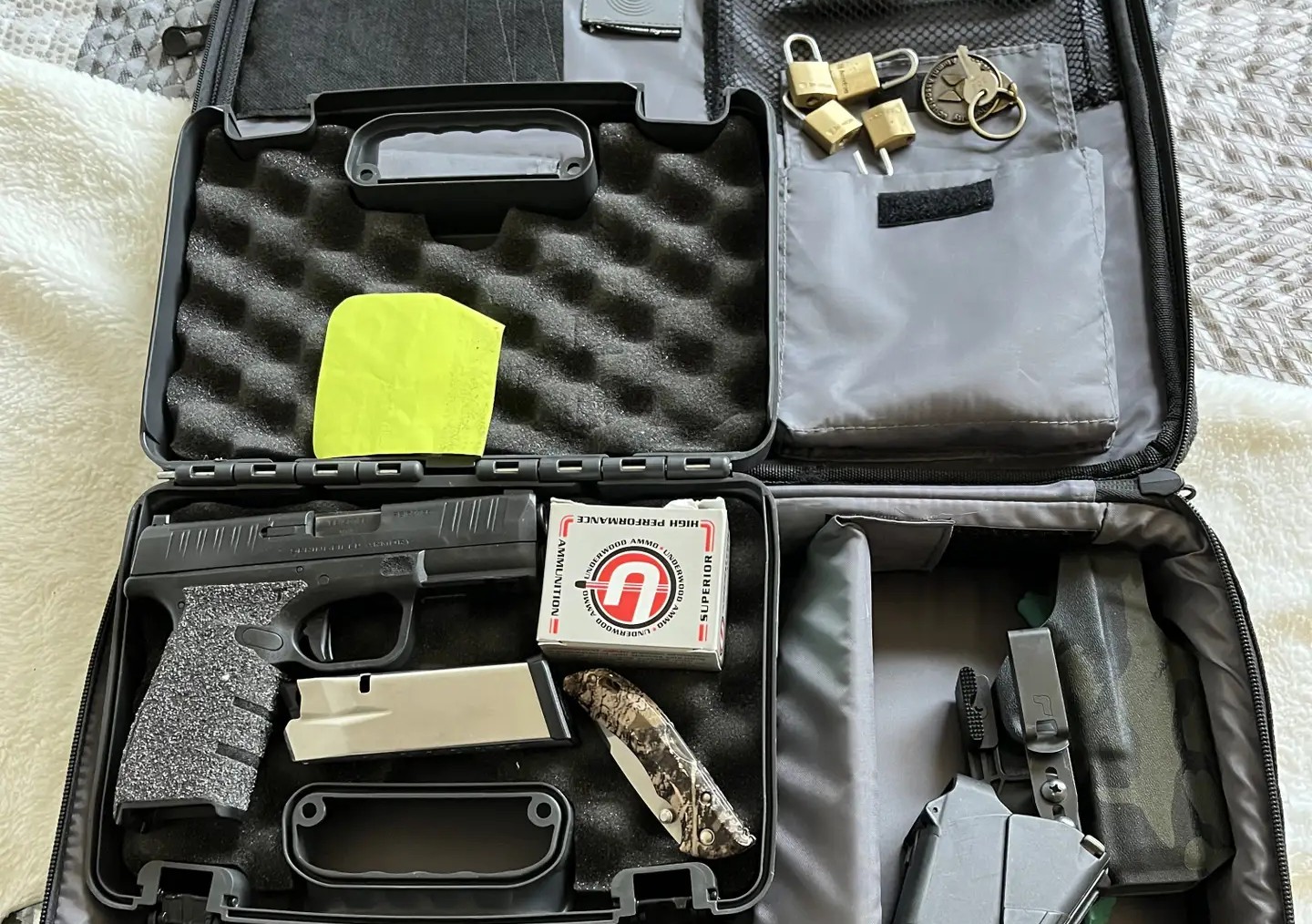
You do not have to carry a complete firearm to create a problem. TSA lists firearm parts such as frames, receivers, magazines, clips, bolts, and firing pins as prohibited in carry on baggage. These items may be allowed in checked baggage under special rules.
This is important because some travelers may think a part is harmless simply because it cannot fire a round by itself. Airport security rules do not work that way.
TSA also considers factors such as the nature of a firearm violation and whether the item was deliberately concealed when deciding civil penalties.
What to do: If you are traveling with firearm parts, check TSA and your airline before packing. Do not put them in your carry on just because they are not assembled.
4. Leave Realistic Gun Replicas at Home or Check Them Properly
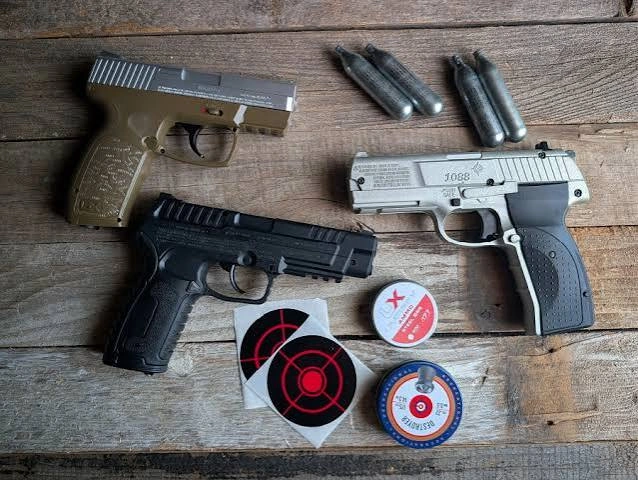
A toy can become a serious airport security problem when it looks like a real weapon. TSA lists BB guns, pellet guns, and compressed air guns as prohibited in carry on bags. Some may be allowed in checked baggage with special instructions.
TSA also warns that realistic toy weapons can cause problems. Its current list says items such as toy guns and weapons that resemble realistic firearms or weapons are prohibited in carry on baggage.
It means you should not bring a realistic weapon replica to a security checkpoint and expect it to pass without a problem. A TSA officer may need to stop the bag and inspect the item. Police may become involved if the circumstances create a security concern.
What to do: Do not carry realistic weapon replicas through the checkpoint. If the item is permitted in checked baggage, follow the airline and TSA rules.
5. Keep Stun Guns and Shocking Devices Out of Your Carry On
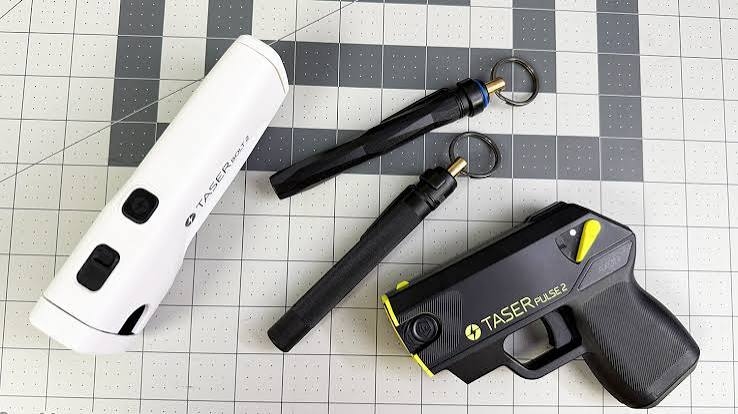
Stun guns, Tasers, and other shocking devices are prohibited in carry on baggage. TSA says these devices can be transported in checked baggage when they are packed in a way that prevents accidental discharge. Some devices also contain lithium batteries, which creates another set of rules.
This is a good example of why simply checking one rule is not enough. You may have a device that TSA allows in checked baggage, but the battery inside it may have additional FAA requirements.
What to do: Check both TSA and FAA rules before traveling with a self defense device. Never put a stun gun or Taser loose in your carry on.
6. Do Not Put Knives in Your Carry On
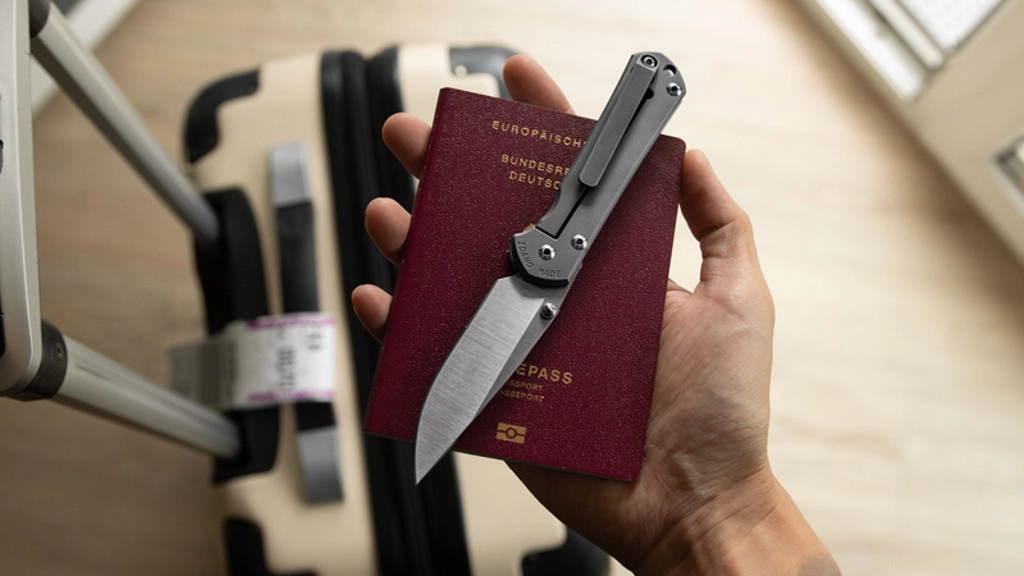
A small knife may seem harmless. Airport security does not treat it that way. TSA says pocket knives and Swiss Army knives are not allowed in carry on bags. Utility knives are also prohibited in carry on baggage.
Restricted-item overview
Items that may face special restrictions
Certain edged and martial-arts-related items can be subject to heightened legal, transport, ownership, or carry restrictions depending on the jurisdiction.
- Category
Daggers
Compact edged items that can fall under specific restrictions.
- Category
Machetes
Larger cutting tools that may receive heightened scrutiny.
- Category
Swords
Long bladed items whose status can depend on local regulations.
- Category
Throwing knives
Items designed for throwing may be treated differently under weapons rules.
- Category
Martial arts weapons
Certain traditional or specialized weapons can have additional requirements.
- Category
Large blades
Oversized blades may trigger different legal classifications.
The same basic rule applies to many other sharp weapons. Do not rely on a claim you saw online about a certain blade length. Rules can depend on the exact item and the location where you are traveling.
What to do: Search for the exact item in TSA’s What Can I Bring tool. If TSA says it belongs in checked baggage, pack it securely there.
7. Pack Axes and Ice Picks in Checked Baggage
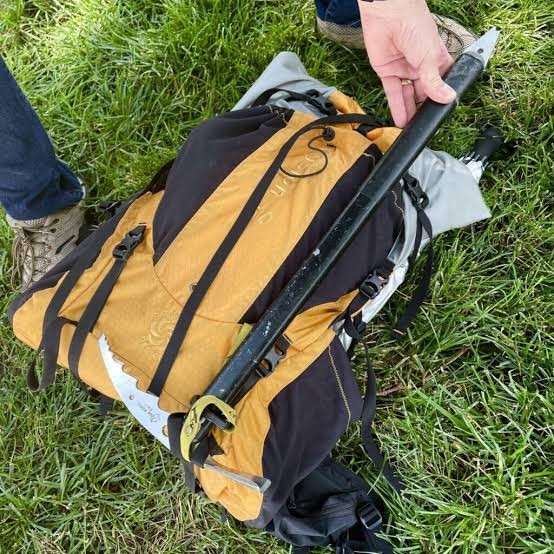
Outdoor equipment can cause the same problem as a weapon. Axes, hatchets, ice axes, and ice picks are not suitable for your carry on bag.
TSA’s item database allows certain sharp outdoor tools in checked baggage when they are properly packed. Sharp objects should be sheathed or securely wrapped so they cannot injure baggage workers or inspectors.
This rule matters for hikers, campers, climbers, and people moving equipment between locations. You may use an axe every weekend and have no legal problem owning it. That does not mean you can carry it through airport security.
What to do: Put these tools in checked baggage when TSA allows them there. Protect the sharp parts before handing over your bag.
8. Keep Martial Arts Weapons Out of Your Carry On

Training equipment can become a security issue when it is designed to hurt or disable someone. TSA lists throwing stars as prohibited in carry on baggage. They may be allowed in checked baggage when properly packed.
Other martial arts weapons should also be checked against TSA’s current database before travel. This includes items used for training that may look like weapons.
The fact that you bought something from a sporting goods store does not tell you whether it can pass through airport security.
What to do: Search the exact item before packing. If it is permitted in checked baggage, secure it so it cannot injure anyone handling your luggage.
9. Do Not Put Pepper Spray in Your Carry On
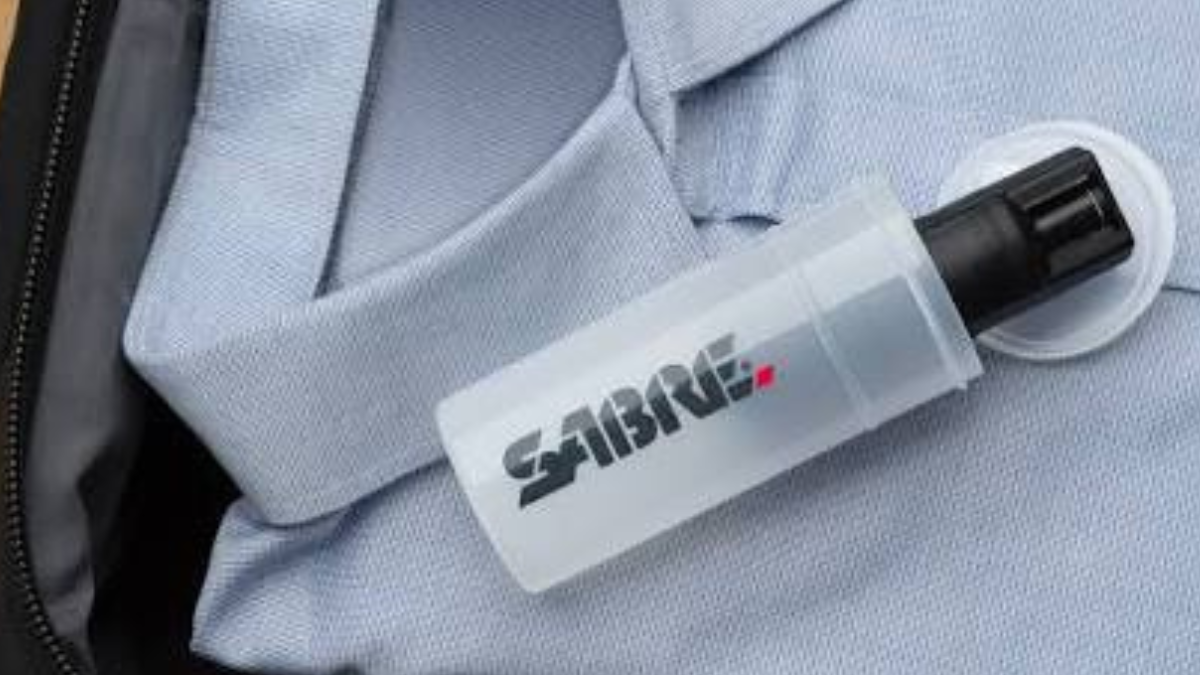
Pepper spray is often carried for personal safety. It is also an item you should remove from your carry on before going to the airport.
TSA does not allow self defense sprays in carry on baggage. Certain products may be allowed in checked baggage when they meet specific requirements. Airline rules can be stricter.
The important point is simple. Pepper spray being legal to own does not make it legal to carry through the TSA checkpoint. Do not assume that a small container gets an exception.
What to do: Check TSA and your airline before traveling with any self defense spray. If it is not clearly allowed, leave it at home.
10. Never Pack Fireworks or Explosives
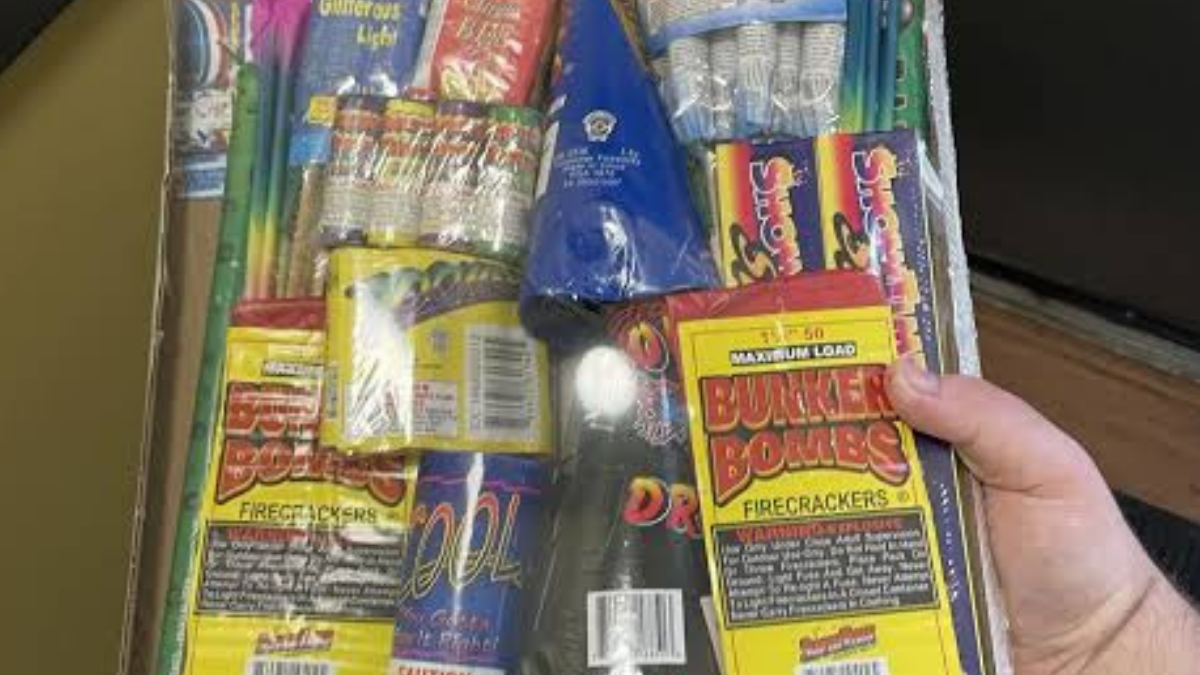
This is one area where there is little room for confusion. TSA lists fireworks and firecrackers as prohibited in both carry on and checked baggage. The same list also includes other explosive items.
Air travel creates special risks because an aircraft is a confined space. The FAA also warns that dangerous goods that are prohibited, improperly packaged, leaking, or hidden can lead to civil or criminal penalties.
What to do: Leave fireworks and explosives out of your luggage. Buy legal products after you arrive if local law permits them.
11. Leave Gasoline and Other Flammable Fuels Out of Your Bags
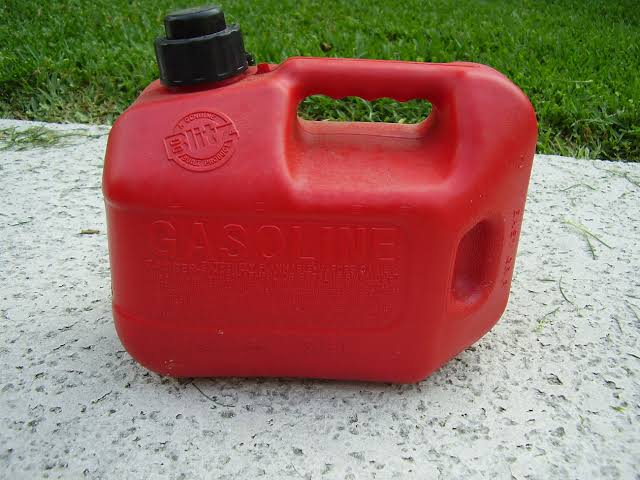
Fuel is another item that cannot simply be moved from your carry on to your checked bag. TSA and FAA rules restrict many fuels and flammable liquids because they can leak, catch fire, or create dangerous fumes.
The FAA lists flammable liquids and other hazardous materials among dangerous goods that can be prohibited in passenger baggage.
Do not assume that a tightly closed bottle makes the item safe for air travel.
What to do: Check the exact product with the FAA PackSafe guidance before you travel. If it is prohibited, do not put it in either bag.
12. Torch Lighters Are a Surprising Airport Problem
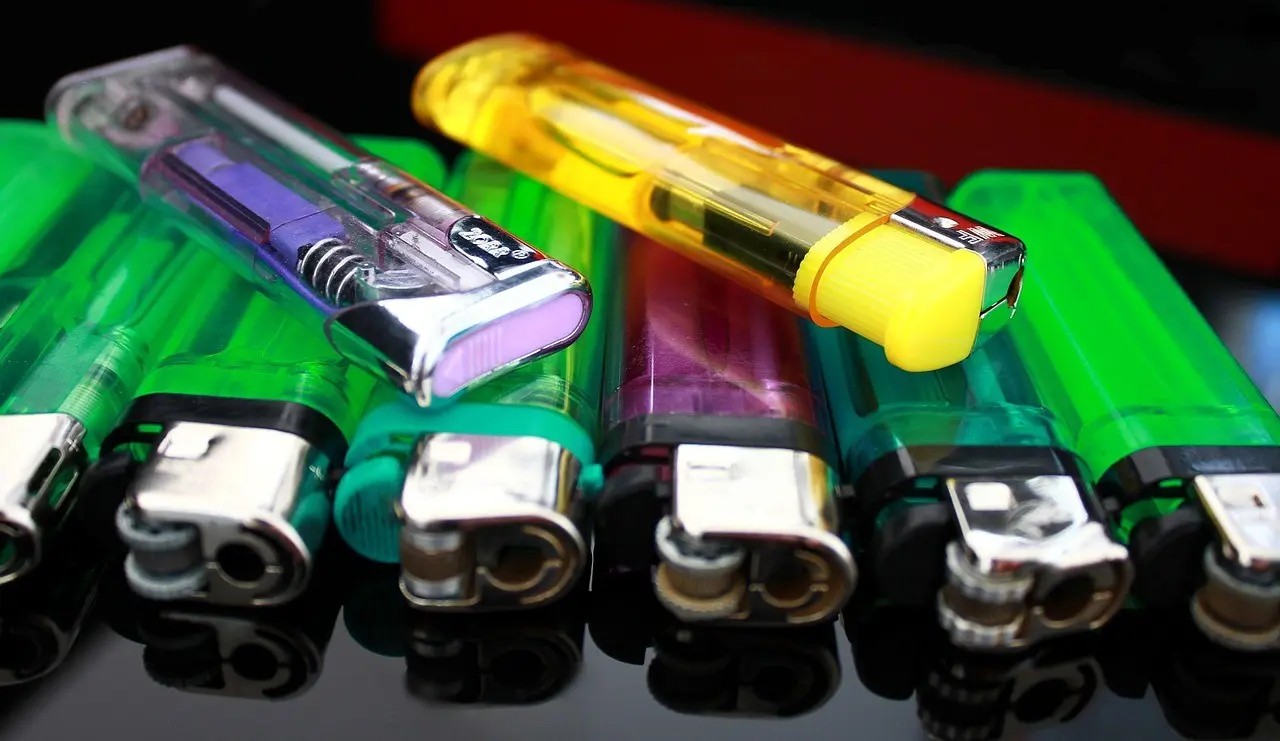
A torch lighter is different. The FAA says torch lighters, also called blue flame or jet flame lighters, are not allowed in the cabin or checked baggage.
Regular butane lighters have different rules. The FAA says certain absorbed liquid and butane lighters are limited to one per passenger and must be carried in the cabin or on the passenger.
Lithium battery powered lighters also have their own rules. So do not treat every lighter as the same item.
What to do: Check the type of lighter before you pack it. If it is a torch lighter, leave it at home.
13. Check the Watt Hours on Your Power Bank
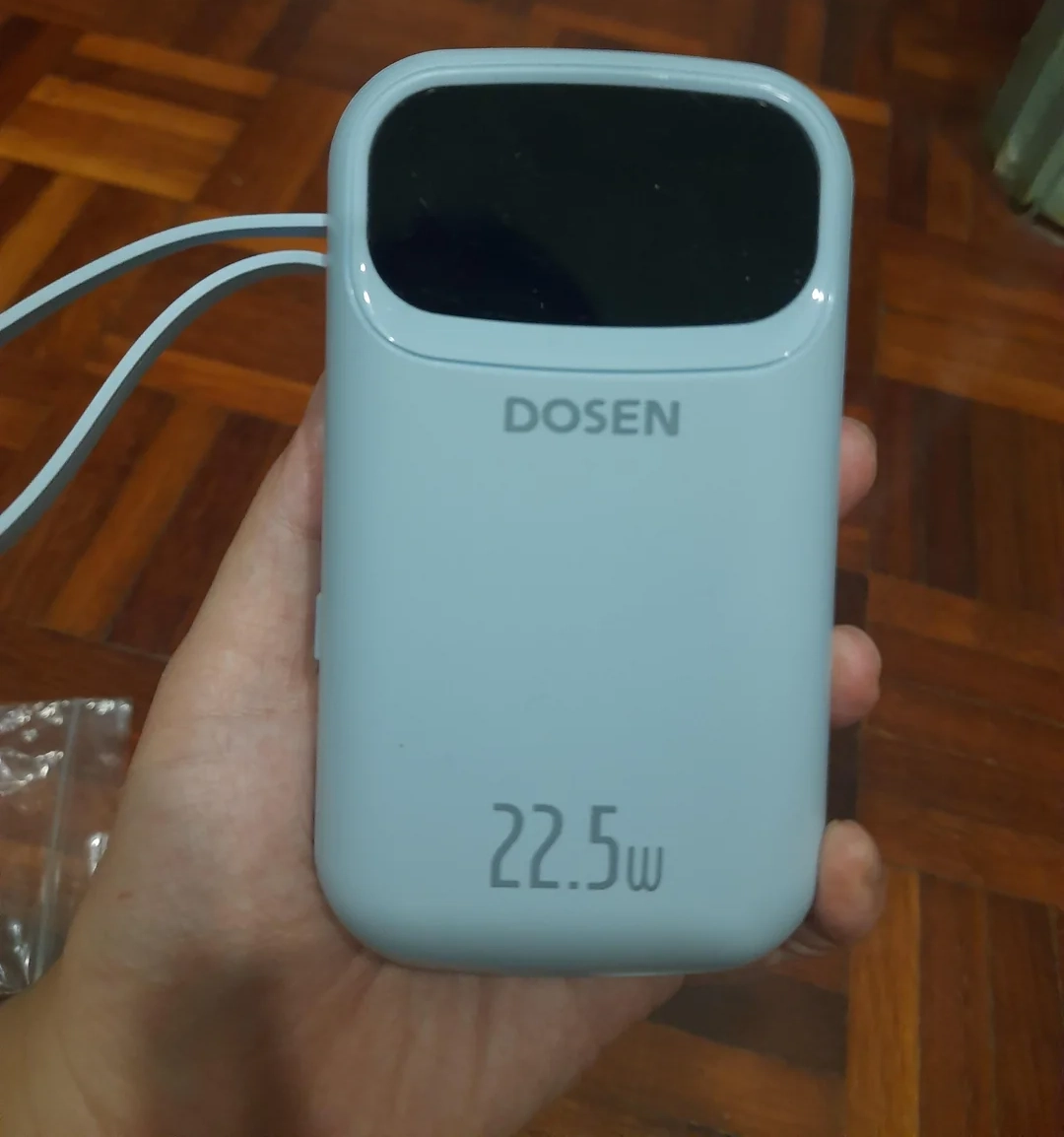
Power banks are one of the most common items that travelers get wrong. The important number is watt hours, or Wh.
The FAA says rechargeable lithium batteries with a capacity of 0 to 100 Wh are allowed on passenger aircraft under the applicable rules. Batteries from 101 to 160 Wh require approval from the airline. Batteries above 160 Wh are forbidden on passenger aircraft.
What to do: Check the Wh rating before you leave. Keep spare batteries and power banks with you in the cabin.
14. Do Not Fly With a Damaged or Recalled Lithium Battery
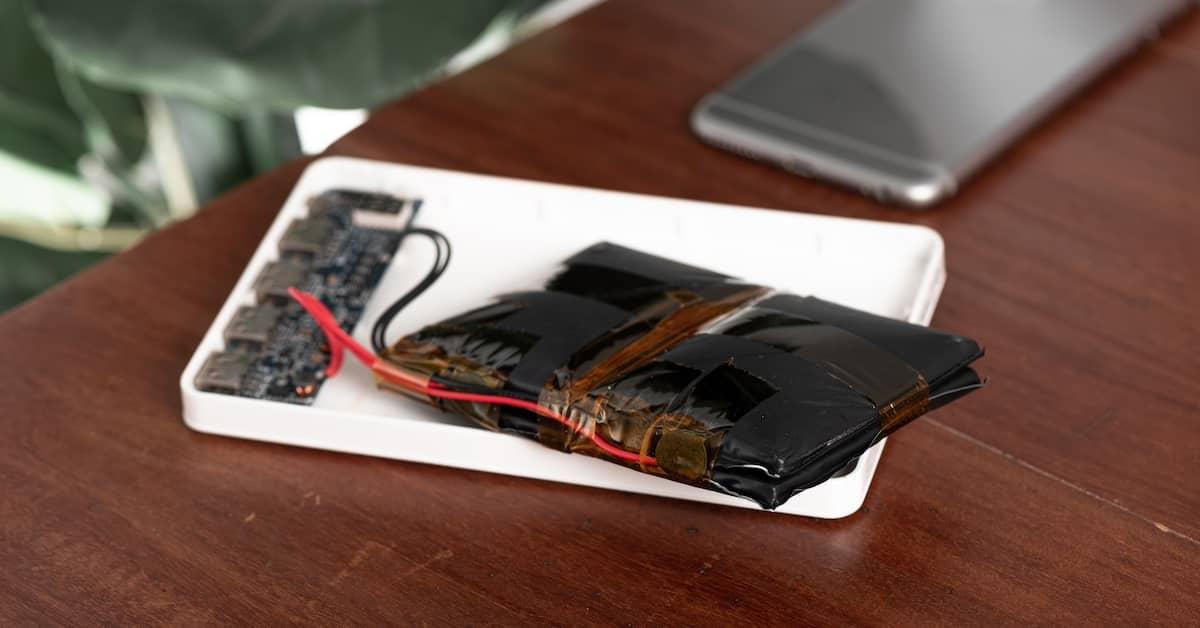
A battery does not have to be large to be dangerous. A damaged battery can create a serious safety problem.
The FAA says damaged or recalled lithium batteries and battery powered devices that could create sparks or dangerous heat must not be carried on an aircraft unless the battery has been removed or made safe.
What to do: Do not pack a damaged or recalled battery. Contact the airline or manufacturer for safe handling instructions.
15. Never Put a Spare Power Bank in Checked Baggage
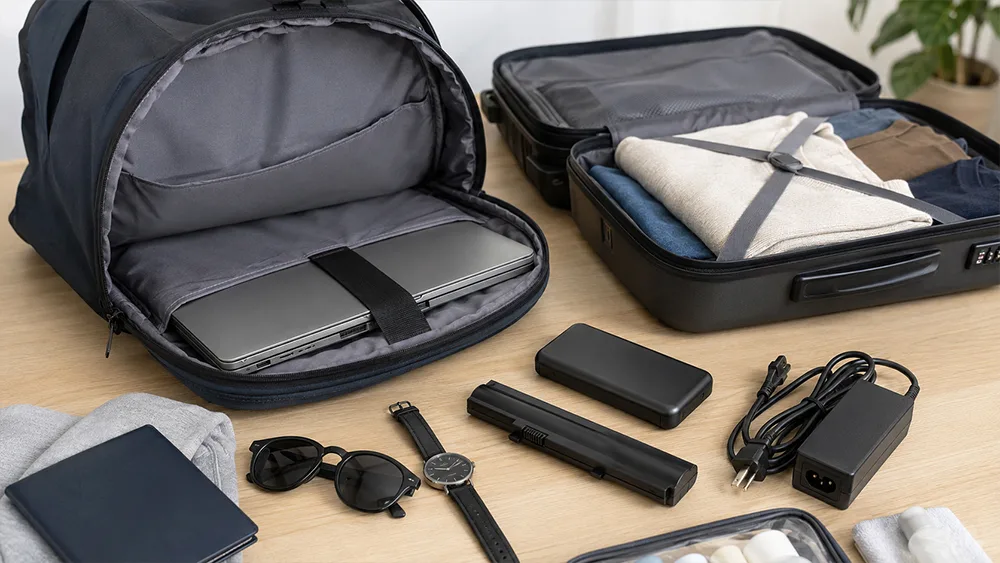
Your laptop can often travel in checked baggage if it is completely powered off and protected. Your spare power bank cannot. The FAA says spare lithium batteries, including power banks and portable chargers, must be carried in carry on baggage.
There is another important rule. If an airline takes your carry on bag at the gate and puts it in the aircraft hold, you must remove your spare lithium batteries and power banks first.
What to do: Keep your power bank in an easy to reach part of your carry on. If the airline checks the bag at the gate, remove the power bank before handing it over.
16. Do Not Pack Fire Extinguishers or Certain Gas Cylinders
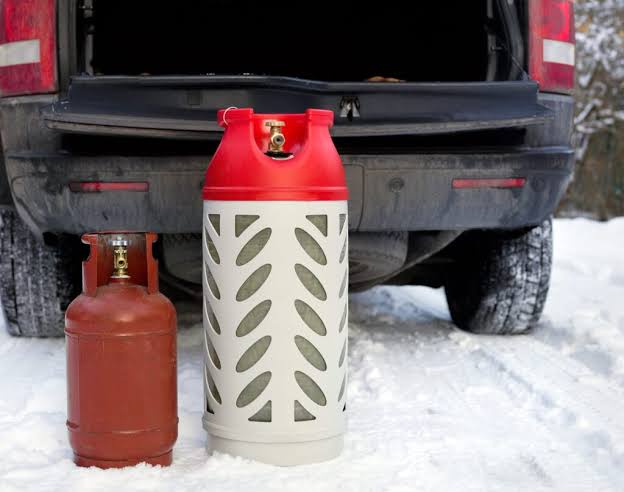
Compressed gas can be dangerous on an aircraft. TSA lists fire extinguishers and other compressed gas cylinders as prohibited in both carry on and checked baggage.
Some special equipment has exceptions, so you should always check the exact product. This is why a general rule such as “all gas cylinders are banned” would be too broad.
What to do: Search for the exact cylinder or device in TSA’s database and check FAA PackSafe before traveling.
17. Watch the 3.4 Ounce Liquid Rule

This is probably the most common carry on mistake. TSA allows liquids, aerosols, gels, creams, and pastes in carry on bags when each container holds 3.4 ounces, or 100 milliliters, or less. These items generally need to fit within the required liquids bag.
What to do: Check the container size before packing. Move larger liquids to checked baggage when permitted.
This is usually a screening problem, not an automatic arrest issue. That distinction matters.
18. Declare Food, Meat, Plants, and Agricultural Products
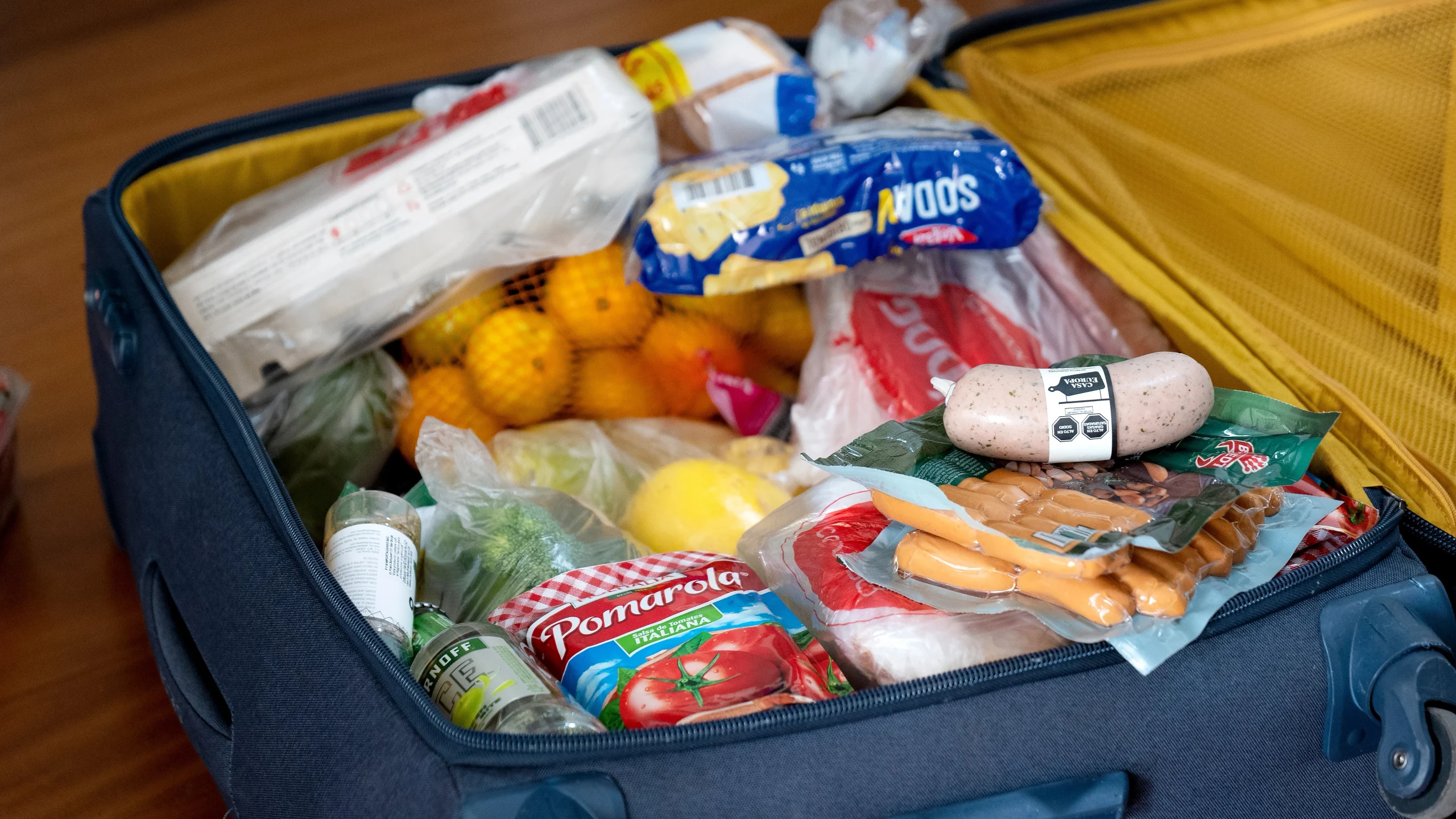
Food can create a very different problem when you enter the United States. CBP says travelers entering the United States must declare foods, plants, agricultural products, and wildlife items.
Declaring an item does not mean the item will be allowed into the country. But failing to declare it can be much worse.
From soil
to table.
A living agricultural system connects the land, plants, animals, and the products that ultimately nourish people.
Meat
Agricultural systems can produce animal-based foods that become part of the food supply.
Fruits
Orchards and fruit crops transform sunlight and soil into fresh, harvestable produce.
Vegetables
Crops provide nutrient-rich produce directly from cultivated land.
Plants
Plants form the foundation of the ecosystem, supporting both food production and biodiversity.
Seeds
Seeds carry the potential for future harvests and continued crop production.
Dairy
Livestock systems can provide milk and dairy products as agricultural outputs.
Animal products
Animals contribute a range of agricultural products beyond food alone.
Soil
Healthy soil is the foundation for everything above it, supporting roots, crops, and life.
APHIS also says that if you declare an agricultural product and an inspector decides it cannot enter, you will generally not face a penalty simply because you declared it. That gives you a simple rule to remember.