
Pennsylvania hides more than you think. Beyond Philadelphia’s streets and Pittsburgh’s bridges, strange and wonderful spots wait in quiet corners. Some sit deep in forests.
Others hide behind ordinary storefronts or sit atop rolling hills most tourists never see. A few defy explanation entirely, built by hands with big dreams and stranger visions. This state holds secrets that surprise even lifelong residents.
Locals drive past these places daily, often without knowing their history. Travelers seek them out for one reason: they refuse to believe such places exist until they see them firsthand. Get ready to explore 18 spots that prove Pennsylvania still surprises.
Pennsylvania’s Hidden Wonders: Places That Defy Belief
Pennsylvania hides more than most visitors expect. Beyond Philadelphia’s busy streets and Pittsburgh’s iconic bridges, strange spots wait in quiet corners across the state. Some sit deep within forests, far from marked trails.
Others hide behind ordinary storefronts or rolling hills most tourists never see. Each location carries its own story, shaped by decades of history. A few of these places defy easy explanation.
Builders with bold dreams created structures that still puzzle visitors today. Even lifelong residents often discover something new when they seek these spots out.
Curiosity drives most travelers here, since photographs alone rarely prove these places actually exist.
Quick Highlights:
- Forest hideaways tucked far from marked tourist trails
- Everyday storefronts concealing surprises inside
- Hilltop locations overlooked by most travelers
- Structures built from bold, unconventional vision
- Spots unfamiliar even to longtime Pennsylvania residents
- Eighteen destinations offering a genuinely unforgettable experience
1. Windber Trolley Graveyard
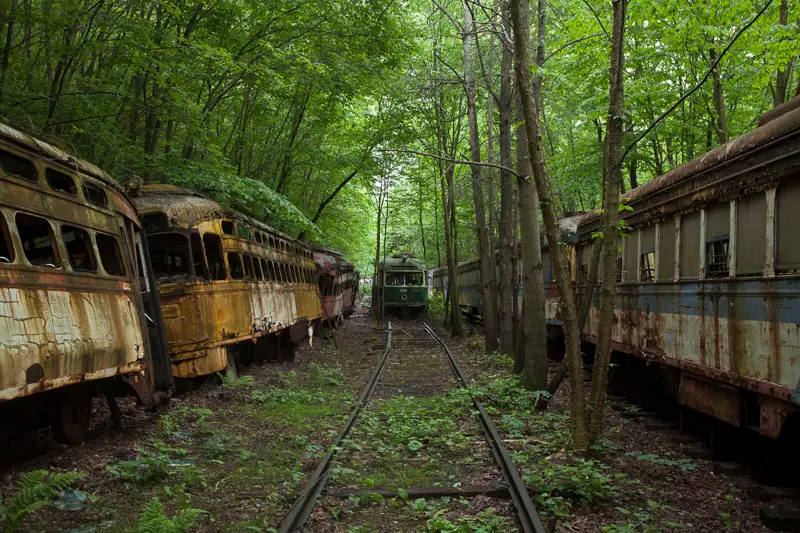
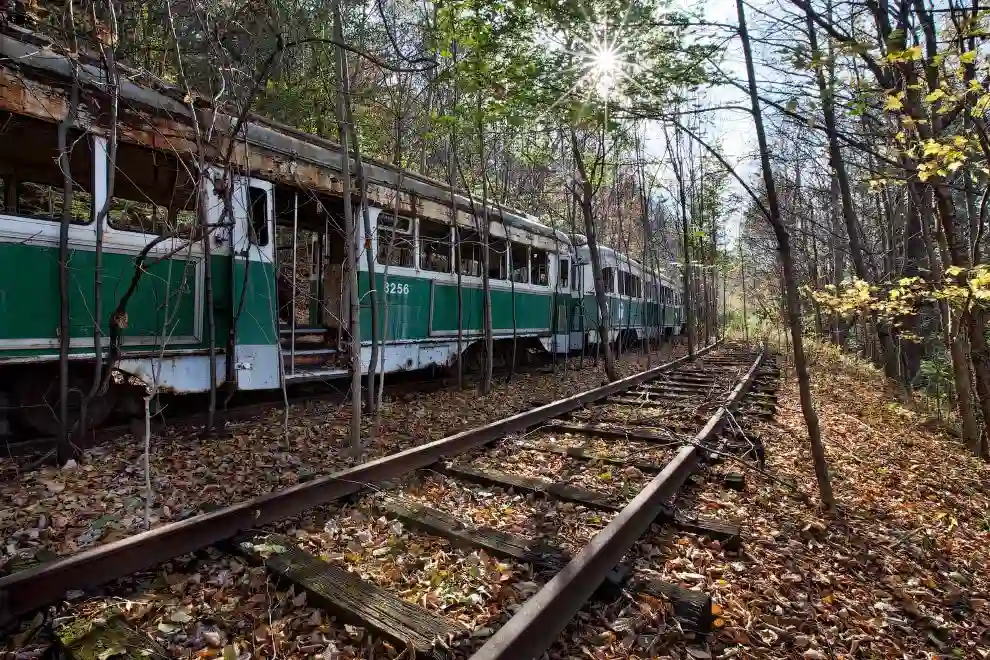
Deep in the Pennsylvania woods, a collection of rusting trolley cars rests beside old tracks covered with weeds and fallen leaves. The vehicles once carried passengers through busy communities, but today their broken windows and fading paint tell a very different story.
Trees have grown between the tracks, while moss and corrosion slowly cover the abandoned cars. The strange combination of industrial history and untamed forest makes the site look like a forgotten railway scene from another time.
2. Haines Shoe House
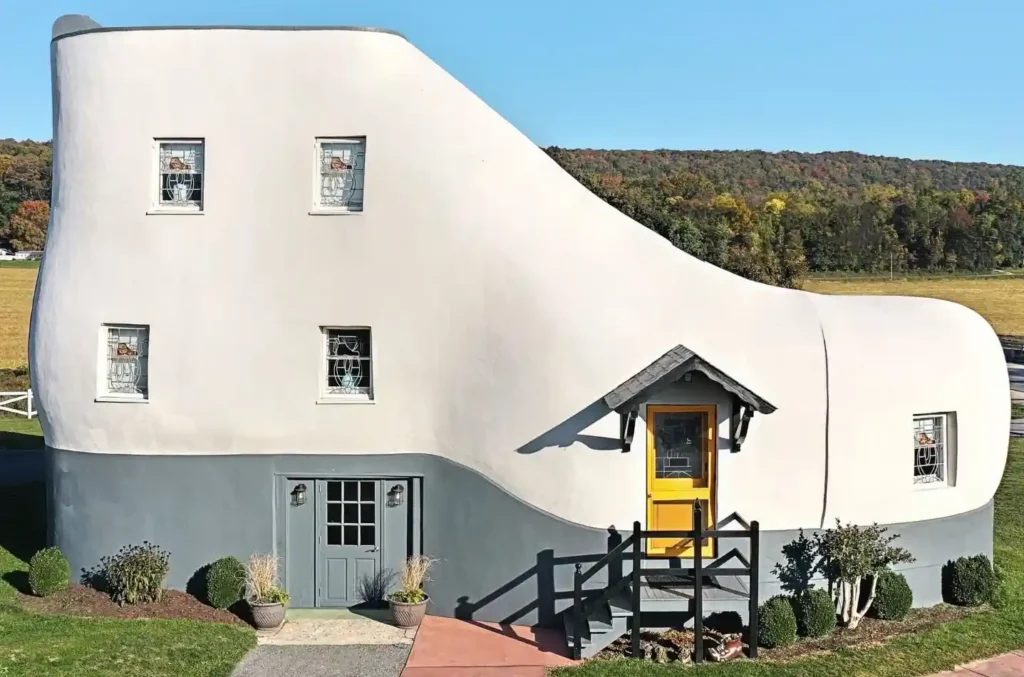
The Haines Shoe House is a five-level building shaped like an enormous work boot near York, Pennsylvania. Shoe salesman Mahlon Haines built it in 1948 as a creative advertisement for his successful footwear business.
Every part of the building follows the shoe theme, from the curved toe and tall ankle to the windows placed along its sides.
What began as a bold marketing idea became a beloved roadside landmark that still surprises people passing through the Pennsylvania countryside.
3. Ringing Rocks Park
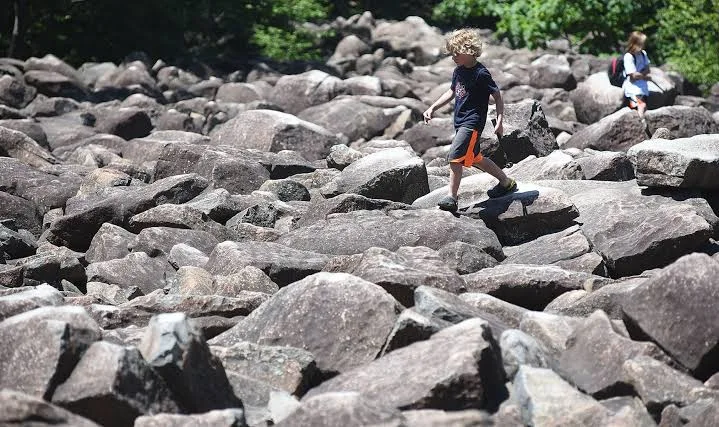
Ringing Rocks Park contains a large field of boulders that produce metallic, bell-like sounds when struck. Visitors often bring a small hammer and move across the field, testing different rocks to hear how their tones change.
Scientists connect the sound to the rocks’ physical structure and the way they rest against one another, although not every boulder rings.
The unusual sound, combined with the park’s rugged landscape and nearby waterfall, makes this natural attraction feel unlike an ordinary rock field.
4. Centralia
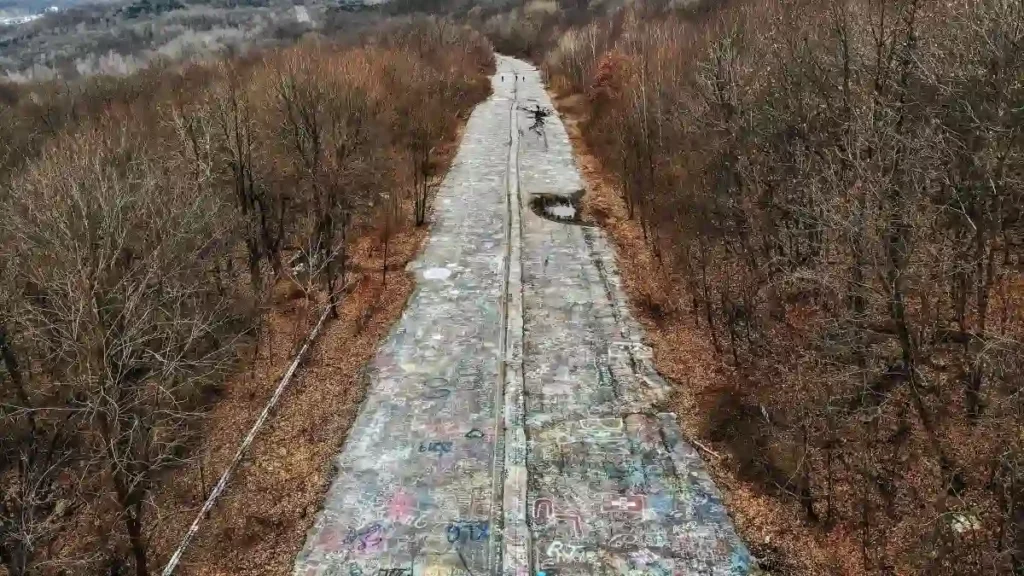
Centralia was once an active Pennsylvania coal town filled with homes, businesses, and mining families. Its future changed after an underground coal-seam fire began in 1962 and continued spreading beneath the community.
Concerns about toxic gases, ground movement, and dangerous sinkholes caused most residents to relocate, leaving only a small population behind.
The Graffiti Highway became a well-known symbol of Centralia, although much of its painted surface was covered with soil in 2020 to discourage trespassing.
5. Mütter Museum
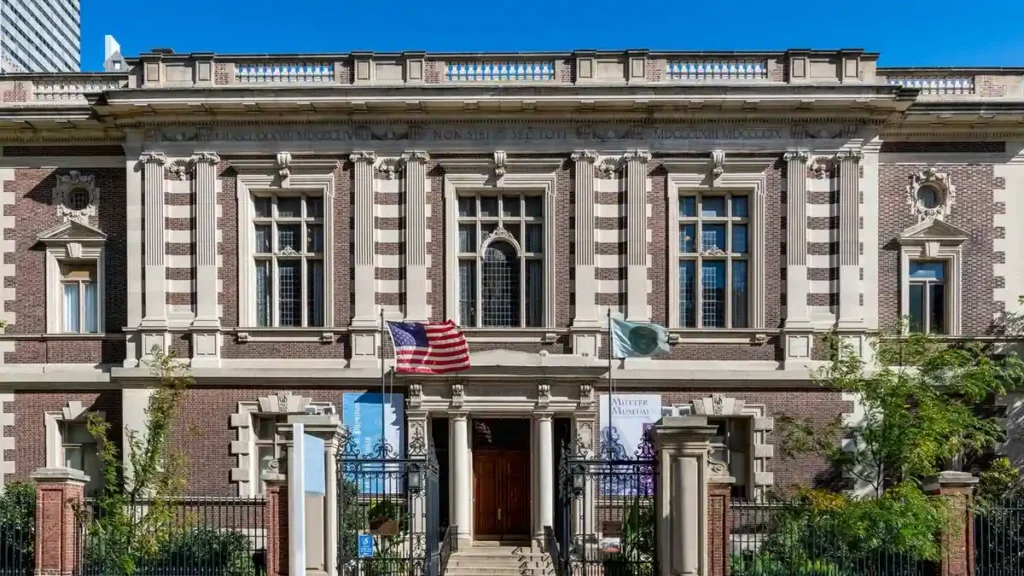
Philadelphia’s Mütter Museum houses one of Pennsylvania’s most unusual collections of medical history. Its exhibits include preserved anatomical specimens, human skeletons, wax models, historic instruments, and examples of rare physical conditions.
The displays may feel unsettling, but they were assembled to help people understand medicine, disease, and the human body.
Rather than serving only as a collection of curiosities, the museum shows how medical knowledge and treatment have changed over time.
6. Randyland
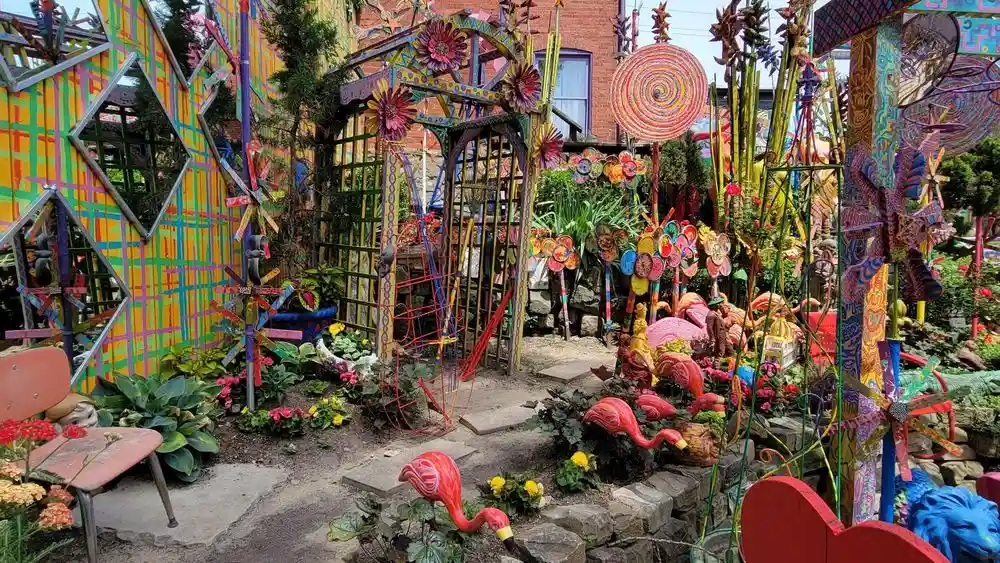
Randyland is a colorful public-art attraction located on Pittsburgh’s North Side. Artist Randy Gilson transformed the property with painted walls, recycled objects, sculptures, mirrors, plants, and decorations in nearly every color imaginable.
The artwork fills the building, courtyard, fences, and surrounding outdoor areas, giving visitors something different to notice at every turn.
Its cheerful appearance reflects Gilson’s goal of bringing happiness, creativity, and a stronger sense of community to the neighborhood.
7. Cherry Springs State Park
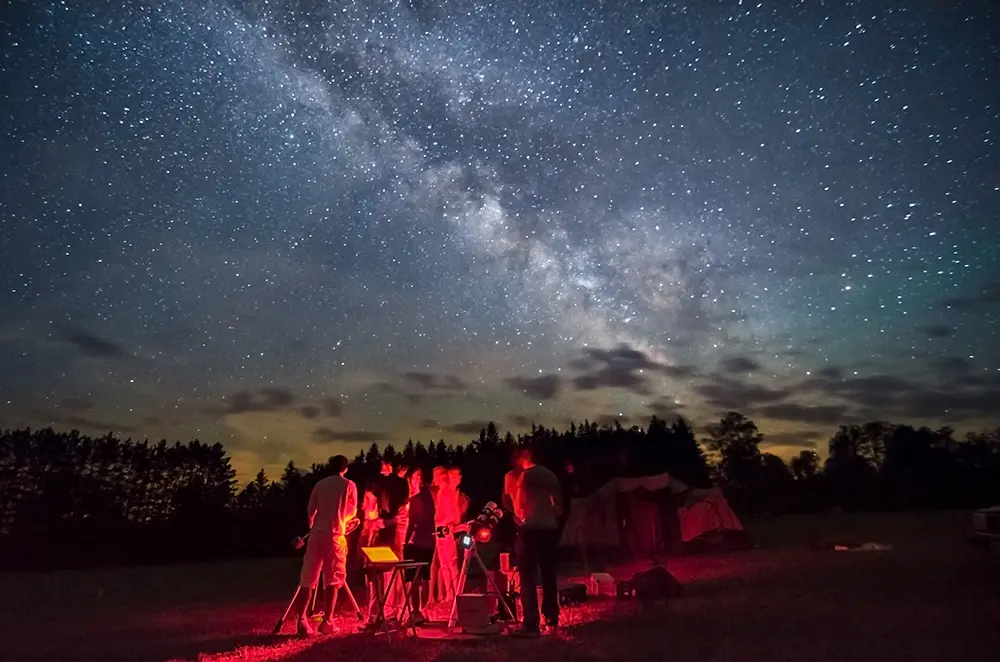
Cherry Springs State Park is famous for the remarkably dark night sky above its remote Pennsylvania landscape. With fewer city lights nearby, visitors can often see thousands of stars and, under good conditions, the bright band of the Milky Way.
Astronomers and casual visitors gather here with telescopes, cameras, blankets, and red lights that protect their night vision.
Weather and cloud cover still affect visibility, but a clear night can reveal planets, constellations, meteors, and details that are difficult to see near large cities.
8. Eckley Miners’ Village
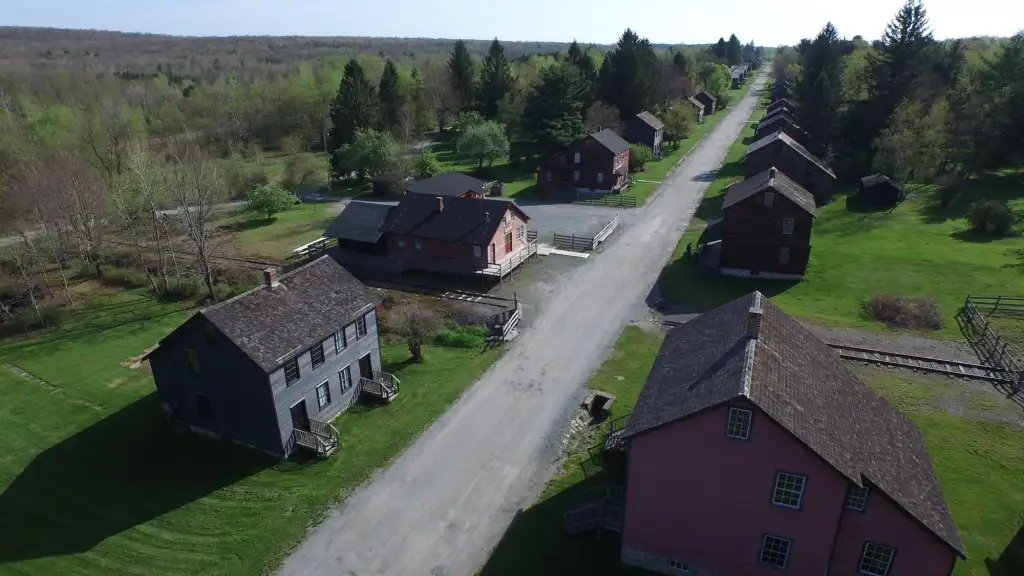
Eckley Miners’ Village preserves the appearance of a nineteenth-century anthracite coal-mining community in northeastern Pennsylvania.
Its long central road is lined with miners’ houses, company buildings, a church, and other structures connected to everyday village life.
The buildings show how housing and living conditions often reflected a worker’s position within the mining company.
Today, the preserved settlement helps visitors understand the difficult labor, close communities, and immigrant families that shaped Pennsylvania’s coal region.
9. Laurel Caverns
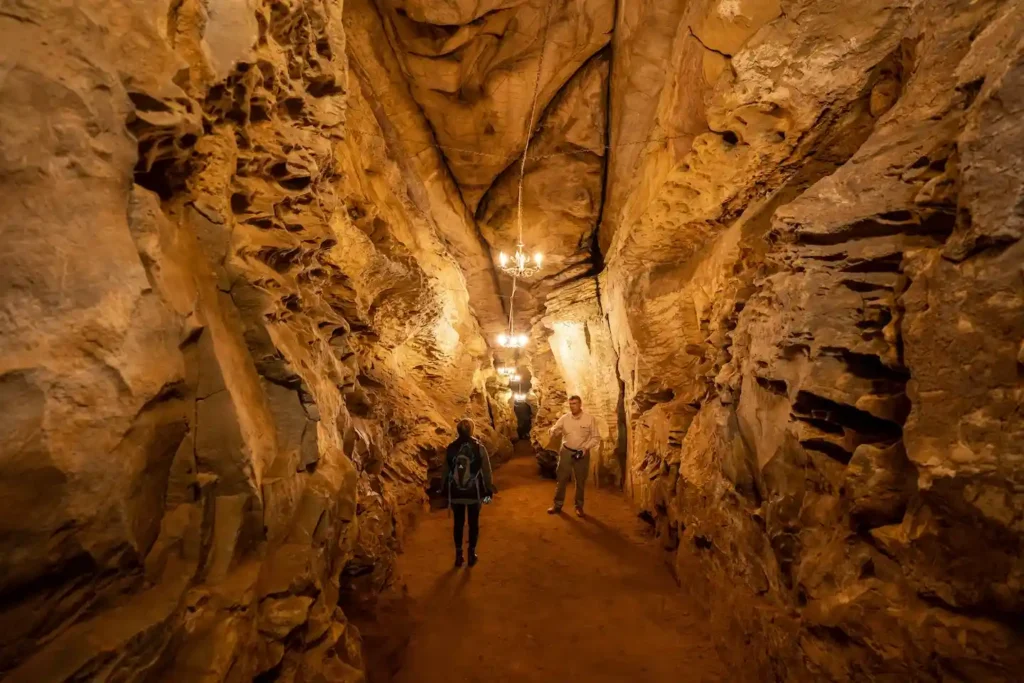
Laurel Caverns contains miles of underground passages beneath the hills of southwestern Pennsylvania. Its sandstone chambers feature tall walls, narrow openings, sloping floors, and unusual textures formed through natural geological processes.
Guided experiences help visitors understand how the caverns developed and what makes their underground environment distinctive.
The cool air, warm lighting, and massive rock surfaces create a dramatic setting that feels far removed from the forests and roads above.
10. Philadelphia’s Magic Gardens
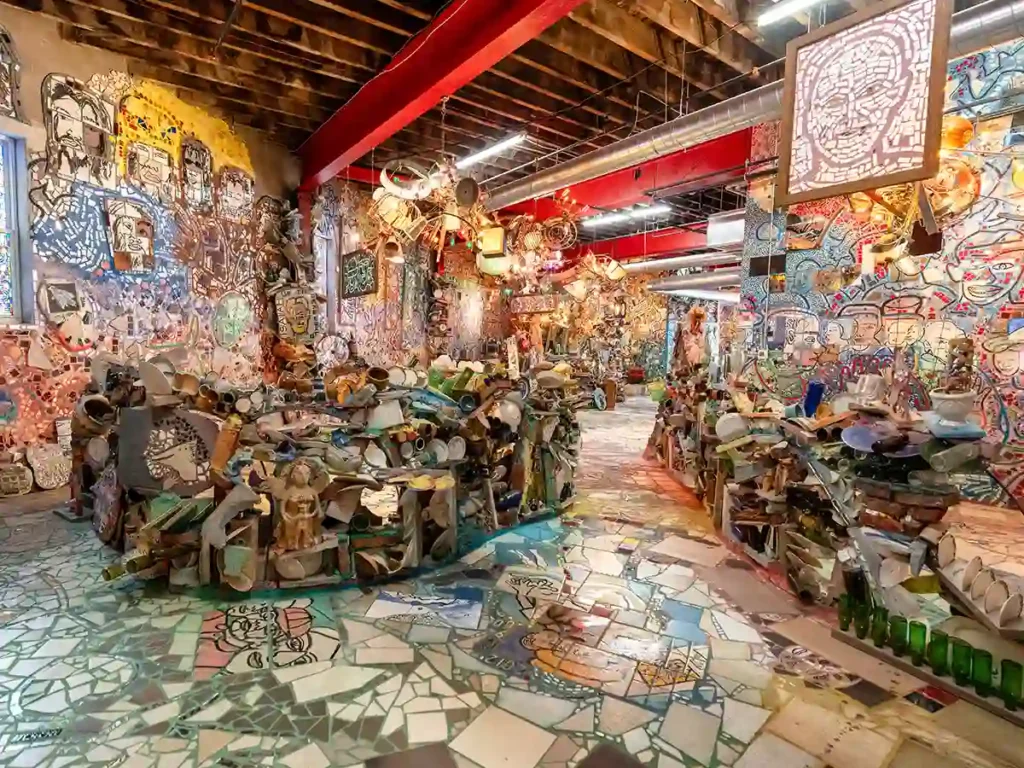
Philadelphia’s Magic Gardens is an immersive art space covered with detailed mosaics created by artist Isaiah Zagar.
Mirrors, ceramic tiles, bottles, bicycle wheels, sculptures, and other found objects form winding patterns across its indoor rooms and outdoor passages.
The artwork extends from the floors to the walls and reaches into narrow corridors that visitors can walk through.
Each surface contains small details, words, faces, and objects, turning the site into a large artwork that rewards slow and careful observation.
11. Jim Thorpe
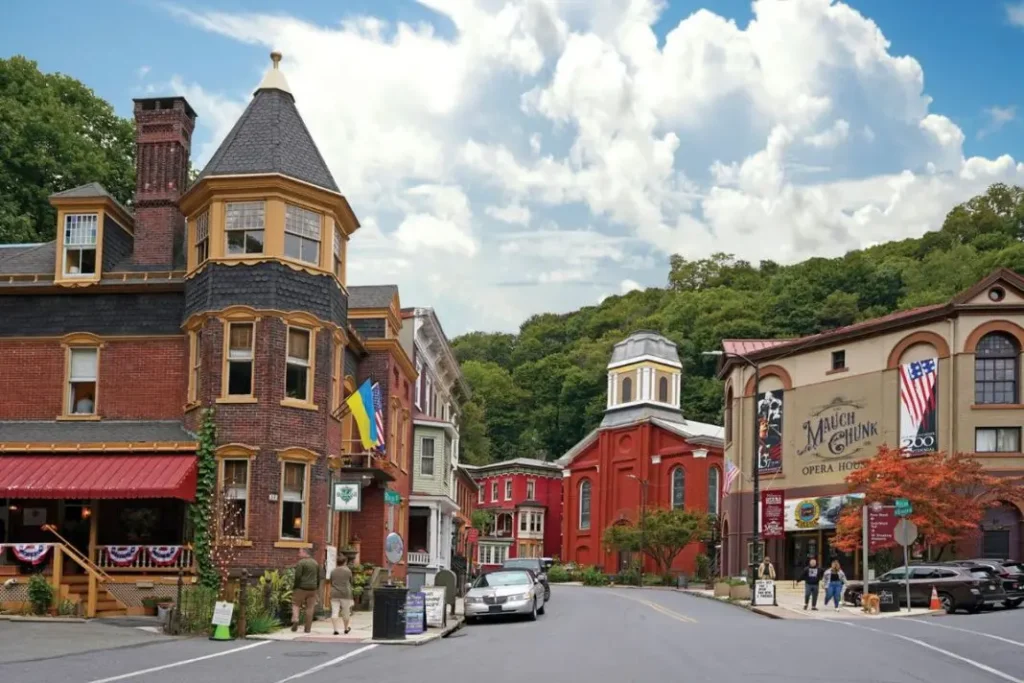
Jim Thorpe is a small Pennsylvania town known for its Victorian buildings, mountain scenery, and historic downtown streets. Colorful storefronts, restaurants, museums, and restored homes sit within a narrow valley surrounded by wooded hills.
Visitors can explore attractions such as the Asa Packer Mansion and the Old Jail Museum or enjoy nearby hiking, cycling, and seasonal train rides.
The combination of architecture and natural scenery gives the town an appearance often compared with a European mountain village.
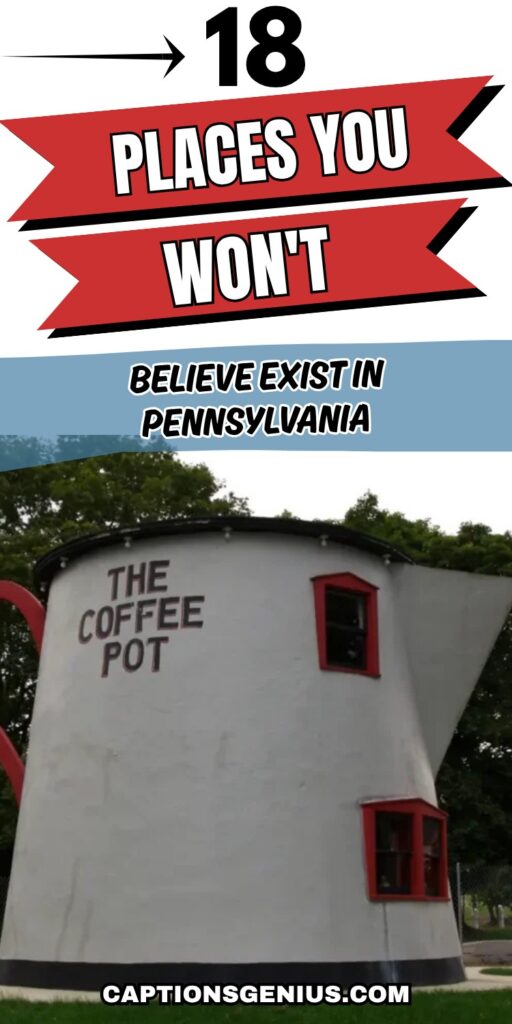
12. The Coffee Pot
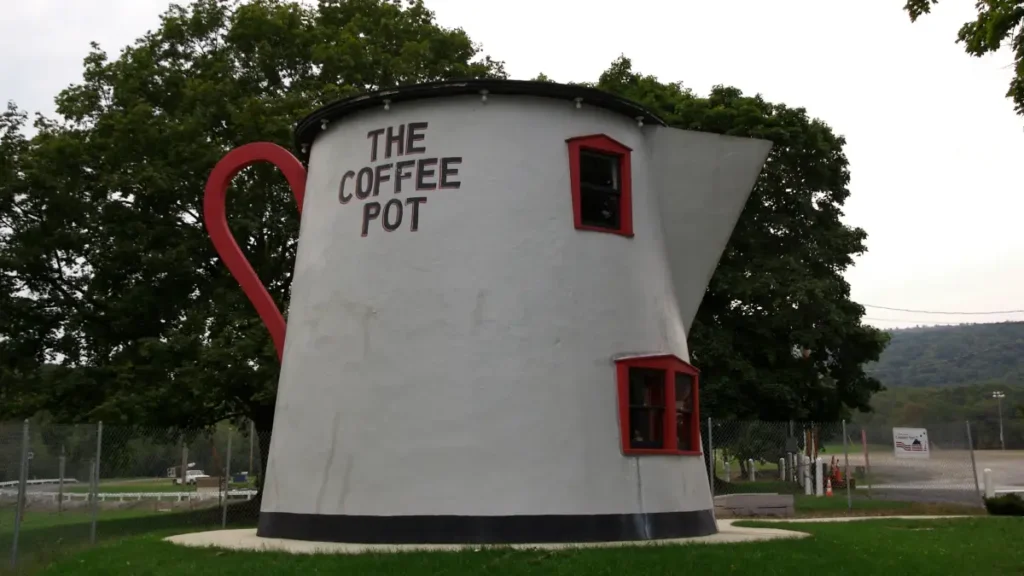
The Coffee Pot is a coffee-pot-shaped roadside building in Bedford, Pennsylvania, constructed in 1927.
Its large handle, pointed spout, rounded body, and small windows make it look more like an oversized kitchen object than a conventional building.
It originally attracted motorists during the early years of American automobile travel and roadside tourism.
After facing decline and possible demolition, it was preserved and moved, allowing this playful example of novelty architecture to remain part of Bedford’s identity.
13. Gravity Hill
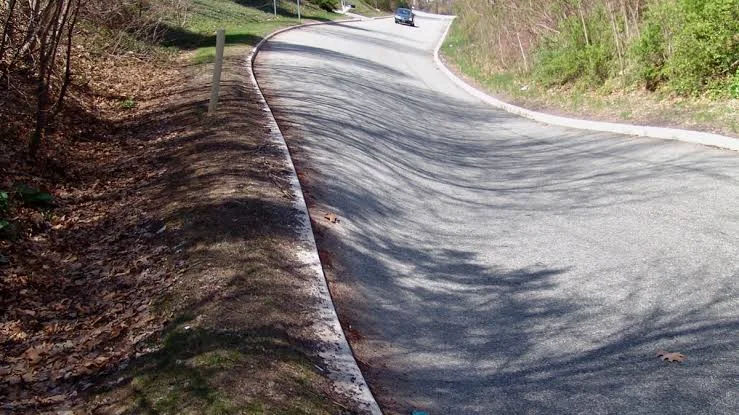
Gravity Hill is a rural road in Bedford County where vehicles appear to roll uphill even when placed in neutral. The effect can feel impossible because the car seems to move against the normal pull of gravity.
The most accepted explanation is an optical illusion created by the slope and surrounding landscape, which makes downhill appear to be uphill.
Trees, hills, and the absence of a clear horizon confuse the eyes, creating a memorable example of how visual perception can misread an ordinary road.
14. Kecksburg
Kecksburg became connected with one of Pennsylvania’s best-known UFO stories after an unusual event on December 9, 1965.
Witnesses reported seeing a bright object cross the sky before apparently descending into a wooded area near the community.
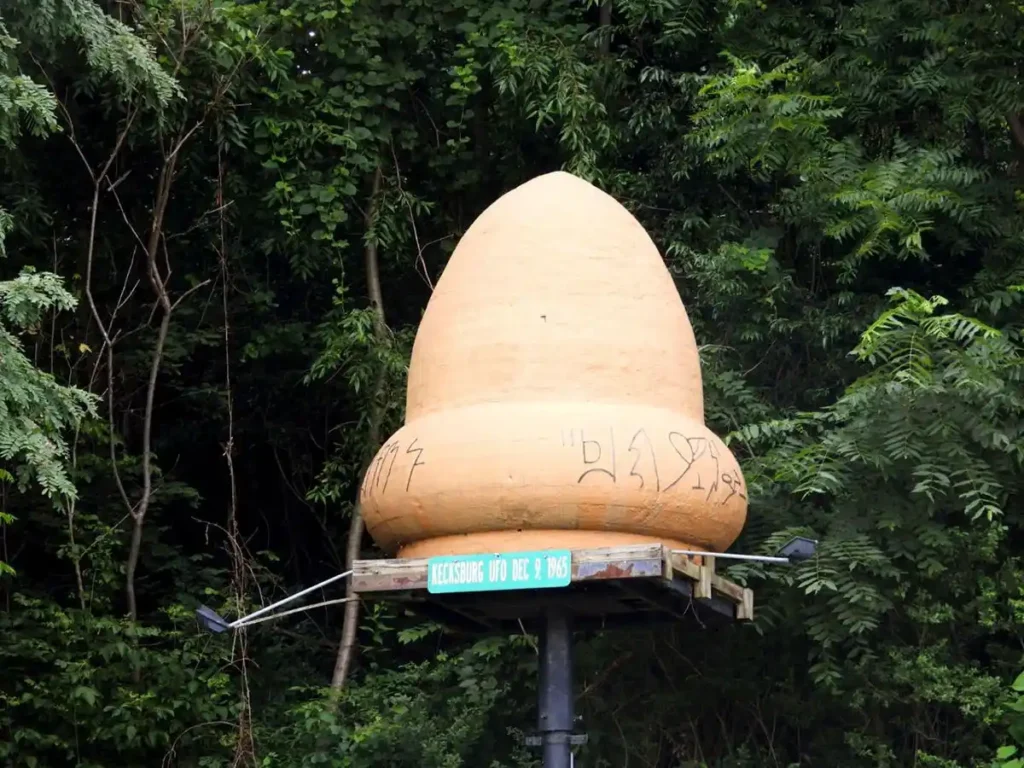
Some people later described an acorn-shaped object, while official explanations connected the sighting to a meteor or another natural event.
A large acorn-shaped monument now represents the mystery and has become a recognizable local landmark, even though the true cause of the incident remains disputed.
15. Kinzua Bridge State Park
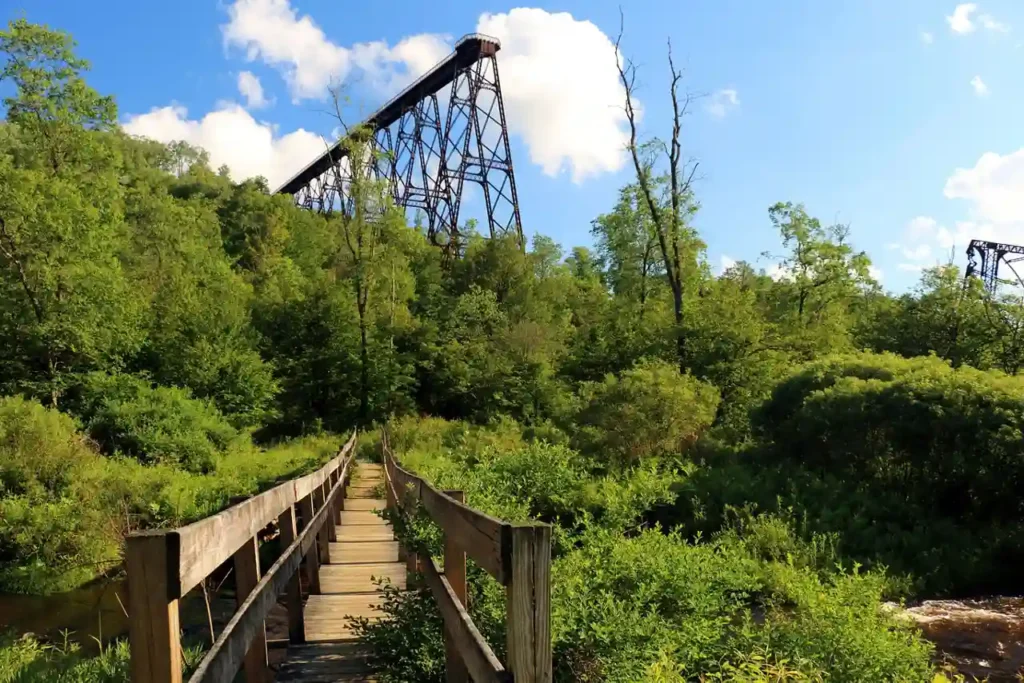
Kinzua Bridge State Park preserves the remains of a massive railroad viaduct that once crossed the Kinzua Creek Valley.
When completed during the nineteenth century, the structure demonstrated the growing engineering power of the American railroad industry.
A tornado destroyed a large section of the bridge in 2003, leaving twisted steel towers scattered across the valley floor.
Part of the surviving structure was later turned into a pedestrian skywalk, offering views of the wreckage, surrounding forest, and deep valley below.
16. Penn’s Cave
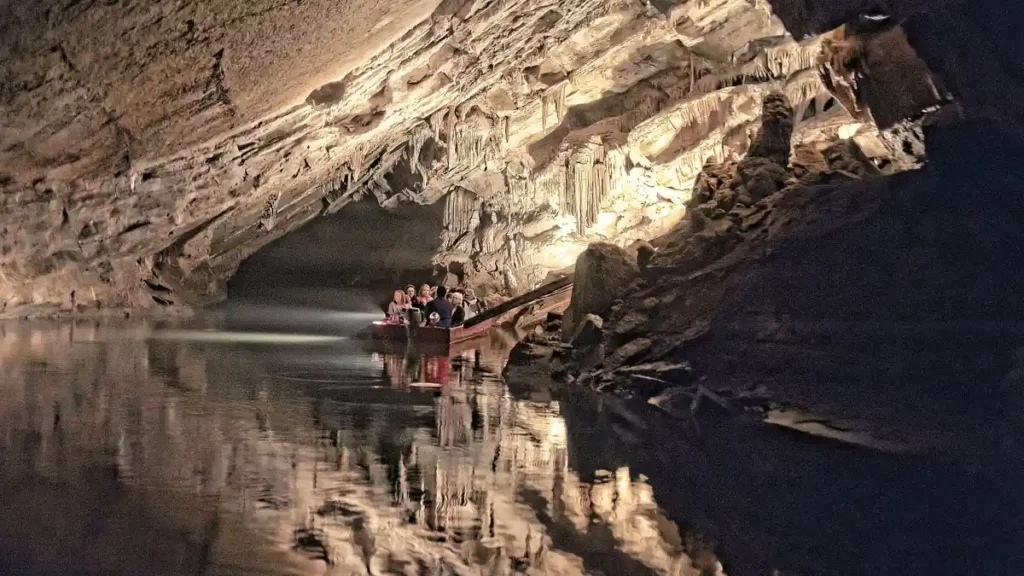
Penn’s Cave offers an underground experience that visitors explore primarily by boat. The water passes through a limestone cavern filled with natural formations, reflected rock walls, narrow passages, and large chambers.
Guides explain the cave’s geology and point out formations that resemble familiar animals, people, and objects.
The combination of dark water, illuminated stone, and steady cave temperatures gives the boat tour an atmosphere unlike Pennsylvania’s typical above-ground attractions.
17. Columcille Megalith Park
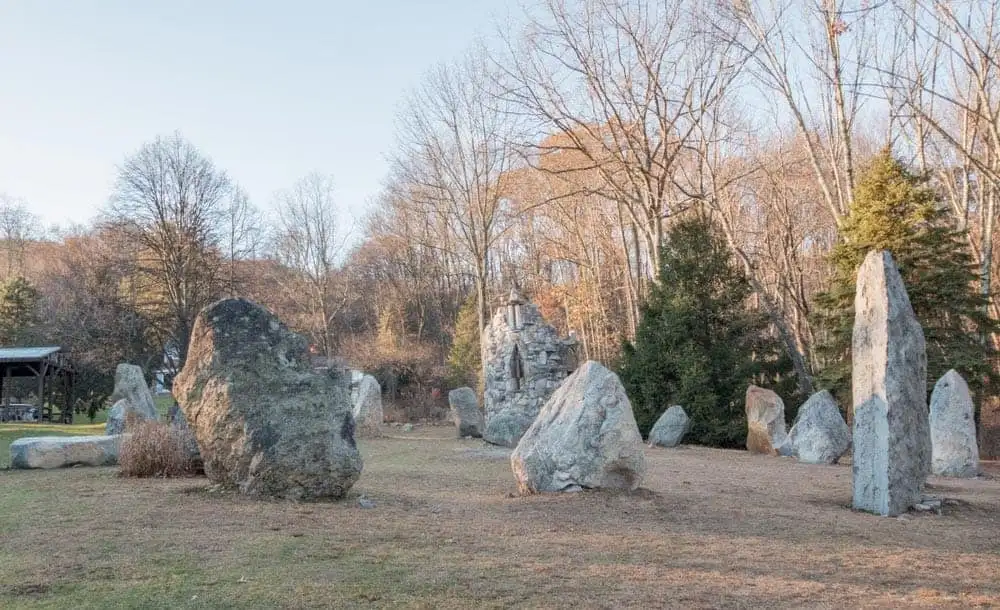
Columcille Megalith Park is a peaceful outdoor space filled with large standing stones and carefully arranged rock formations.
The landscape was inspired by ancient Celtic sites, although the Pennsylvania structures are modern creations rather than prehistoric ruins.
Visitors walk along wooded paths that connect stone circles, quiet clearings, sculptures, and places designed for reflection.
The absence of busy attractions allows the massive stones and natural surroundings to create a calm, mysterious atmosphere.
18. Concrete City
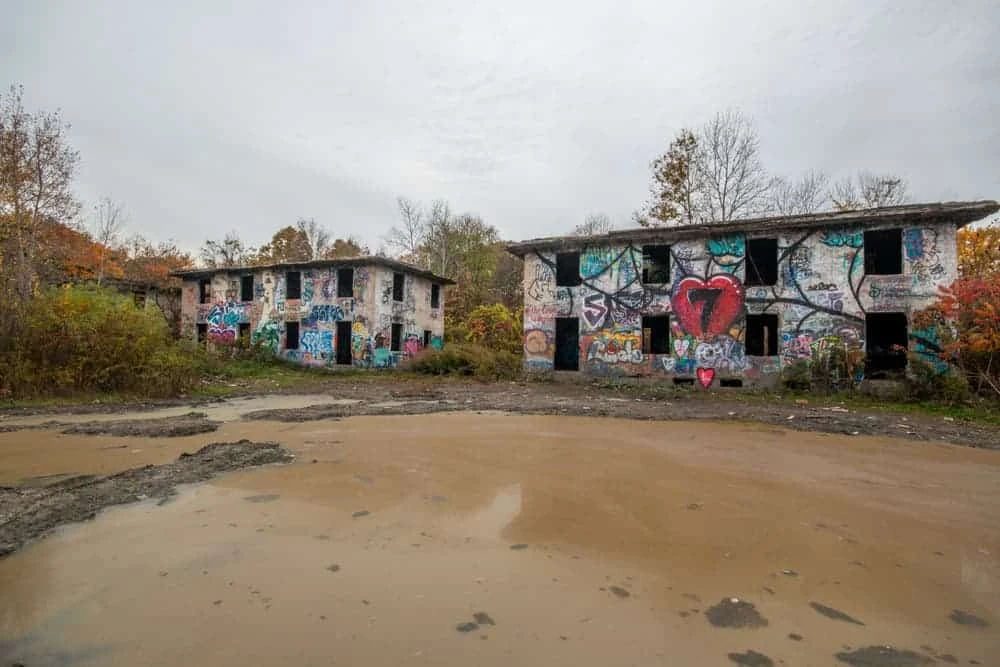
Concrete City is an abandoned housing complex near Nanticoke that was built in 1911 for employees of the local coal industry.
Its concrete duplexes surrounded a shared courtyard and represented an experimental approach to durable worker housing.
Residents left during the 1920s after problems developed with the buildings and the property became too expensive to improve.
The roofless, graffiti-covered ruins still stand today, creating a stark reminder of the coal region’s industrial growth, decline, and abandoned communities.