
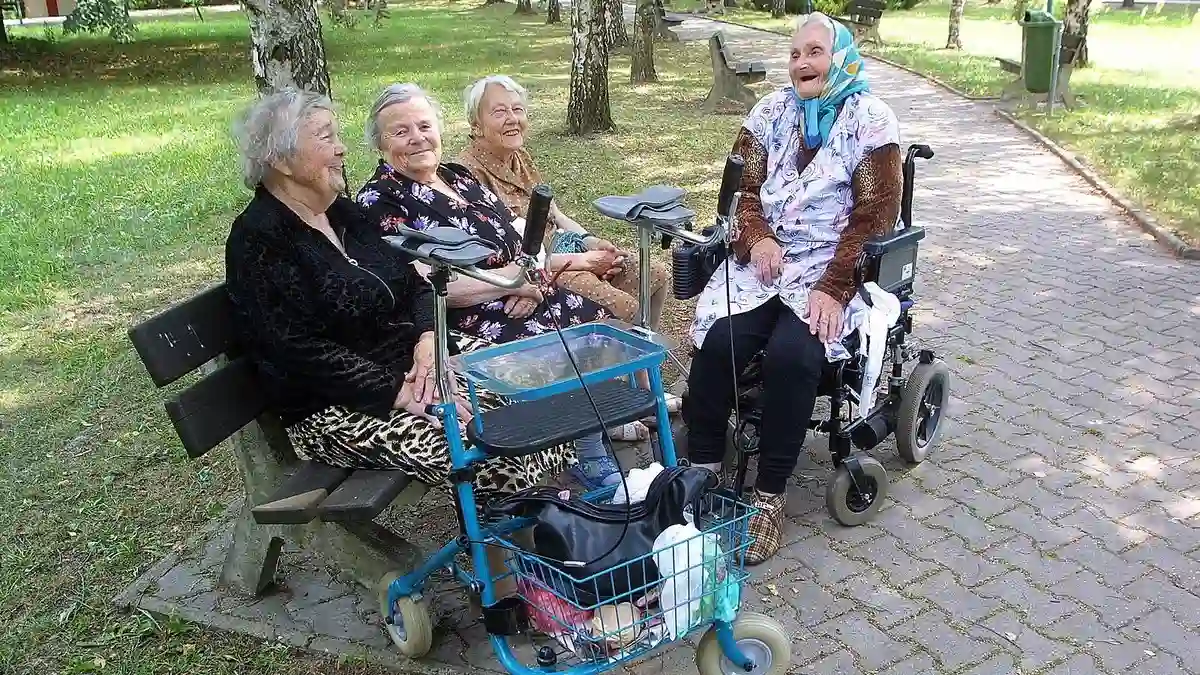
A retirement town may look charming during a short visit, yet daily life can feel very different after you move. Walkability affects far more than exercise. It shapes access to groceries, doctors, parks, cafés, friends, and community events.
A careful street-level check can reveal steep slopes, broken sidewalks, unsafe crossings, poor lighting, and long distances hidden by a map. Before buying a home, spend time walking the routes you would use each week.
The right questions can help you judge comfort, safety, cost, and independence before making a major financial commitment. That insight can prevent an expensive mistake later.

Why Should You Test a Retirement Town Before Buying?

A retirement town can seem attractive during a weekend visit. Daily life may feel quite different once you depend on its streets, shops, medical services, and public spaces.
Walkability supports independence, regular movement, and social connection. Easy access to essential places can also reduce driving costs and make daily errands less stressful.
Maps rarely show steep hills, damaged sidewalks, poor lighting, or difficult road crossings. Walk through the area at different times to understand how safe and practical it feels.
Before purchasing a home, check:
- Distance to grocery stores and pharmacies
- Access to doctors and medical centers
- Sidewalk condition and street lighting
- Safety of crossings and intersections
- Availability of benches and shaded areas
- Access to parks, cafés, and social activities
- Traffic levels during busy hours
1. Can You Walk to a Grocery Store?

The older woman carries several grocery bags along a residential path. Her walk shows why the distance from shops to home matters during retirement.
Test the route while carrying a few items, since the return trip may feel harder. Check the pavement, slopes, resting places, shade, and safe crossings before buying.
- Measure the full walking distance
- Notice steep or uneven sections
- Look for benches and shaded areas
- Check traffic and road crossings
- Consider the weight of grocery bags
2. Is a Pharmacy Within Easy Reach?
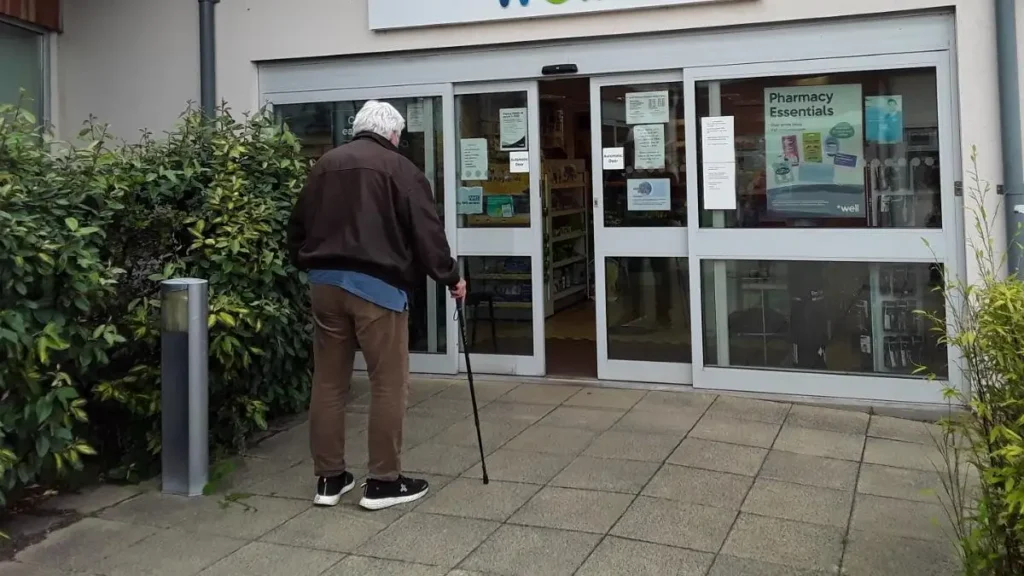
An older man uses a walking stick as he approaches a local pharmacy entrance. The image shows how convenient pharmacy access can support independence during retirement.
Check the walking distance, entrance design, pavement, and opening hours. A pharmacy should remain easy to reach when mobility becomes limited or urgent medicine is needed.
- Measure the route from home
- Check for steps and steep slopes
- Look for automatic doors
- Review opening hours
- Ask about prescription delivery services
3. Are the Sidewalks Smooth and Well Maintained?

A woman over 60 walks her dog along a clean residential sidewalk. The smooth surface and open path appear comfortable for regular walks and daily activity.
Inspect sidewalks for cracks, raised edges, loose paving, and blocked sections. Even small surface problems can increase the risk of trips or falls.
- Check for cracks and uneven concrete
- Notice the width of the path
- Look for clear driveway crossings
- Test the route after rain
- Check seasonal maintenance services
4. Can You Cross Busy Roads Safely?

A woman over 60 pulls a shopping trolley across a marked pedestrian crossing while several cars approach. The scene shows how traffic speed and crossing time can affect safety.
Walk across major roads before choosing a home in the area. Check traffic signals, visibility, crossing width, curb height, and the time allowed for pedestrians.
- Count the seconds allowed to cross
- Look for clear traffic signals
- Check for lowered curbs
- Watch driver behavior
- Test crossings during busy hours
5. Are the Streets Well Lit After Sunset?

A woman stands with her dog on an illuminated street after dark. Streetlamps and building lights make the route visible, though the cobblestone surface may require extra care.
Visit the neighborhood after sunset to check lighting conditions. Look for dark corners, uneven paths, clear crossings, and safe routes between home and essential services.
- Check lighting along the full route
- Notice gaps between streetlamps
- Look for dark entrances and corners
- Test visibility at road crossings
- Inspect uneven surfaces after dark
6. Does the Area Have Steep Hills or Slopes?

An older woman uses a handrail while climbing a steep outdoor path. The image shows how elevation changes can demand extra strength, balance, and care.
Walk from the home to local shops and services before buying. Notice hills, steps, handrails, resting points, and safer alternative routes.
- Test the route at a comfortable pace
- Look for secure handrails
- Check for steps without ramps
- Notice places to stop and rest
- Consider rain and icy conditions
7. Are Benches and Rest Areas Available?

An older woman sits comfortably on an outdoor bench with her walking stick. The seat offers a useful place to pause, recover, and enjoy the surroundings.
Check how often benches appear along common walking routes. Seats with back support, shade, firm surfaces, and clear access can make longer trips more manageable.
- Look for benches along main routes
- Check seat height and back support
- Find shaded resting areas
- Inspect access around each bench
- Notice the distance between rest points
8. Can You Reach Medical Care Without Driving?

An older woman leaves a consultation room while holding her medical records. The image represents access to routine appointments and local health services during retirement.
Check how easily you can reach clinics, specialists, urgent care, and hospitals without a car. Walking routes, public transport, community shuttles, and medical ride services can protect your independence.
- Measure the distance to local clinics
- Check public transport routes
- Ask about community shuttles
- Review medical ride services
- Locate the nearest urgent care center
9. Are Parks and Social Spaces Close to Home?
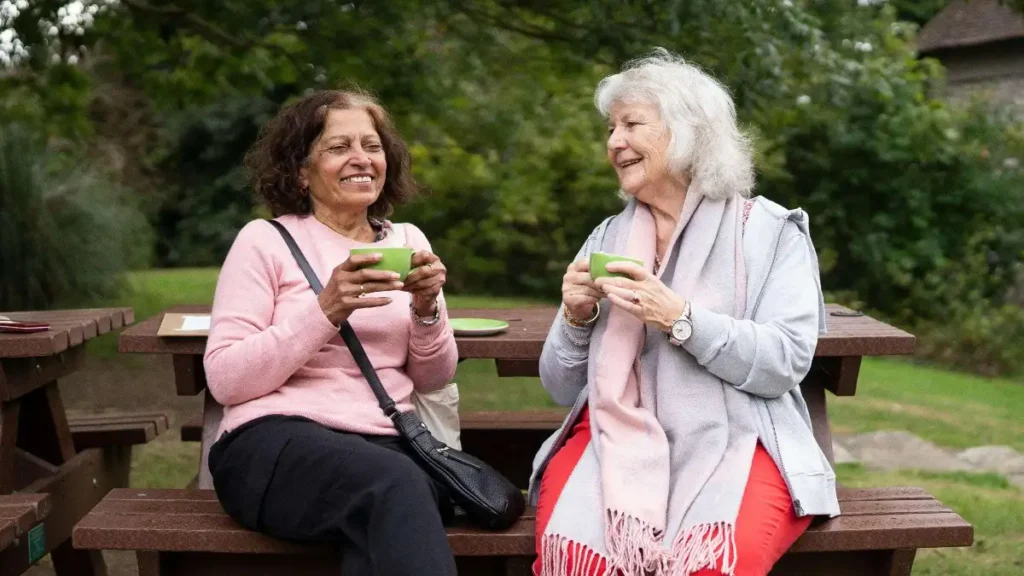
Two older women share drinks and conversation at a picnic table in a green park. The setting shows how local outdoor spaces can support friendship, relaxation, and regular social contact.
Visit parks and community areas before choosing a home. Check their distance, seating, shade, walking paths, activity options, and general sense of safety.
- Measure the walk from home
- Look for comfortable seating
- Check path conditions
- Notice shade and shelter
- Review community activities
- Visit at different times of day
10. Does Traffic Make Walking Noisy or Stressful?
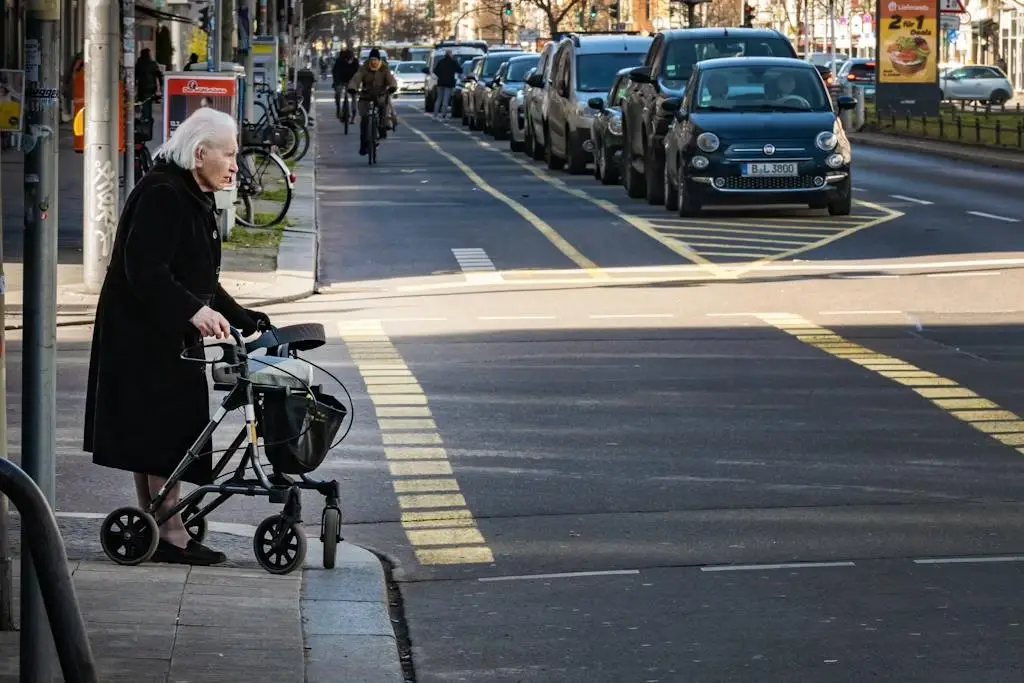
An older woman waits at a busy road crossing with her walking frame. Cars, cyclists, several traffic lanes, and limited space create a demanding street environment.
Visit the area during morning and evening traffic. Listen for road noise, watch vehicle speed, and check how long pedestrians must wait before crossing.
- Observe traffic during busy hours
- Listen for constant road noise
- Check vehicle speed
- Notice crowded cycling lanes
- Measure pedestrian waiting time
- Look for quieter walking routes
11. Would You Feel Comfortable Walking There Alone?
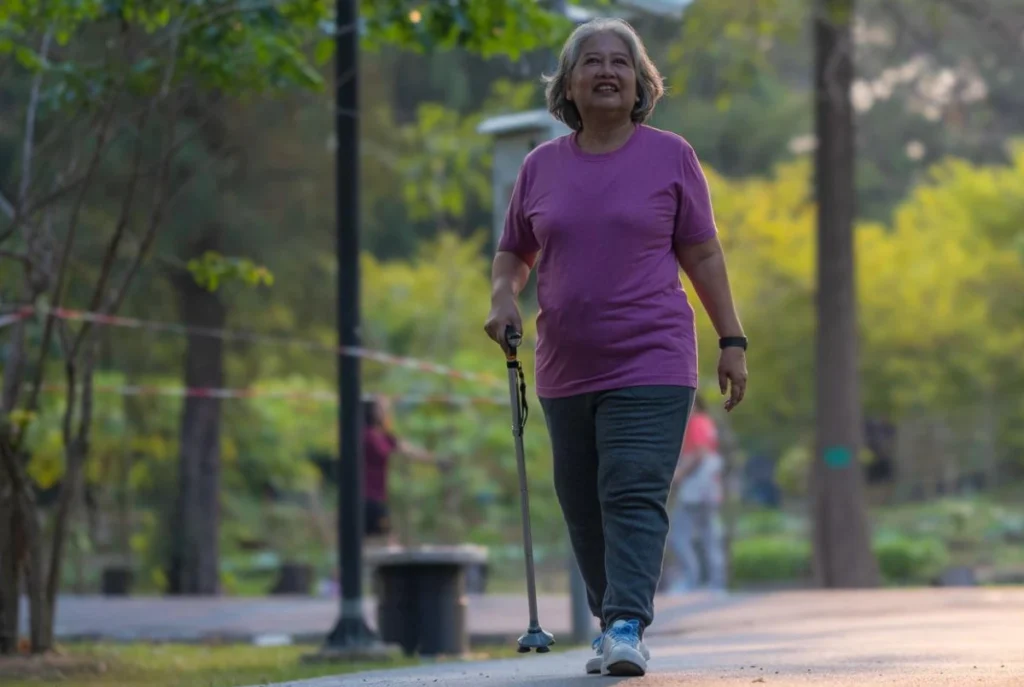
A woman over 60 walks alone with a cane along a wide park path. Her relaxed expression and the open surroundings suggest a calm place for independent walking.
Visit the area alone at several times of day before buying. Notice visibility, lighting, foot traffic, emergency access, and any isolated sections along common routes.
- Check sightlines along the path
- Look for regular foot traffic
- Notice lights and security cameras
- Identify isolated areas
- Confirm mobile phone coverage
- Locate emergency contact points