
Traveling alone at 67 can feel freeing until the small surprises begin. A missed train becomes your problem to solve. Heavy luggage feels heavier when no one can watch it. Quiet dinners may bring peace one night and loneliness the next.
Yet solo travel also reveals strength, patience, and confidence you may not know you have. After a year on the road, I learned that planning covers only part of the experience.
The rest comes from handling fatigue, safety, money, health, and unexpected kindness. These 14 lessons show what guidebooks rarely explain before an older traveler leaves home alone confidently.
What Does Solo Travel at 67 Really Teach You?
Solo travel at 67 can bring freedom, confidence, and a fresh sense of purpose. It also places every decision, delay, and unexpected problem in your hands. A missed train feels more stressful when you must find the next route alone.
Heavy luggage, quiet dinners, unfamiliar streets, and sudden fatigue can also test your patience. After one year of traveling alone, I learned that good planning covers only part of the experience.
These 14 lessons reveal the practical and emotional challenges that most travel guides rarely mention.
Important realities include:
- Managing delays without immediate support
- Protecting your health, money, and belongings
- Planning rest around energy levels
- Handling loneliness during quiet moments
- Accepting help while maintaining independence
1. Loneliness Can Appear in Beautiful Places
A solo traveler sits near the edge of a vast canyon, surrounded by layered cliffs and open sky. The remarkable view contrasts with the quiet isolation of experiencing it alone.
Beautiful destinations do not always prevent loneliness. Regular calls with family, group tours, and friendly conversations can bring connection during long solo trips.
2. Your Energy Determines Each Day’s Schedule
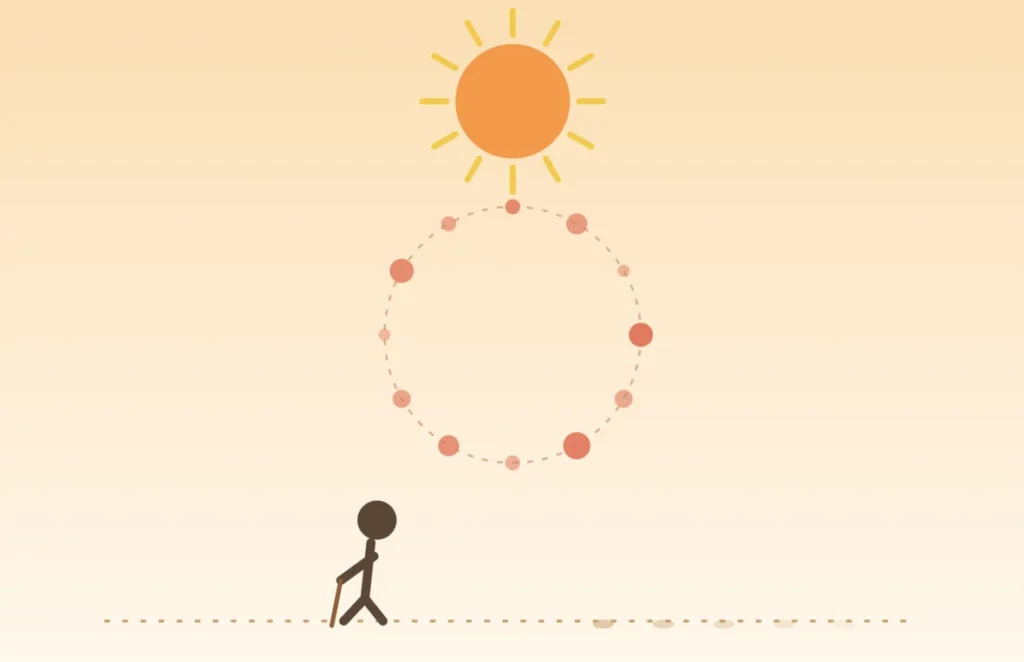
The image shows a traveler walking with a cane beneath a bright sun and a circle of changing markers. It reflects how energy can rise and fall throughout a long travel day.
Plan demanding activities during the hours when you feel strongest. Leave room for breaks, slower afternoons, and early evenings when your body needs rest.
3. Heavy Luggage Quickly Becomes a Burden
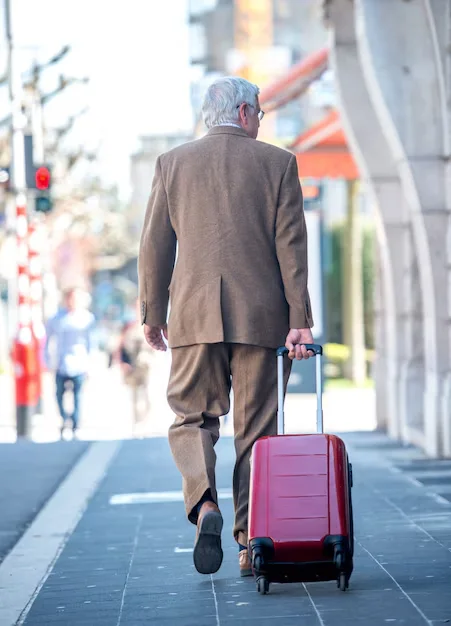
The image shows an older solo traveler pulling a red suitcase along a city sidewalk. Even one rolling bag can become exhausting across stations, uneven streets, steep steps, and long walking routes.
Packing less protects your energy and makes each transfer easier. Choose lightweight luggage, limit duplicate clothing, and leave space instead of filling every compartment.
4. Small Travel Delays Feel Bigger Alone
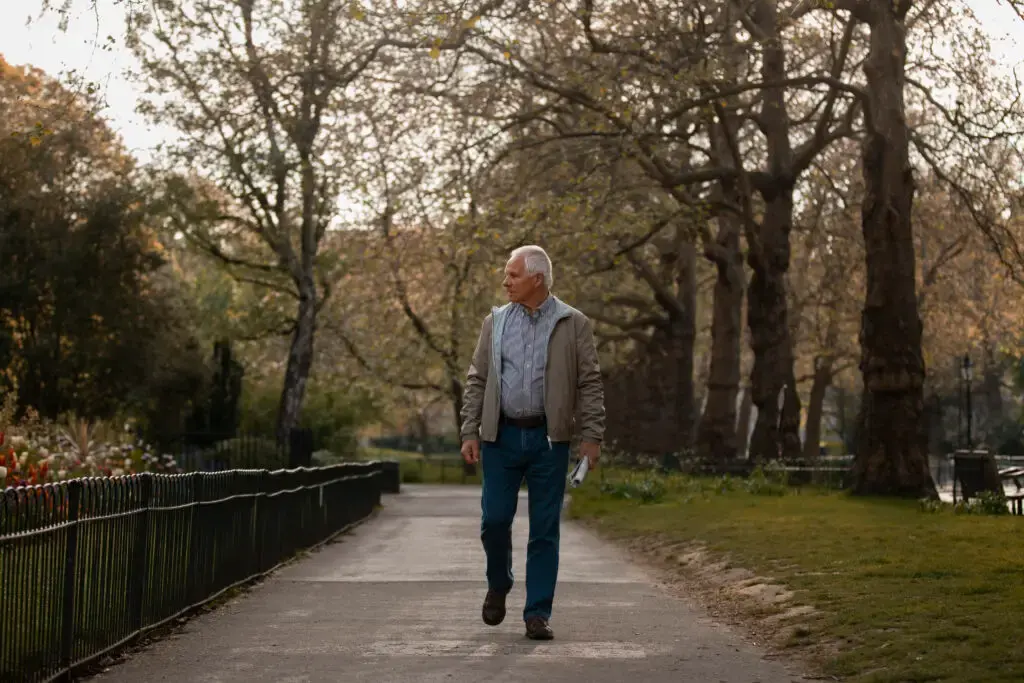
The image shows an older traveler walking alone through a quiet park while holding a folded map. His searching glance suggests that plans have changed and a new route is needed.
Without a companion to share the problem, a small delay can feel stressful. Extra time and a simple backup plan can make sudden changes easier to manage.
5. Eating Alone Takes Time to Feel Natural
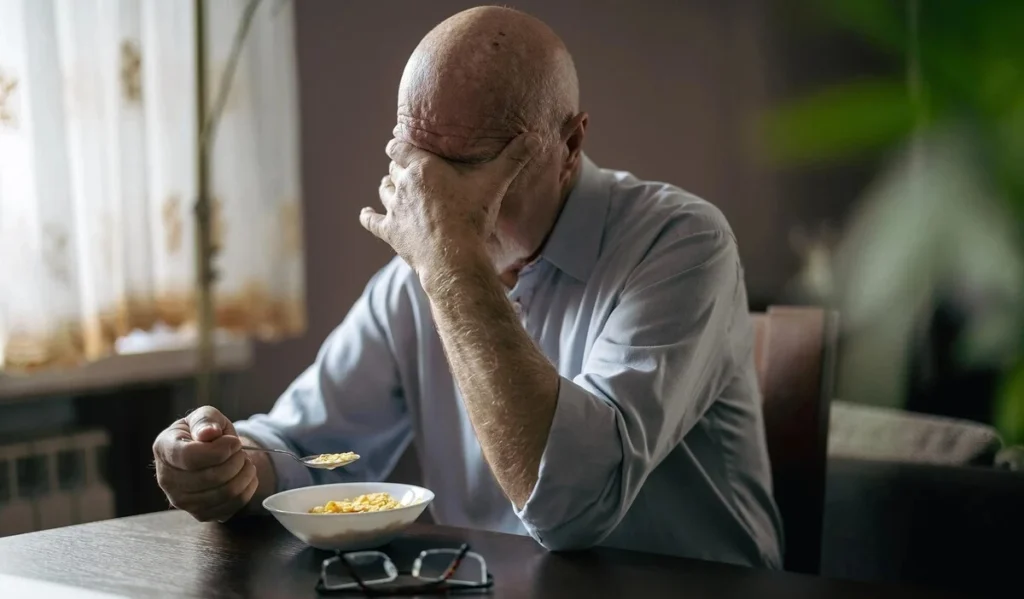
The image shows an older man sitting alone at a table with a small bowl of food. His hand covers his face, giving the quiet meal a heavy and uncomfortable mood.
Dining alone can feel awkward during the first weeks of solo travel. Choosing casual cafés, sitting near a window, or bringing a book can make the experience feel easier.
6. Personal Safety Requires Constant Awareness
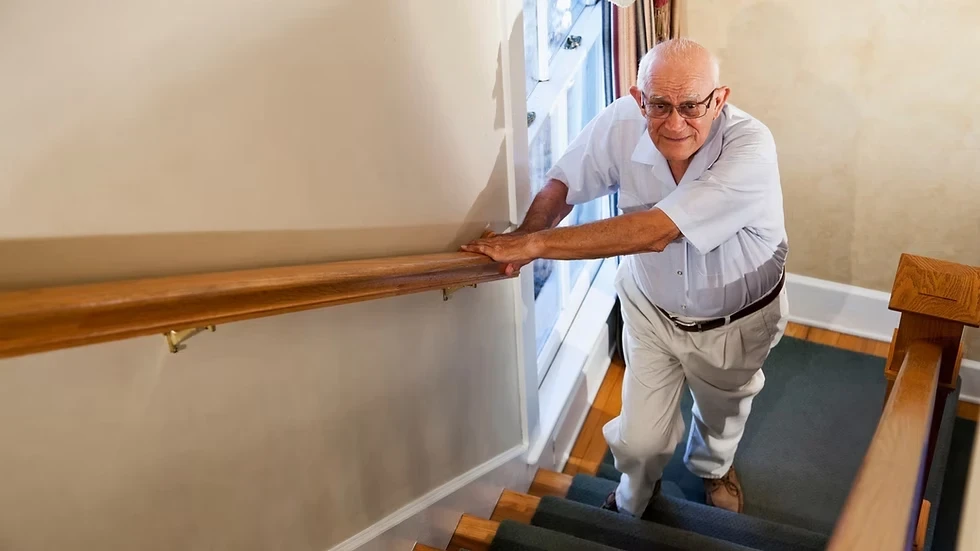
The image shows an older traveler carefully climbing stairs while holding the handrail. Unfamiliar buildings, narrow steps, poor lighting, and missing elevators can create unexpected safety concerns.
Check hotel access before booking and avoid rushing on stairs. Choosing well lit routes and asking for help with luggage can reduce unnecessary risk.
7. Health Problems Need a Clear Backup Plan

The image shows an older man discussing his health with a doctor. A medical problem can feel more frightening when it happens far from home and no travel companion is present.
Carry a medicine list, insurance details, and emergency contacts. Learn where nearby clinics are located and keep essential medicine in your personal bag.
8. Technology Becomes Your Travel Companion
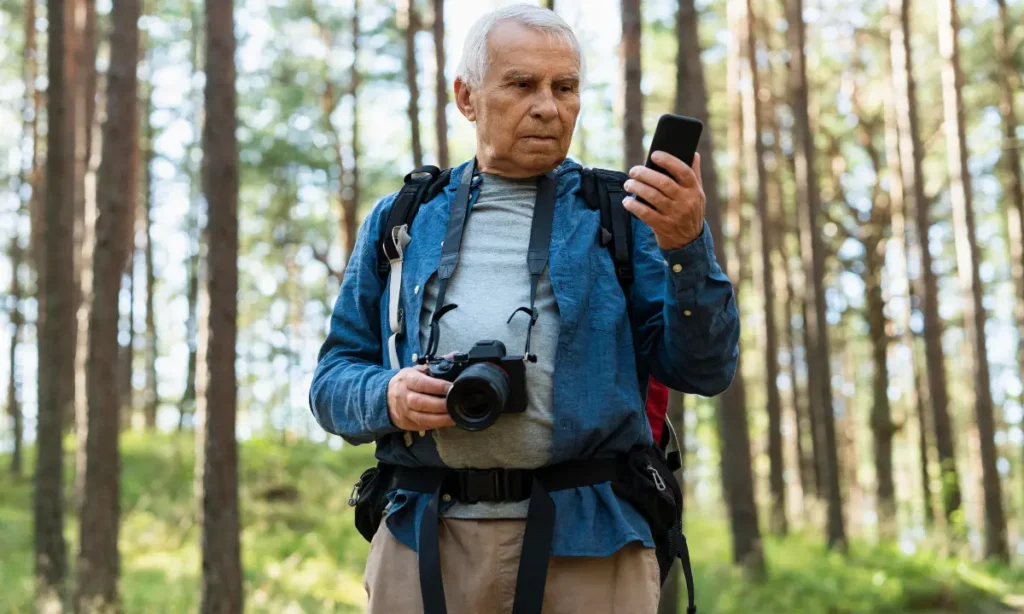
The image shows an older solo traveler checking his phone while carrying a camera and backpack through a forest. A smartphone can provide directions, reservations, translations, and quick contact with family.
Download offline maps before leaving reliable service areas. Carry a portable charger and keep important addresses written on paper in case the phone stops.
9. Unexpected Costs Can Disrupt Your Budget
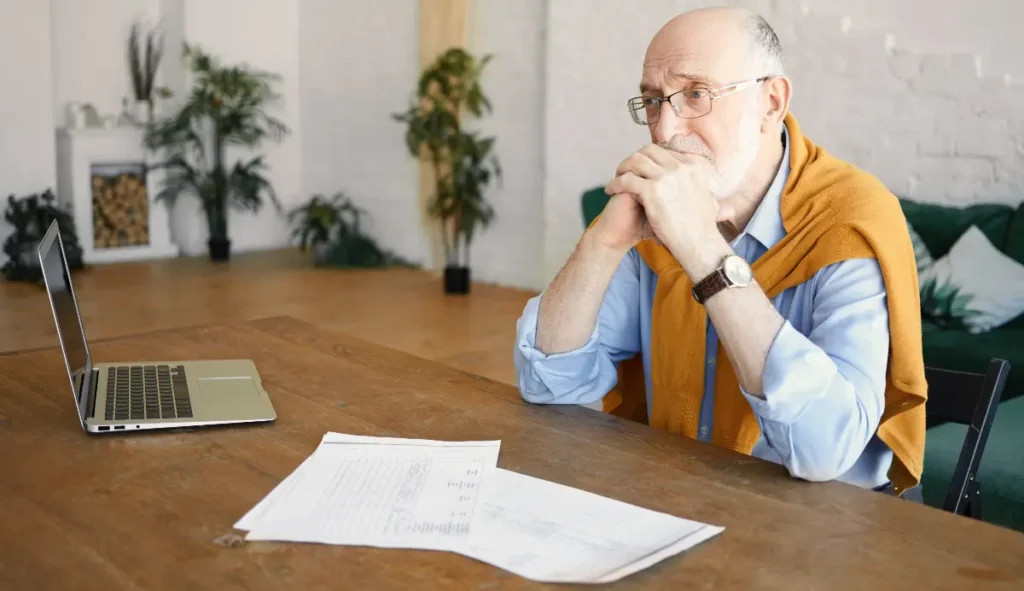
The image shows an older man reviewing papers beside a laptop with a worried expression. Extra transport, medical needs, baggage fees, and last-minute accommodation can quickly increase travel costs.
Keep a separate emergency fund and review spending each week. A financial cushion makes sudden changes easier to handle without cutting essential parts of the trip.
10. Making Friends Requires More Effort
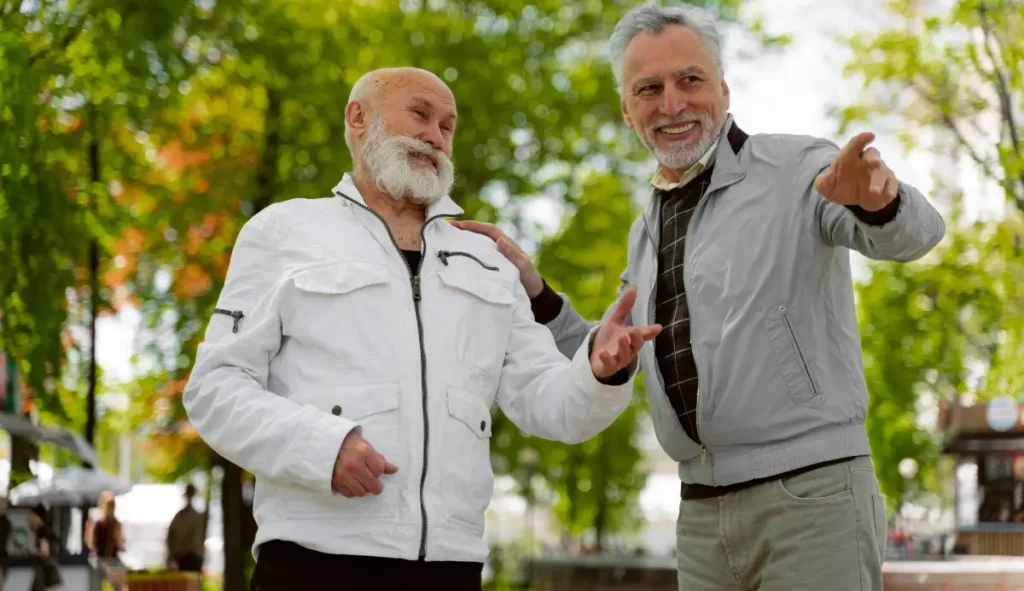
The image shows two older men smiling and talking in a sunny park. Their relaxed conversation reflects the connection that can make solo travel feel warmer and less isolated.
Friendships rarely happen without effort when you travel alone. Local tours, walking groups, classes, and shared cafés can create natural chances to meet people.
11. Daily Decisions Can Become Exhausting
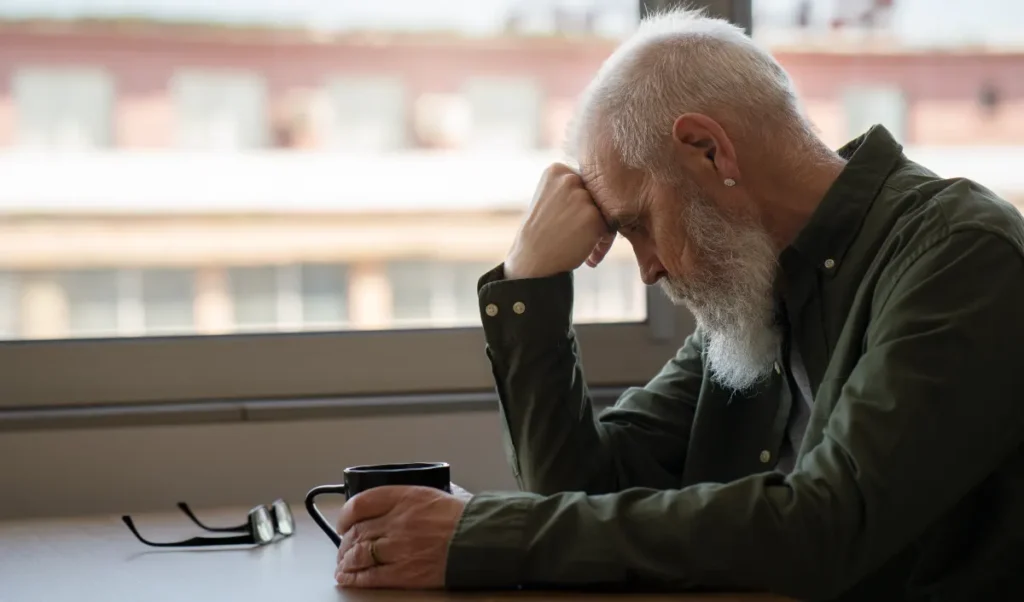
The image shows an older man sitting alone with a mug while resting his forehead against his hand. His tired posture reflects the mental weight of handling every travel choice alone.
Routes, meals, bookings, and safety checks can drain your attention. Choose the next day’s main plan each evening and leave some time unscheduled.
12. Homesickness Arrives at Unexpected Moments
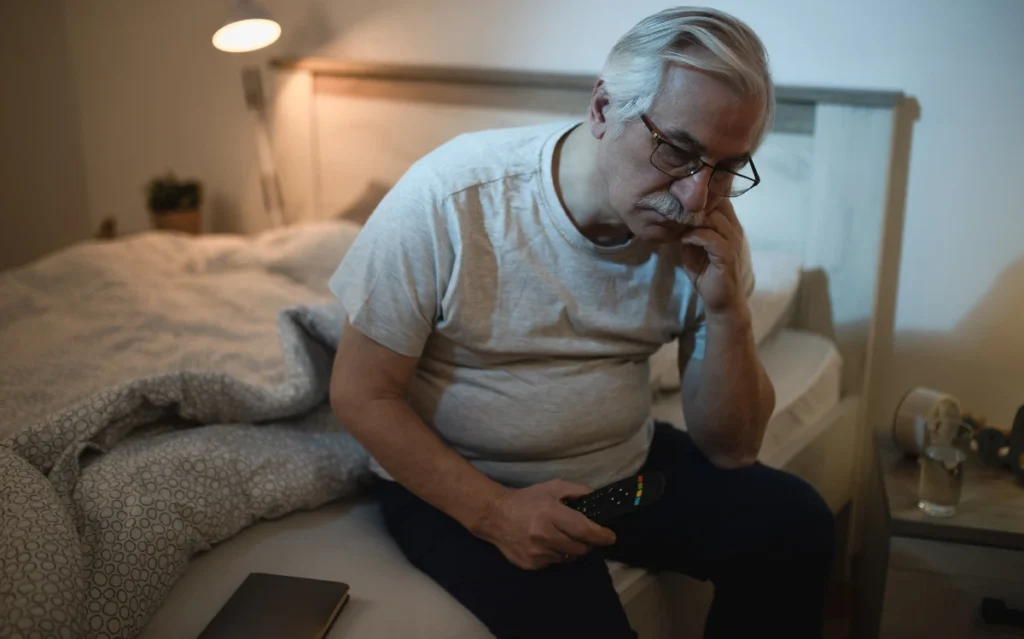
The image shows an older traveler sitting on the edge of a bed at night while speaking on the phone. The quiet room and his lowered gaze suggest a strong need for a familiar voice.
Homesickness can surface after a busy day or during a lonely evening. Regular calls, familiar music, and a simple nightly routine can make distant places feel less isolating.
13. Accepting Help Does Not Reduce Your Independence
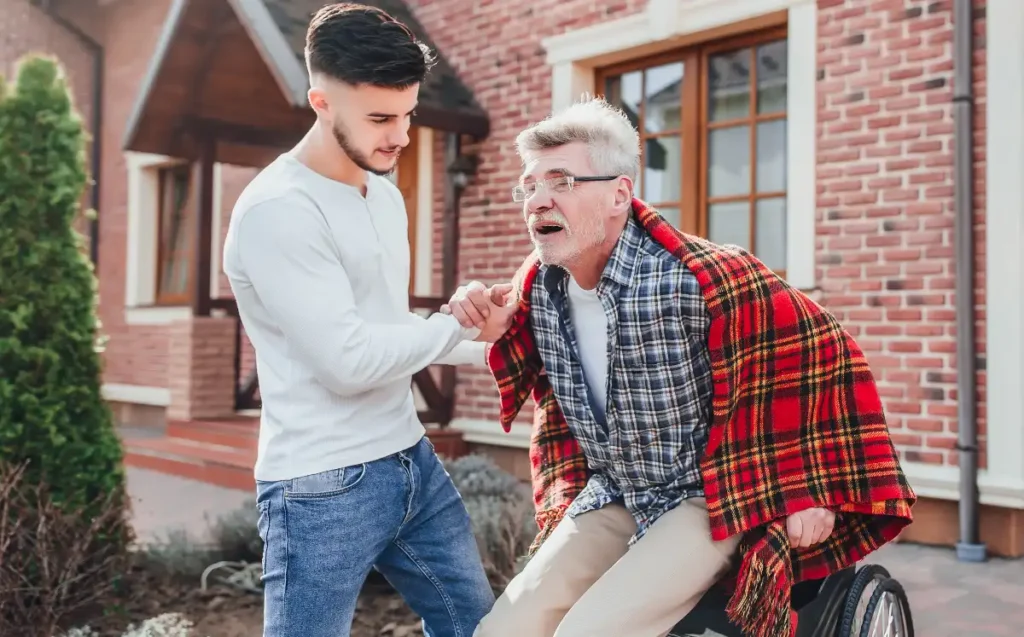
The image shows a younger man offering steady support as an older man rises from a wheelchair. The assistance helps him move safely while keeping him involved in the action.
Accepting help with stairs, luggage, or transportation is a practical choice. Independence means making your own decisions, including knowing when support can protect your comfort and safety.
14. Returning Home Can Feel Surprisingly Difficult
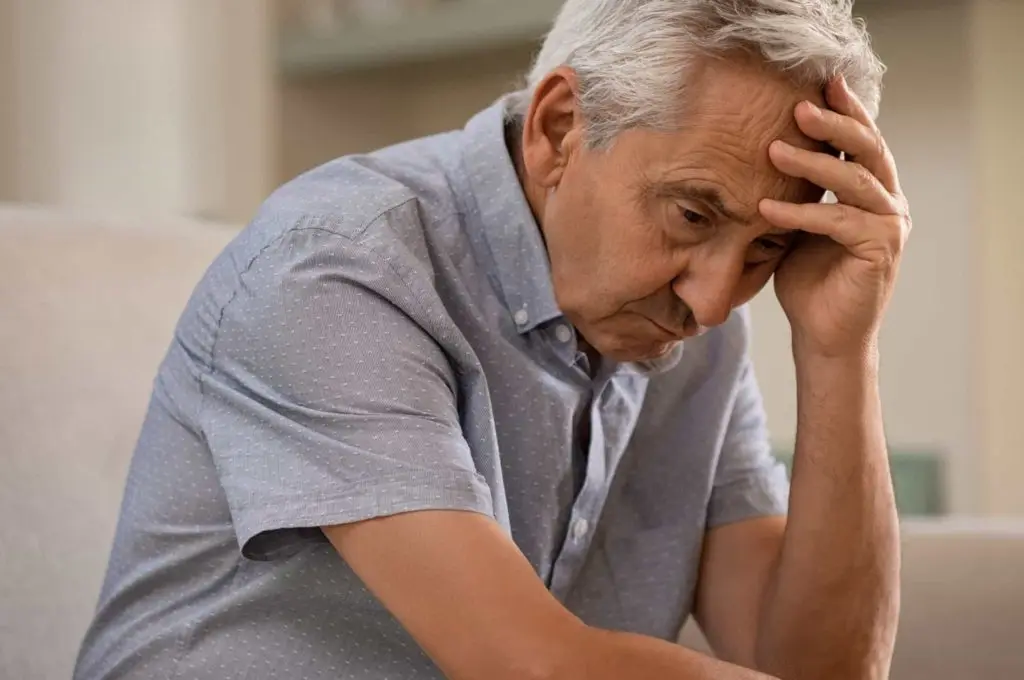
The image shows an older man sitting indoors with his hand against his forehead and a distant expression. His posture reflects the sadness and uncertainty that can follow a long solo trip.
After a year of constant movement, familiar routines may suddenly feel too quiet. Give yourself time to adjust, reconnect with people, and build meaningful plans at home.