
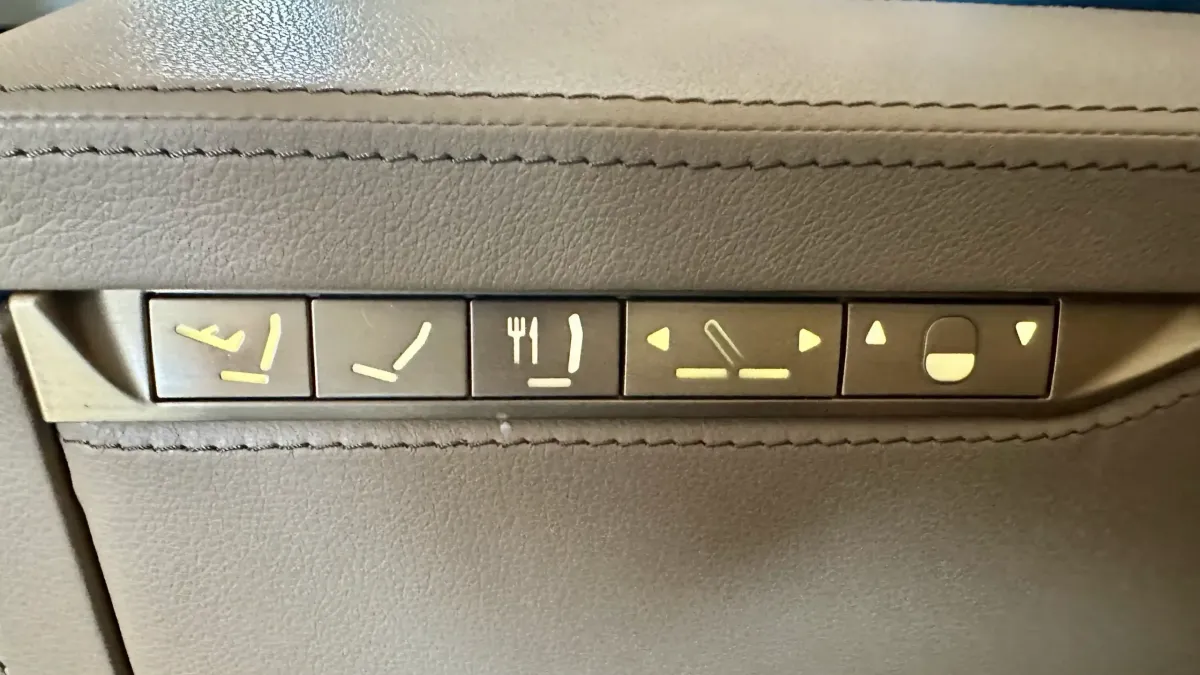
Airlines rarely explain every feature built into an airplane seat, so many passengers miss tricks that can make a flight more comfortable.
A hidden button may lift an aisle armrest, while smart seat choices can provide extra space, easier access, or a quieter ride.
Knowing what to check before boarding can also help you avoid stiff legs, poor sleep, and the wrong seat near busy cabin areas.
Some features vary by aircraft and airline, but they are often easy to find once you know where to look. These airplane seat tricks can help you travel with less stress and more comfort.
Airplane Seat Features Most Passengers Overlook
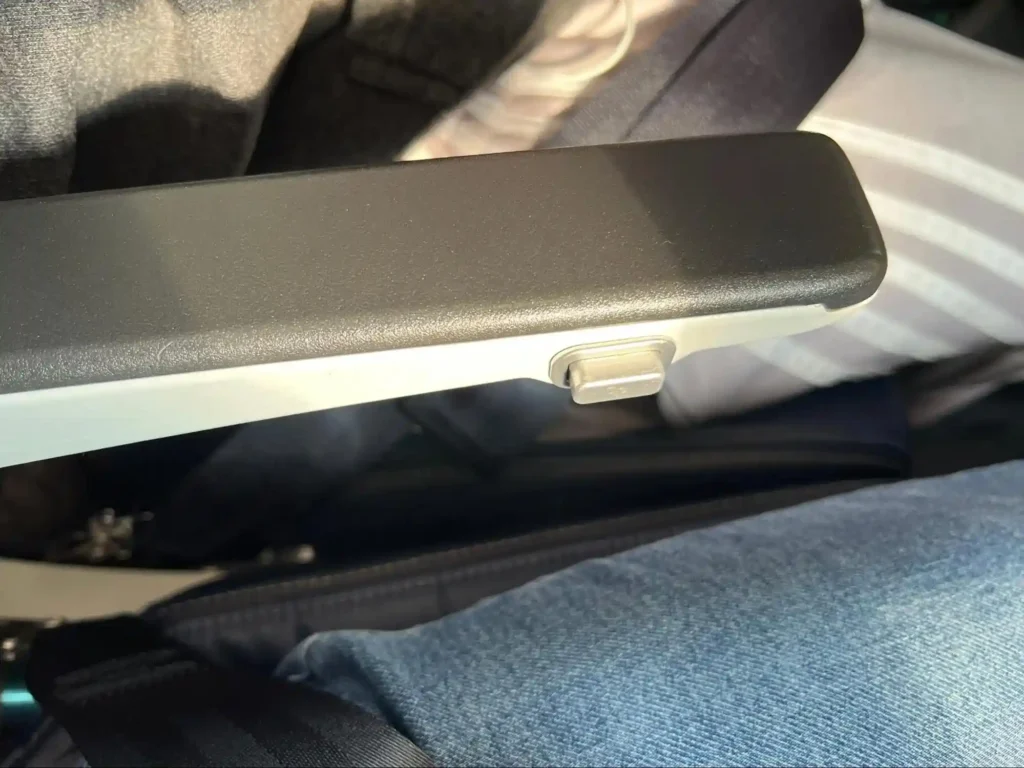
Airplane seats often include useful features that passengers never notice. Hidden buttons, adjustable headrests, and movable armrests can make a long flight feel more comfortable.
Your seat location also affects the travel experience. Seats near restrooms may face more noise and foot traffic, while certain rows can offer extra legroom or faster cabin access.
Aircraft layouts and seat features can differ across airlines. Checking the seat map and learning a few simple tricks before boarding can help you make a smarter choice.
Key details to check include:
- A hidden release button beneath the aisle armrest
- Adjustable headrest wings for better neck support
- Extra legroom near some exit rows and bulkheads
- Seats located away from restrooms and service areas
- Power outlets and entertainment controls near the seat
- Limited recline in the final row of some cabins
1. The Algorithm Illusion
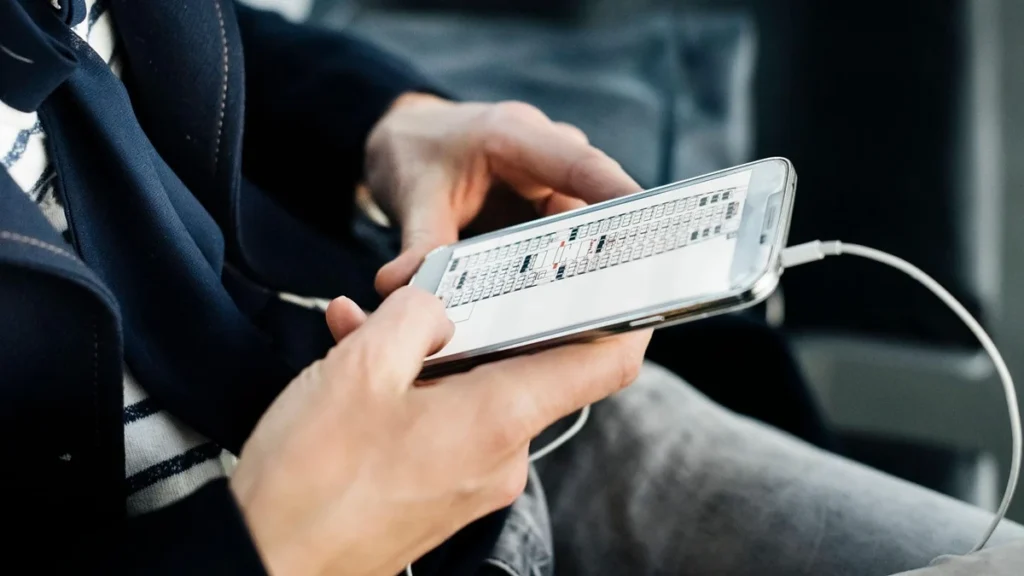
The image shows a traveler viewing an airline seat map on a phone. Some seats may appear occupied even when the airline has simply restricted them for operational or pricing reasons.
Avoid paying for a seat immediately because the map looks full. More choices may appear as departure approaches.
- Check the seat map again before check-in
- Compare the price with the comfort offered
2. The Tail End Cabin Problem
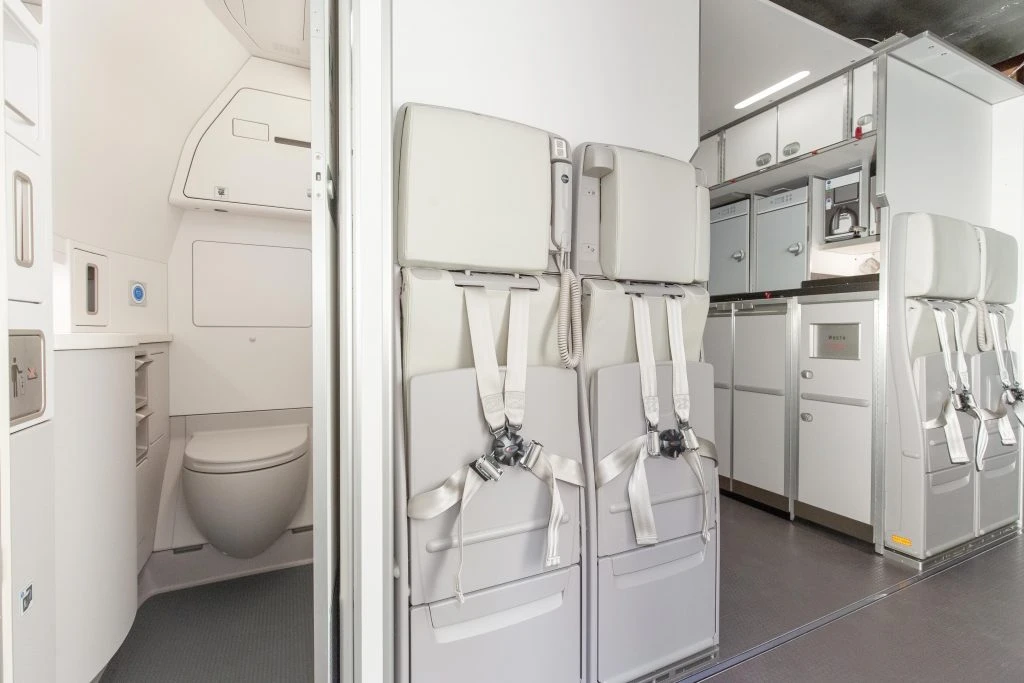
This photograph shows the rear galley and lavatory area. Seats close to this section often experience more foot traffic, door movement, crew activity, and cabin noise.
Some final rows also have limited recline due to the wall behind them. Choose a seat several rows away when comfort and quiet matter.
- Check the location of restrooms
- Avoid the final row when recline is limited
3. Choose Seats Close to the Wings
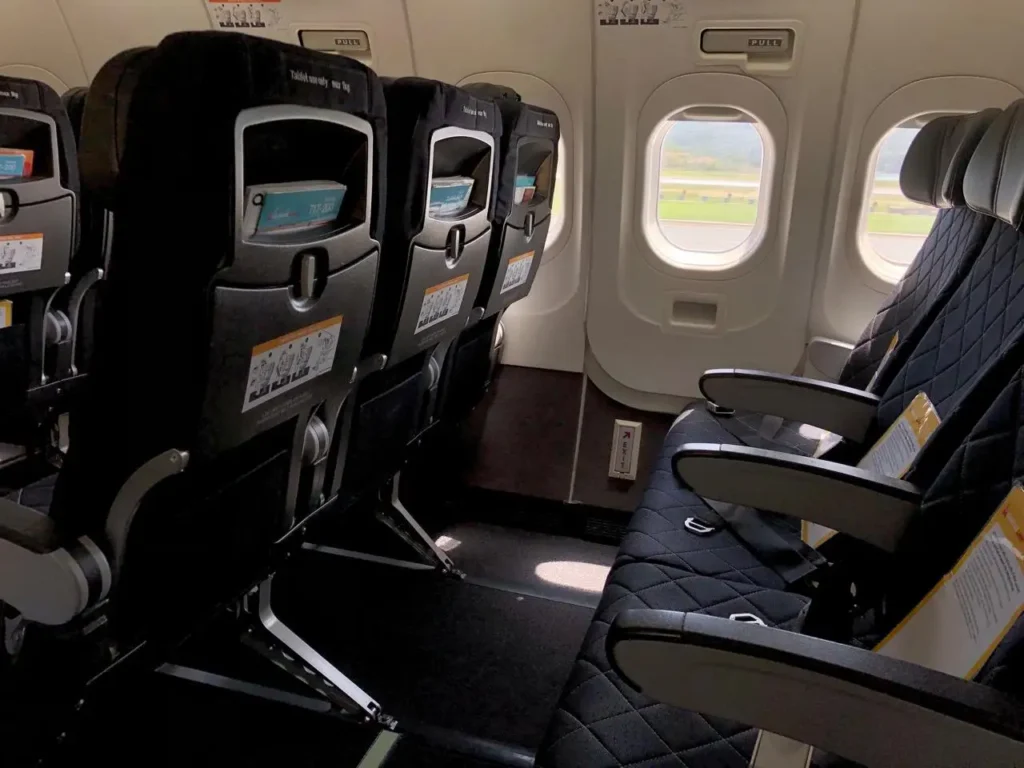
The pictured seats sit in an overwing exit area. Seats close to the wings are near the aircraft’s center of gravity and may feel steadier during turbulence.
Exit rows can also provide more legroom. However, passengers must meet safety requirements and may face storage restrictions.
- Look for the wing position on the seat map
- Review exit row rules before booking
4. Watch for Cabin Noise Zones
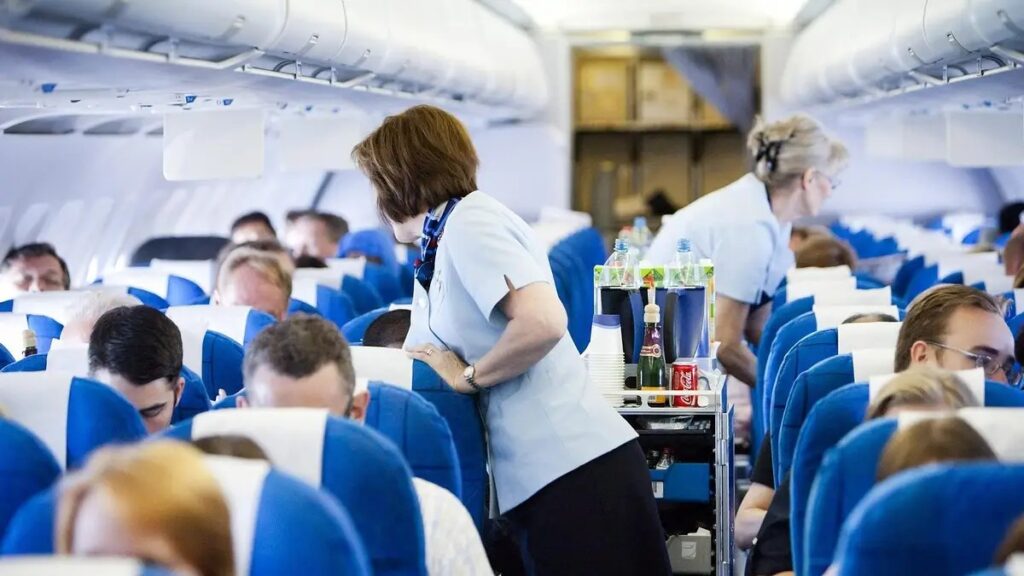
A busy cabin with passengers and service activity appears in this image. Seats close to galleys can experience cart movement, crew conversations, lights, and meal preparation sounds.
Engine noise can also vary across the cabin. Travelers seeking a calmer flight should consider seats forward of the engines and away from service areas.
- Avoid rows beside a galley
- Consider a window seat for less aisle traffic
5. Window Seat or Aisle Seat
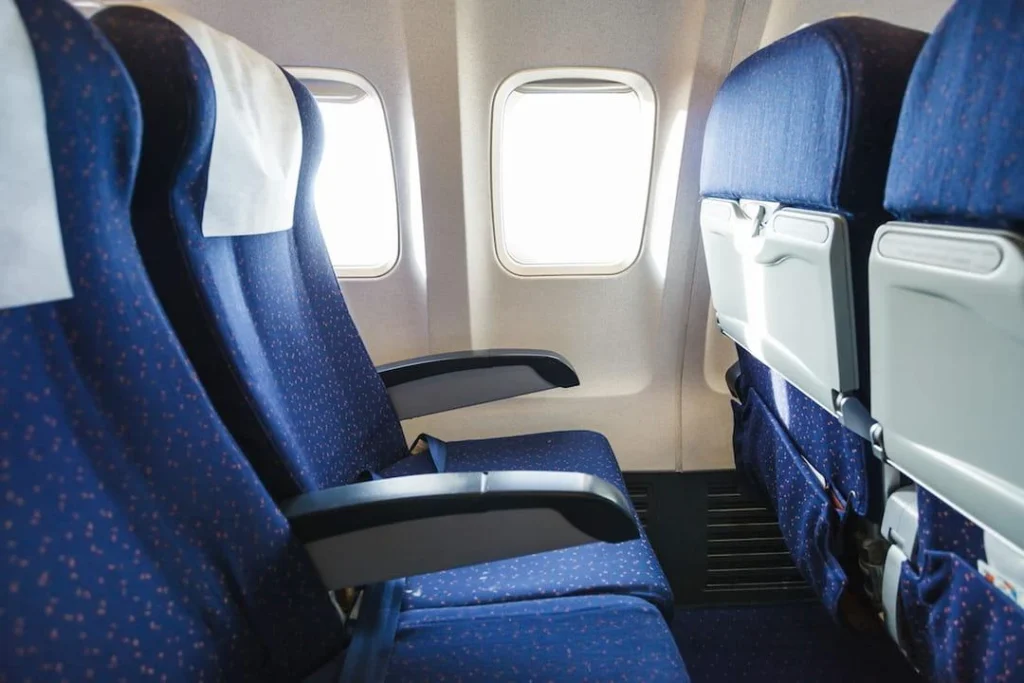
The photograph clearly presents both seat choices. Window seats provide wall support, outside views, and control over the window shade.
Aisle seats make standing, stretching, and reaching the restroom easier. They can be useful for travelers with stiffness or short connections.
- Choose the window for rest and privacy
- Choose the aisle for easier movement
6. Leave the Middle Seat Open
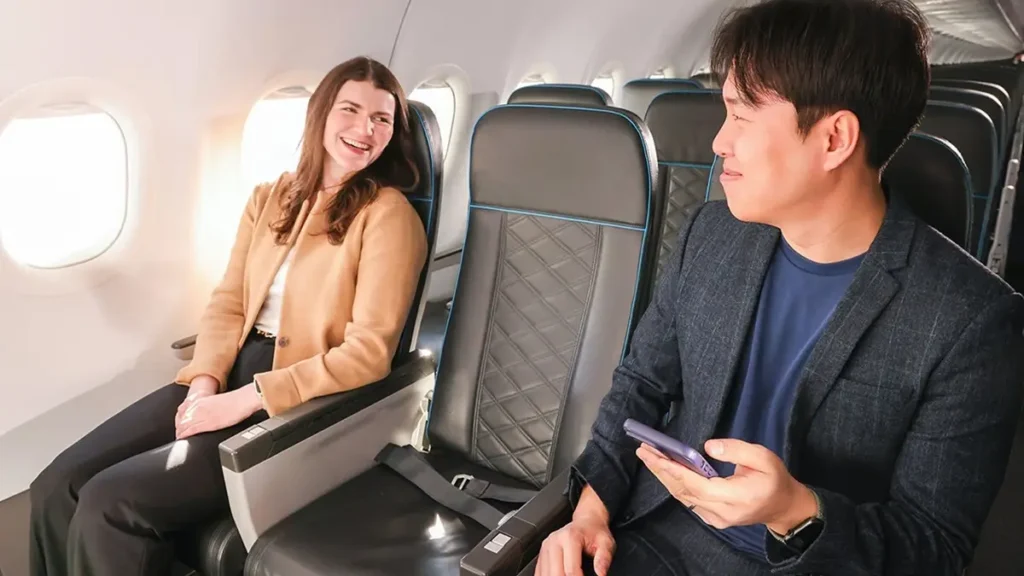
Two travelers occupy the window and aisle seats while the middle remains empty. Couples sometimes use this booking strategy when they hope to gain more personal space.
The middle seat may still be assigned on a full flight. If another passenger arrives, offering the aisle or window can help the couple sit together.
- Select the two outer seats
- Prepare to exchange one seat if needed
7. Middle Seat Armrest Courtesy
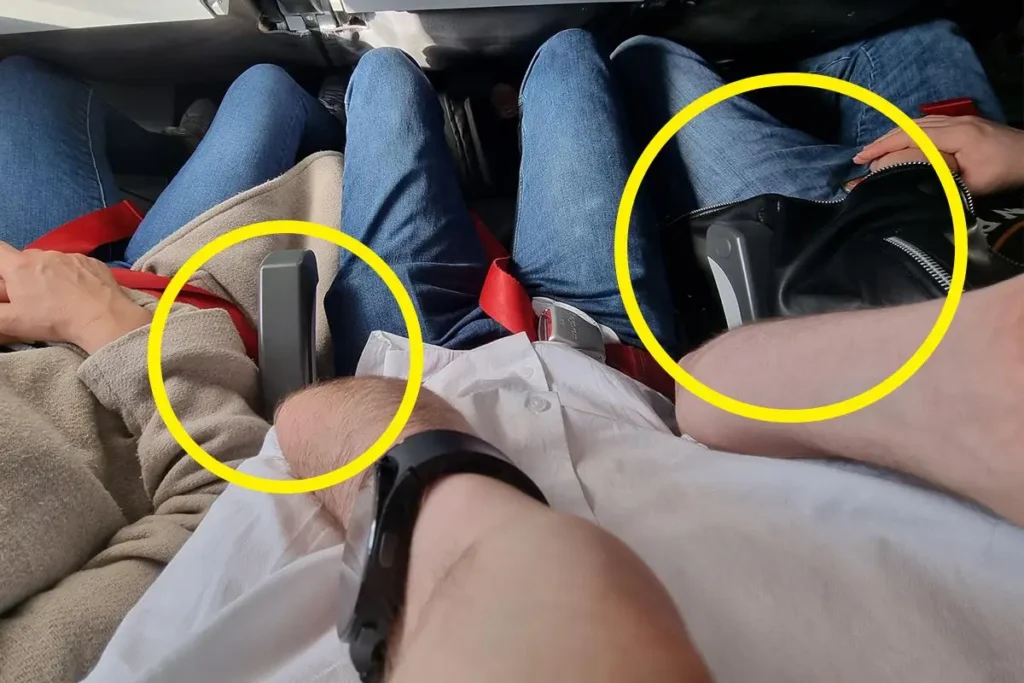
The highlighted photograph shows the armrests surrounding a middle passenger. Common travel etiquette gives the middle traveler priority over both shared armrests.
This practice is a courtesy rather than a legal rule. Claiming the space early and remaining considerate can prevent an uncomfortable disagreement.
- Keep elbows within the armrest area
- Discuss shared space politely when necessary
8. Find the Hidden Armrest Button
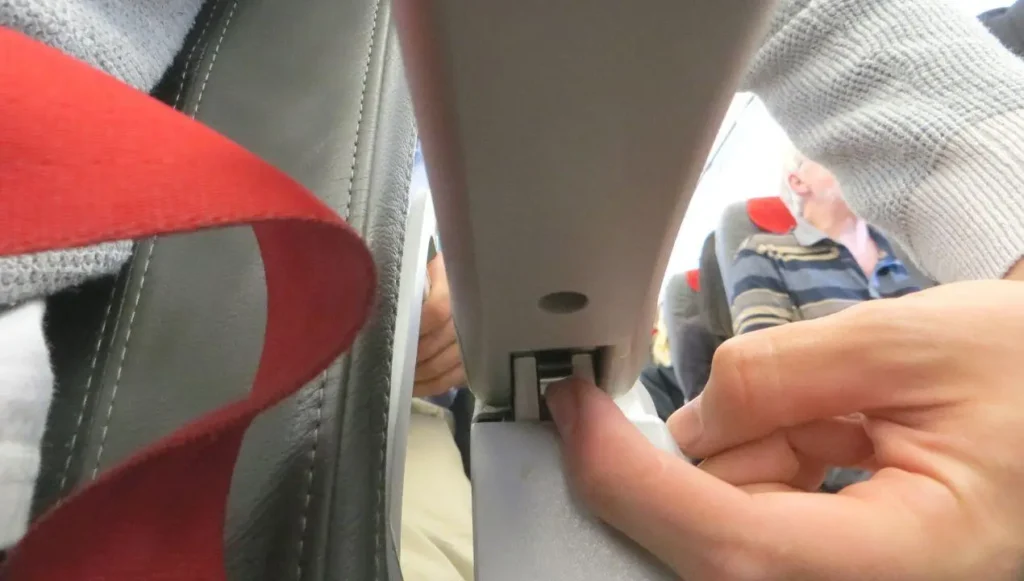
This close view reveals a release control beneath an airplane armrest. Many aisle armrests have a concealed button or lever close to the hinge.
Pressing it may allow the armrest to lift, providing easier movement into the aisle. The feature can vary across aircraft and may remain locked during certain flight stages.
- Feel underneath the armrest near its hinge
- Follow crew instructions during takeoff and landing
9. Understand the Bulkhead Tradeoff
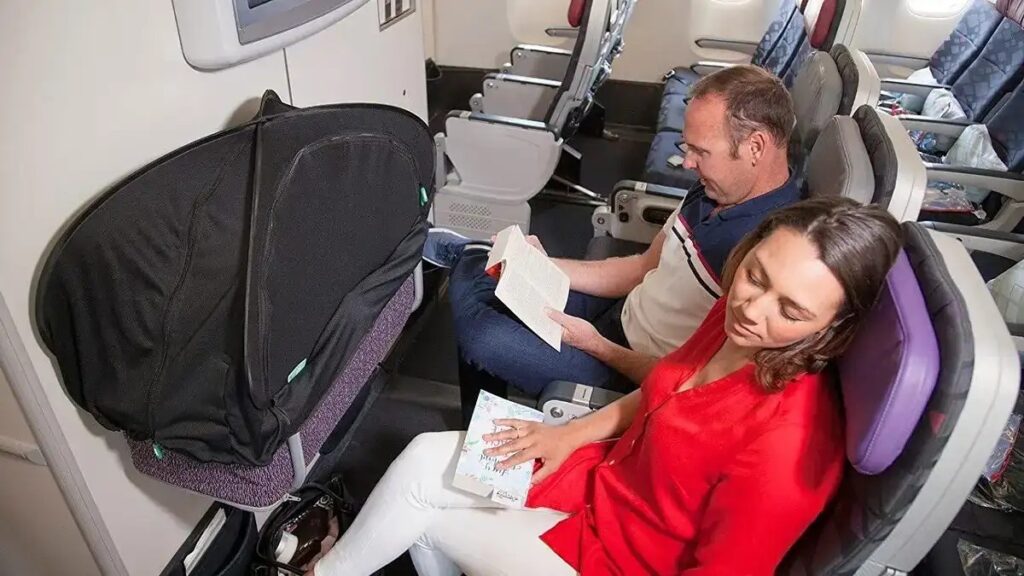
This shows spacious seating at the front of a cabin section. Bulkhead rows remove the reclining seat directly in front and may provide additional knee space.
Personal bags usually cannot remain on the floor during takeoff and landing. Some aircraft also place infant bassinets on the bulkhead wall.
- Store personal items in the overhead bin
- Check bassinet locations before selecting the row
10. Speak Calmly With the Gate Agent
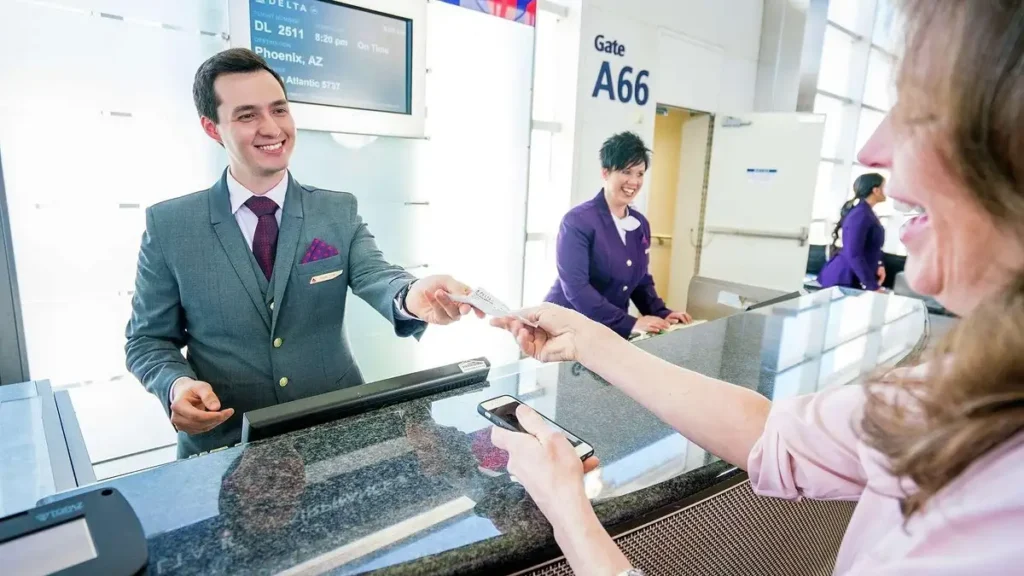
A solo traveler is shown speaking with airline staff at a counter. Flexible passengers may be easier to move when agents need to adjust seats or balance the cabin.
A polite request can make communication easier, but it does not guarantee an upgrade. Approach the desk at a quiet moment and accept the final decision respectfully.
- Explain that you are traveling alone
- Offer flexibility without making demands
11. Check Again When Seats Are Released
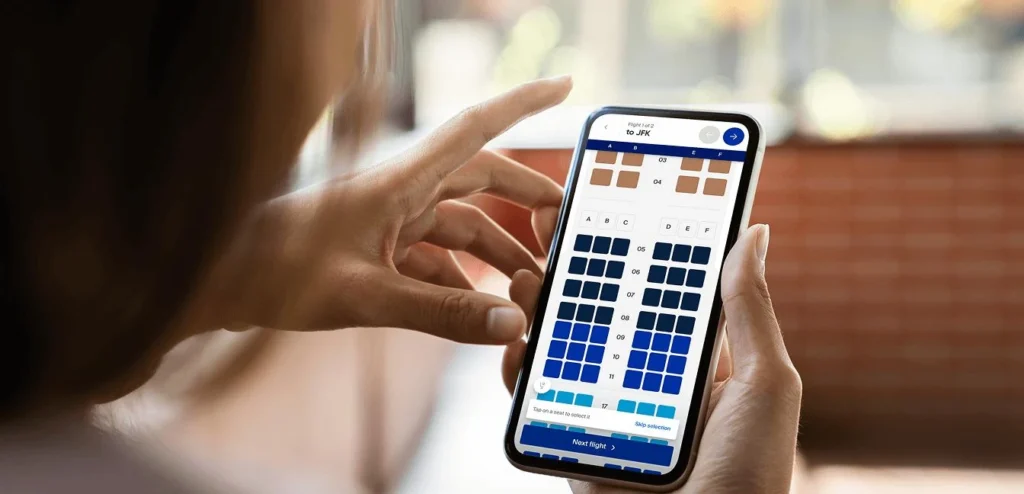
The phone screen displays an airline seat map during the selection process. Airlines may release restricted or unassigned seats as check-in opens and departure gets closer.
Look again when the standard check-in window begins. Another review several hours before departure may reveal seats freed after cancellations or schedule changes.
- Check when online check-in opens
- Review the map again before leaving for the airport
12. Verify the Aircraft Layout
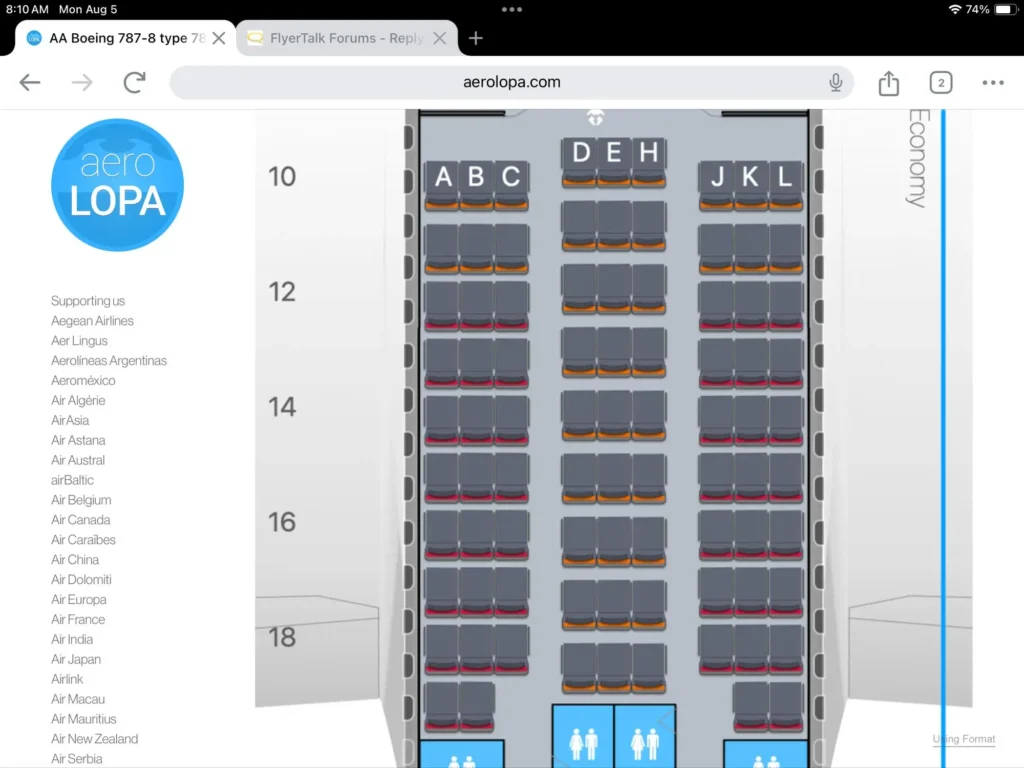
This screenshot shows a detailed AeroLOPA cabin map. Independent layout tools can reveal window placement, wing location, restrooms, galleys, exits, and seat arrangements.
Compare the aircraft model on the reservation with the correct external map. Aircraft substitutions can occur, so repeat the check close to departure.
- Confirm the exact aircraft type
- Compare the airline map with AeroLOPA or SeatMaps
13. Sit Near the Front for a Short Connection
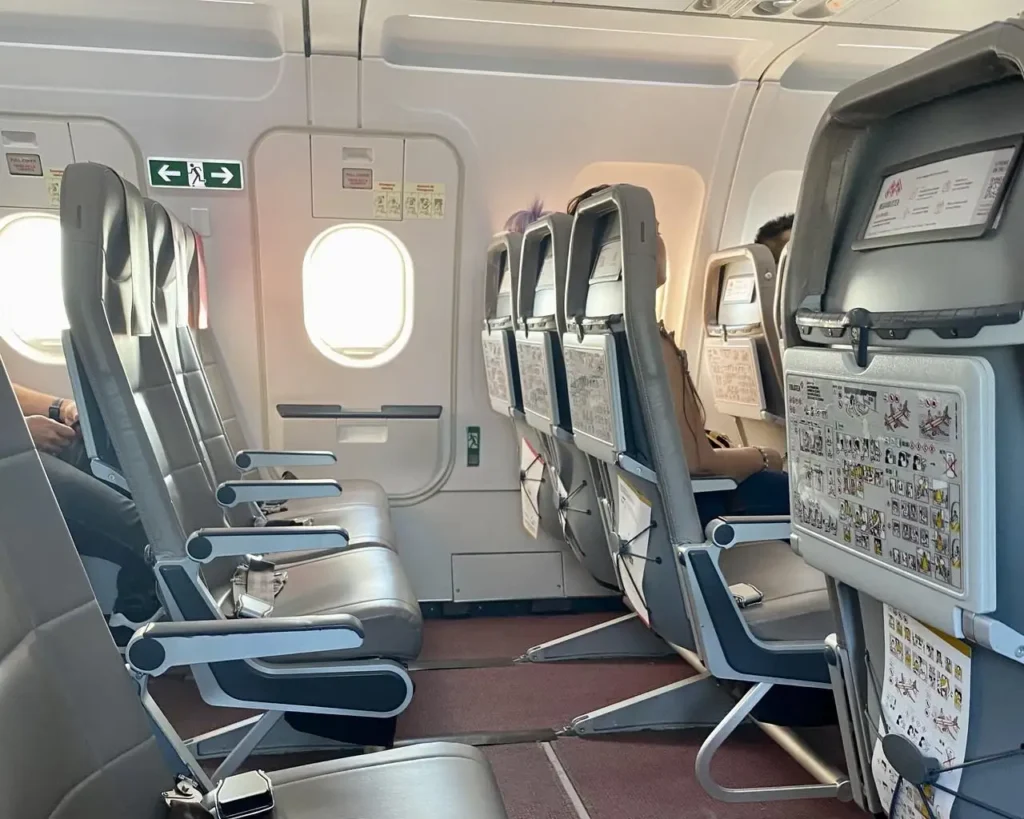
The image shows aisle seating close to an aircraft exit. A front cabin aisle seat can help a traveler leave sooner after landing.
This position becomes useful when connection time is limited. Keeping essential belongings organized can also prevent delays while leaving the plane.
- Select an aisle seat in the front section
- Keep important items inside a small personal bag
14. Consider the Aircraft Type
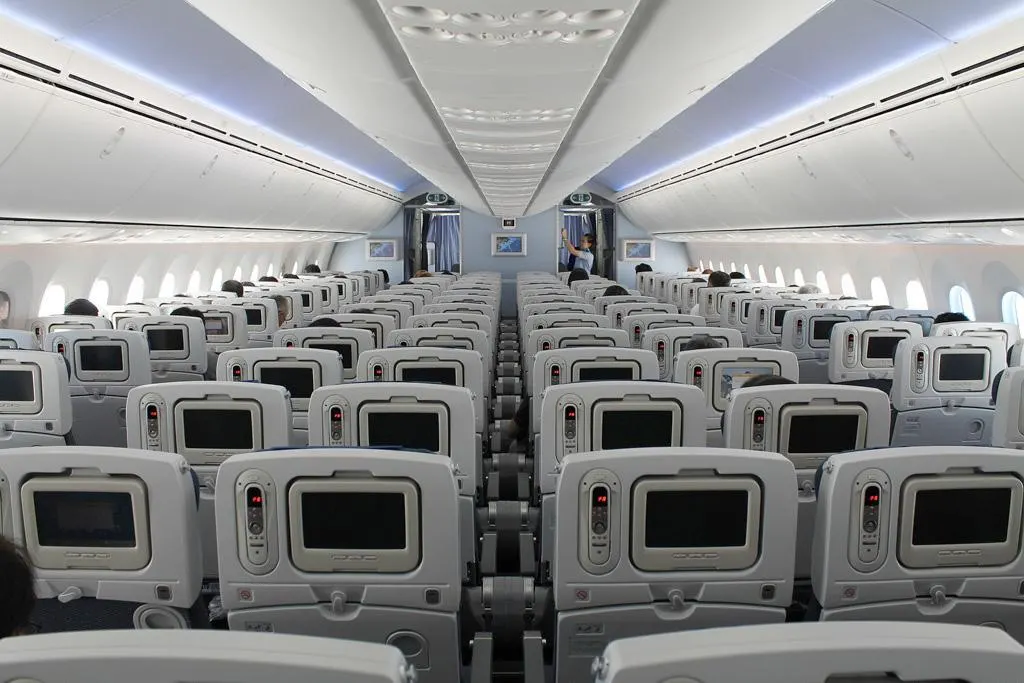
The photograph shows a modern wide cabin with updated seats, large overhead bins, and personal screens. Aircraft such as the Boeing 787 and Airbus A350 use modern cabin systems designed to support passenger comfort.
Cabin pressure, humidity, seating, and lighting can affect how travelers feel after a long flight. Confirming the aircraft model can help when several flight options are available.
- Compare aircraft before booking
- Remember that airlines can change equipment
15. Add Personal Comfort Support
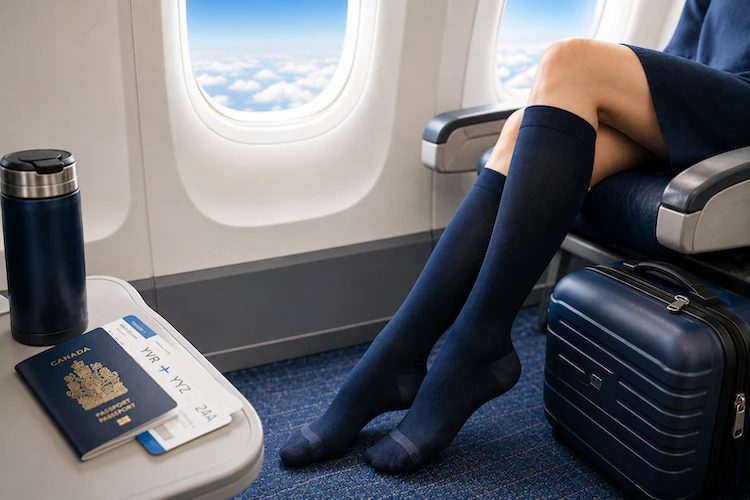
The final image shows a passenger wearing compression socks inside the cabin. Such socks may help certain travelers manage leg swelling during a long flight.
Regular movement, hydration, back support, and noise-cancelling headphones can also improve comfort. Travelers with circulation problems should ask a medical professional if compression socks are appropriate.
- Stand and move when safe
- Use a rolled jacket for lower back support