
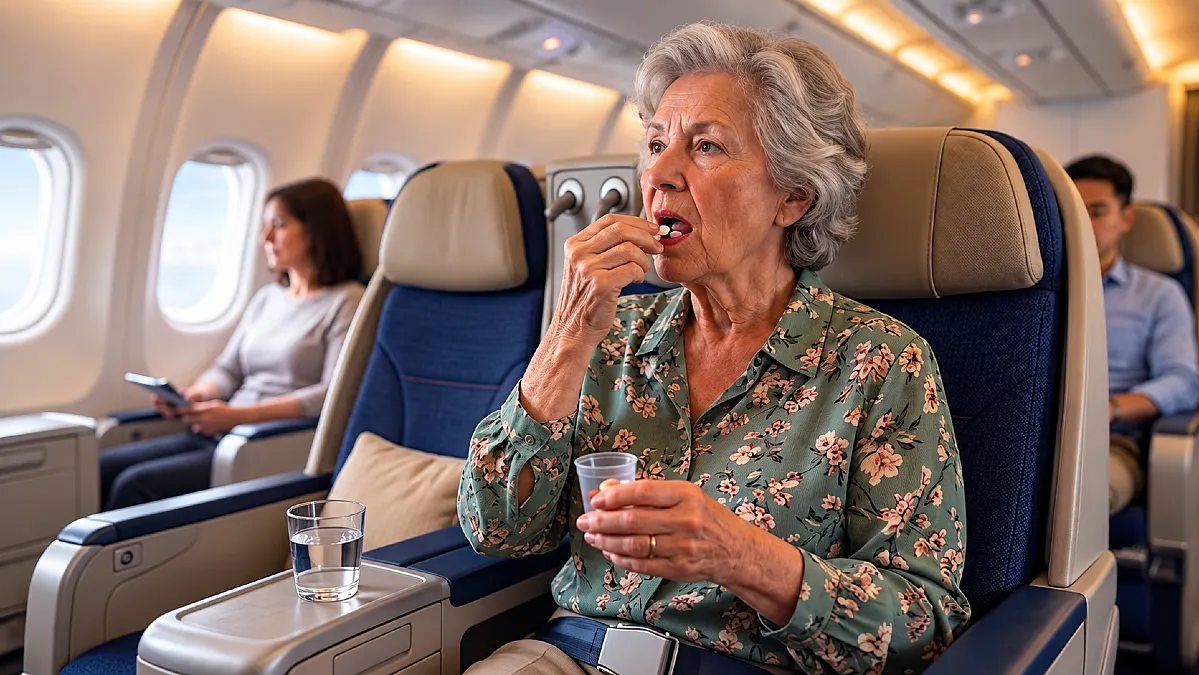
Two travelers in their 70s can take the same 11 hour flight and have completely different first days after landing. One walks off the plane tired but comfortable. The other has swollen feet, a stiff back, dry eyes, poor sleep, and no energy left for the plans ahead.
Age alone does not explain the difference. What you do before and during a long flight can change how comfortable you feel when you arrive.
Long periods of sitting matter more as health risks and mobility limits add up. Dry cabin air can bother your eyes and nose.
Crossing several time zones can also disturb sleep, appetite, mood, and concentration. The CDC’s 2026 Yellow Book covers all of these concerns when discussing international air travel.
1. Check Your Health Plan Before a Long Flight
The best time to think about your health is not when the plane doors close. If you have heart disease, lung disease, diabetes, limited mobility, a history of blood clots, or another ongoing condition, discuss your trip before departure.
The CDC recommends that older international travelers review their health, medications, destinations, activities, and vaccine needs with a healthcare professional. Ideally, this happens several weeks before travel.
This matters because normal aircraft cabins are pressurized to an altitude below the plane’s actual cruising height, but the available oxygen pressure is still lower than at sea level. Most healthy travelers handle this without trouble, while some people with heart, lung, blood, or circulation problems may need extra planning.
Before departure, check:
- Your regular medicine supply
- Any recent surgery or hospital stay
- Heart or lung symptoms
- Previous blood clots
- Mobility needs
- Destination vaccines and medicines
A ten minute medical conversation before the trip can be more useful than buying another travel gadget.
2. Board Warm Instead of Already Stiff
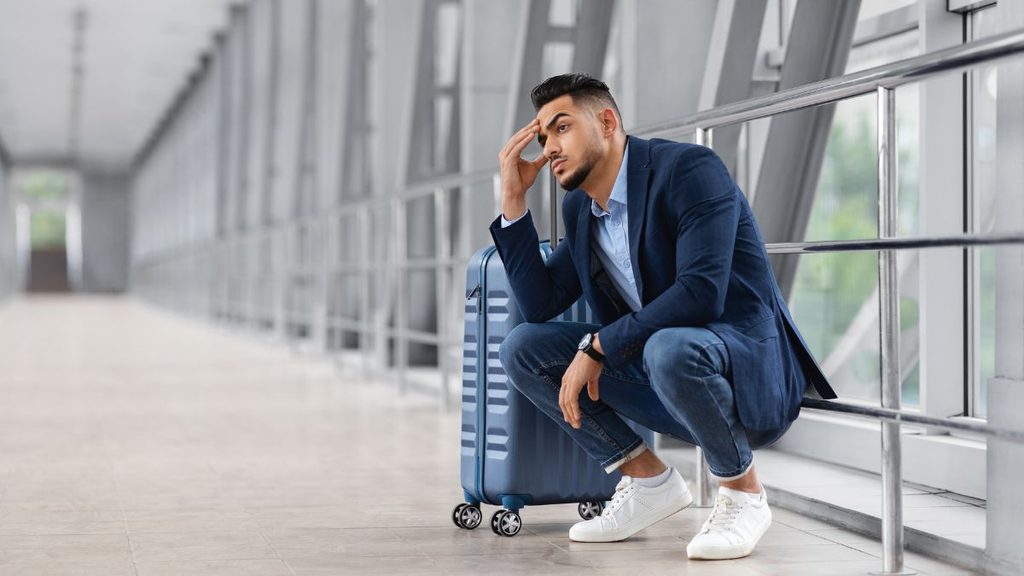
A long flight does not really begin when you sit in seat 32C. Your body may already have spent an hour in a car, another hour waiting at security, and another long stretch sitting at the gate.
Use some of that airport time to move.
Take an easy walk through the terminal. Stand for a few minutes instead of sitting at the gate the whole time. Gently move your ankles and knees. Visit the restroom before boarding so you do not begin the flight feeling rushed.
CDC blood clot guidance recommends avoiding long stretches of complete immobility during extended travel.
You do not need an airport workout. The goal is simply to avoid starting ten hours of sitting after you have already spent two hours sitting.
3. Pick an Aisle Seat When Movement Matters
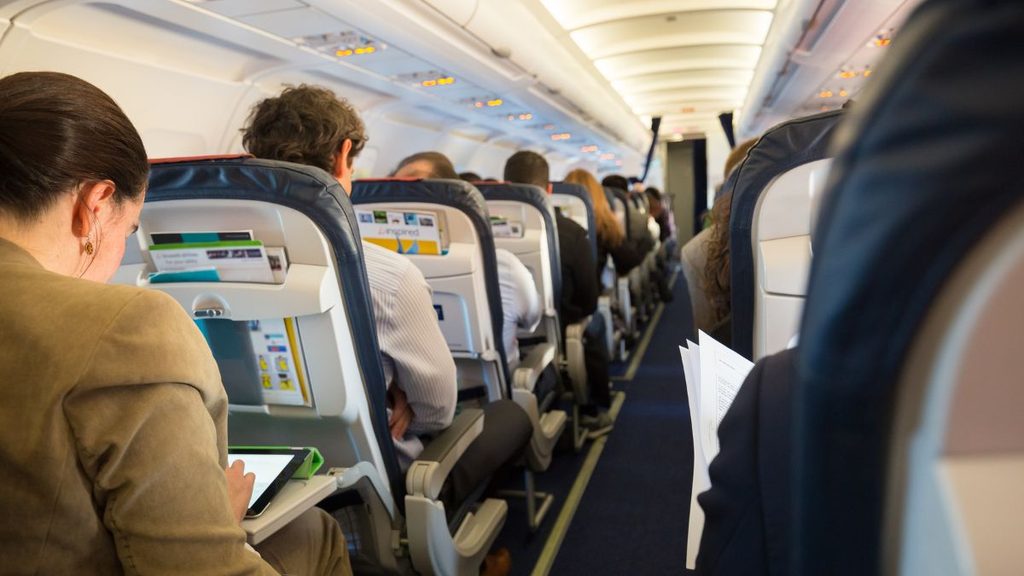
A window seat is lovely until you need to ask two sleeping passengers to move every time you want to stand.
If frequent movement, restroom access, or stiff joints are concerns, an aisle seat can make a long flight much easier.
The CDC Yellow Book notes that aisle seating may help travelers move more freely. It cites research in which window seating was associated with higher VTE risk, though seat choice is only one part of the bigger risk picture.
An aisle seat can make it easier to:
- Stand without disturbing other passengers
- Walk when conditions are safe
- Reach the restroom
- Stretch your knees
- Ask cabin crew for help
The best seat still depends on you. Some travelers sleep much better against the window. But if a window seat makes you stay seated for six straight hours, the aisle deserves serious thought.
4. Wear Loose Layers and Stable Shoes
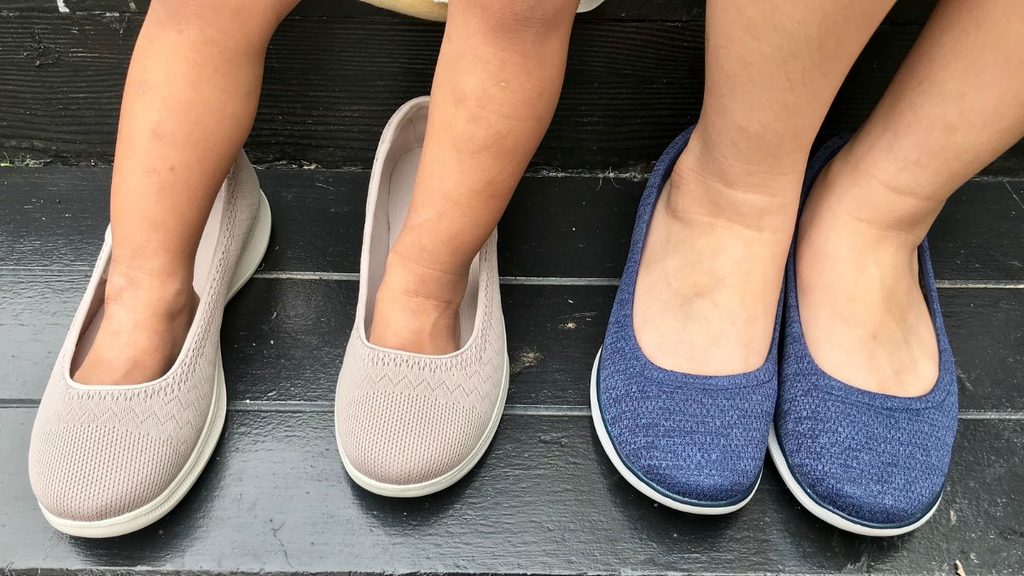
Your airport outfit should make movement easier, not harder.
Choose trousers with a comfortable waist, a soft top, and light layers that do not restrict your legs or stomach. The NHS also advises loose clothing during long trips when discussing DVT prevention.
Footwear matters too. Shoes should be easy to walk in and easy to put back on if your feet feel a little fuller later in the flight.
Skip shoes that already pinch at home. Ten hours of sitting will not make them feel better.
A simple combination works well:
- Comfortable trousers
- Breathable shirt
- Light cardigan
- Easy walking shoes
- Warm socks
You are dressing for sitting, walking, sleeping, temperature changes, and possibly a fast airport connection. Comfort should win.
5. Ask Whether Compression Stockings Are Right for You
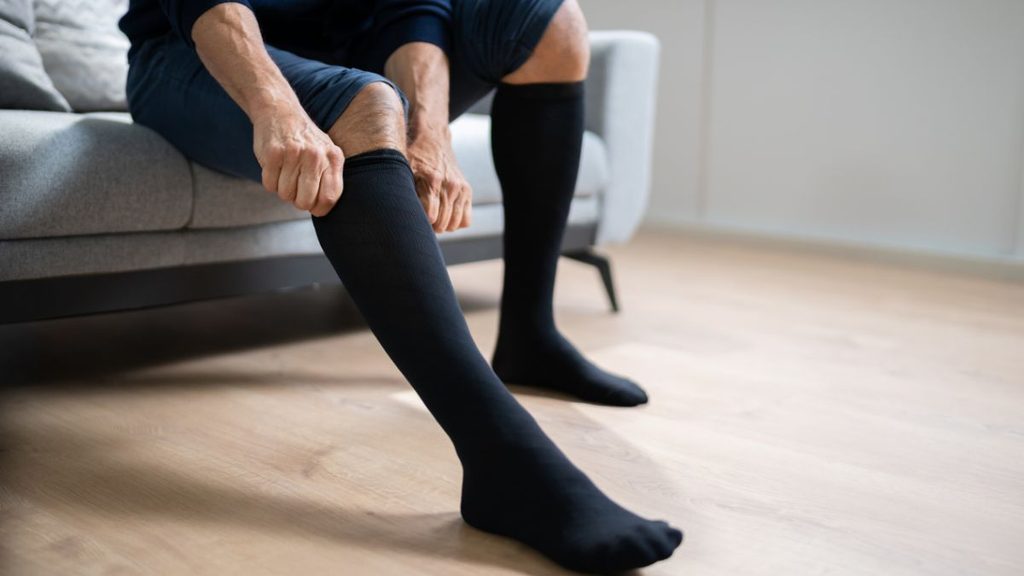
Compression stockings often appear on lists of must have flight gear. The medical guidance is more specific than that.
The CDC Yellow Book says graduated compression stockings appear to reduce symptom free DVT in travelers, but major guidelines focus their use mainly on people with increased clot risk.
The American College of Chest Physicians guidance cited by CDC refers to properly fitted stockings providing 15 to 30 mmHg at the ankle for higher risk long distance travelers.
That does not mean every senior passenger needs medical compression.
If you have a previous clot, recent surgery, active cancer, major mobility limits, or several clot risk factors, ask your healthcare professional what is appropriate for you.
Fit matters. More compression is not automatically better.
And do not start aspirin or a blood thinner on your own simply because you have a long flight booked. Prevention medicine should be based on your personal medical risk.
6. Get Up Every 1 to 2 Hours When It Is Safe
Your legs were built to move.
When you sit in a cramped position for several hours, blood flow in the legs can slow. Long periods of limited movement are one reason extended travel is linked with DVT risk.
The CDC recommends getting up and walking roughly every one to two hours when sitting for more than four hours.
You do not need to march around the aircraft.
Stand when the seat belt sign is off. Walk to the restroom. Take a short pass through the aisle. Return to your seat.
Do it before your knees and back are painfully stiff.
Of course, turbulence and cabin crew instructions come first. Never walk around the cabin when passengers have been told to remain seated.
7. Move Your Ankles and Calves While Seated
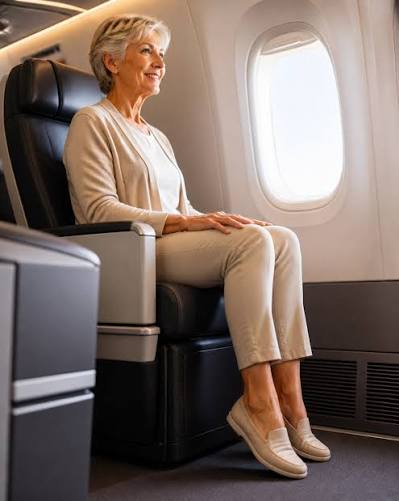
Sometimes walking is not possible.
You may be eating. Your seatmates may be asleep. The seat belt sign may stay on for an hour.
That does not mean your legs have to remain completely still.
CDC guidance suggests simple seated movements during prolonged travel. These include lifting the heels while the toes stay on the floor, lifting the toes while the heels stay down, and tightening then releasing the leg muscles.
Try a simple routine:
- Lift both heels several times.
- Lift both toes several times.
- Slowly circle each ankle.
- Tighten your calf muscles, then relax.
- Change your leg position.
Repeat the movements during the flight.
Small movements do not replace walking when walking is possible. But they are much better than keeping your legs frozen in one position for hours.
8. Keep Water Within Easy Reach
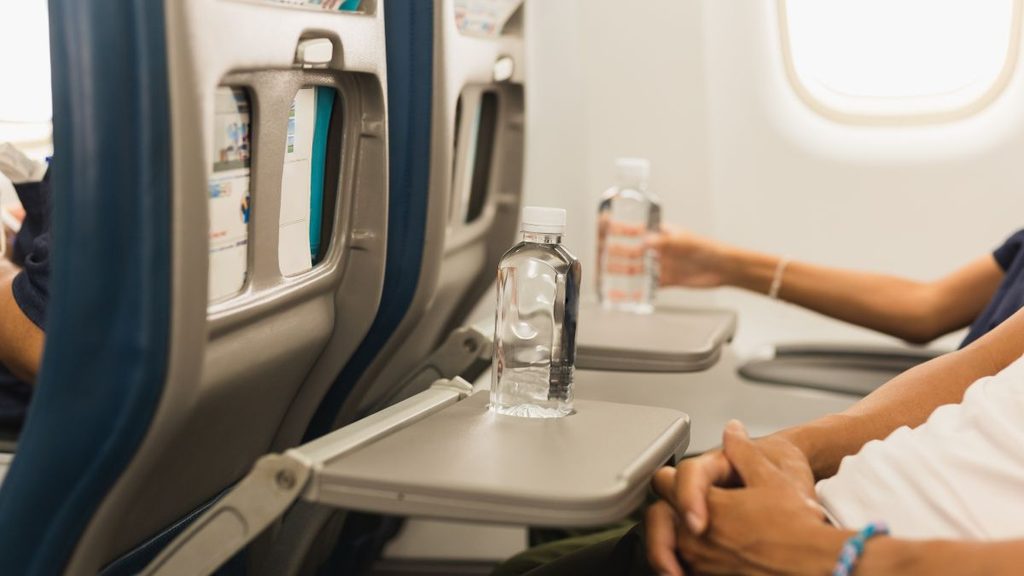
Aircraft cabins are dry.
The CDC Yellow Book says cabin humidity is usually around 10 to 20 percent, which can dry the eyes and the lining of the nose and upper airway.
Bring an empty refillable bottle through security and fill it before boarding when airport rules allow. Keep it where you can reach it instead of burying it in the overhead bin.
Sip water through the flight.
There is one correction worth making because it is often repeated online. Drinking extra water has not been proven to prevent flight related blood clots. CDC’s 2026 Yellow Book says staying hydrated is reasonable, but direct evidence that it prevents travel related VTE is lacking.
Water still helps with ordinary travel comfort.
And if your doctor has told you to limit fluids because of a heart, kidney, or other condition, follow that medical plan rather than a general travel tip.
9. Choose Smaller Meals and Go Easy on Alcohol
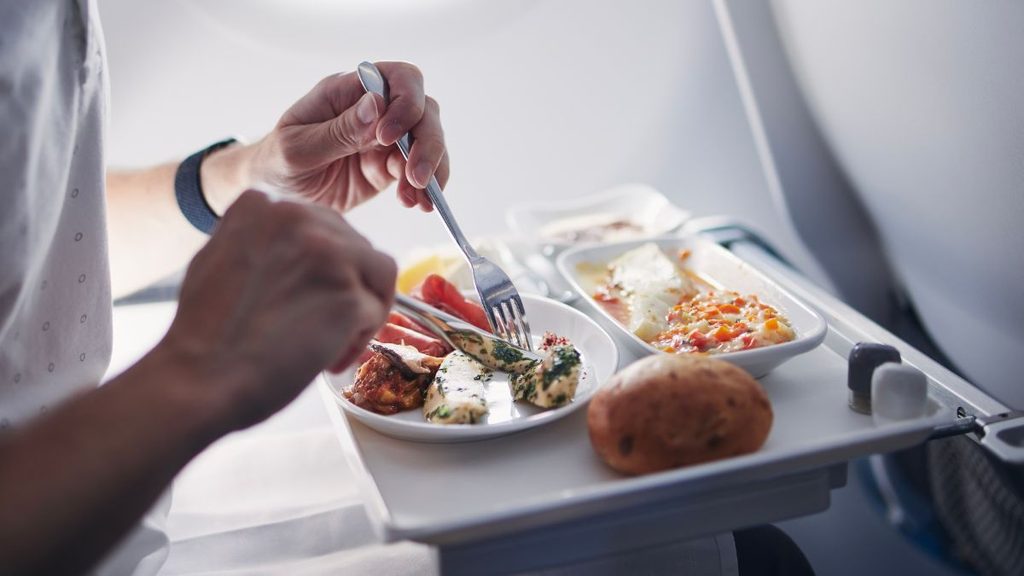
A large meal can sound appealing when there is little else to do for ten hours. Your stomach may disagree.
CDC jet lag guidance notes that smaller meals can help travelers who develop stomach symptoms when their body clock is disrupted. It also advises limiting alcohol because alcohol can disturb sleep.
You do not need to refuse every airline meal.
Simply stop eating when you are comfortable instead of finishing everything because it was placed in front of you.
Useful snacks include:
- Fruit
- Unsalted nuts
- Simple crackers
- A familiar snack bar
- Food that you already know agrees with you
Alcohol deserves extra care. A drink may make you sleepy at first, but that does not mean the sleep will be good.
For many senior travelers, water and a lighter meal produce a much easier arrival.
10. Keep Every Important Medicine in Your Carry On
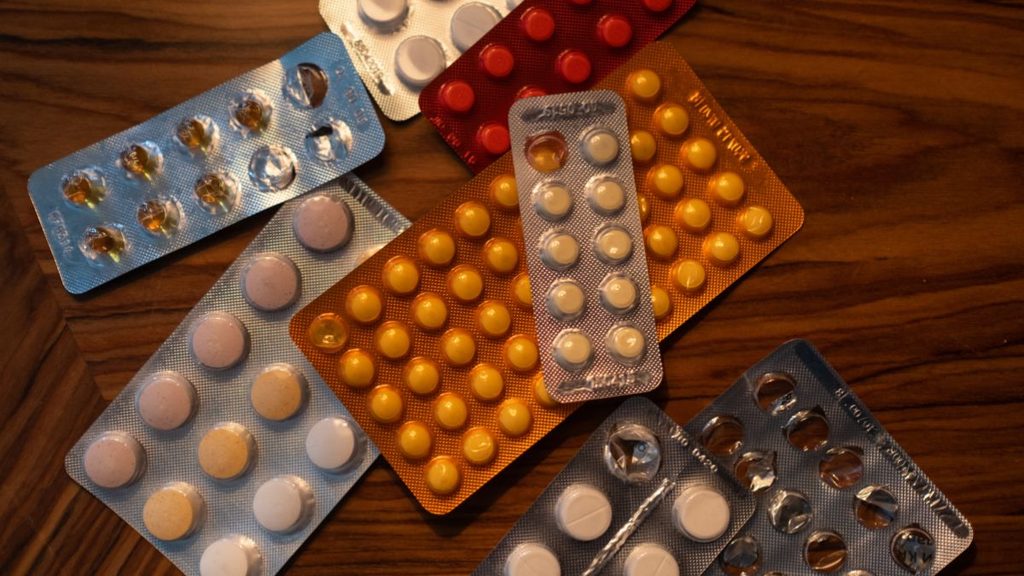
Your suitcase can reach Paris tomorrow even when you reach Paris tonight.
Your medication cannot.
The CDC advises international travelers to pack prescription and over the counter medicines in carry on baggage, bring enough for the entire trip, and add extra for possible delays. It also recommends carrying prescription information and keeping medicines properly labeled.
Time zones need planning too.
CDC guidance says travelers who cross time zones should ask their healthcare professional how to adjust medicine timing. Some medicines depend on the amount of time since your previous dose rather than the local clock.
Keep essential medicine where you can reach it.
TSA allows medications through security and permits medically necessary liquids above the usual carry on liquid limit when they receive the required screening.
Never assume checked luggage is the safest place for something you cannot miss.
11. Keep Your Flight Essentials Under the Seat
Anything you may urgently need should be reachable without opening the overhead bin.
During turbulence, you may be required to remain seated. Your seatmate may also be asleep when you suddenly need your glasses or medication.
A small personal bag can hold:
- Prescription medicine
- Glasses
- Hearing aid supplies
- Tissues
- Lip balm
- Travel documents
- Charging cable
- A small snack
- Pen
- Eye mask
Do not stuff the area around your feet with several loose bags. You still want enough room to move your ankles and legs.
The FAA also warns that poorly stored cabin baggage can create safety problems and recommends keeping carry on items properly secured.
The goal is simple: important things close, unnecessary things out of the way.
12. Protect Your Eyes Nose and Lips From Cabin Dryness
After several hours in the air, dry lips and irritated eyes can become surprisingly annoying.
This is one part of flying that has a clear physical explanation. Aircraft cabin humidity is often around 10 to 20 percent, and the CDC notes that this low humidity can dry the eyes and upper airway.
A small comfort pouch can help.
Consider packing:
- Lip balm
- Hand cream
- Tissues
- Saline nasal spray if it is appropriate for you
- Your normal eye care products
- Face wipes
Use products you already know rather than testing something new at 35,000 feet.
If you wear contact lenses and they become uncomfortable in dry environments, glasses may be easier for a long stretch of the flight.
Small comfort problems are easier to handle early than after eight hours of irritation.
13. Lower Noise and Light When You Want Real Rest
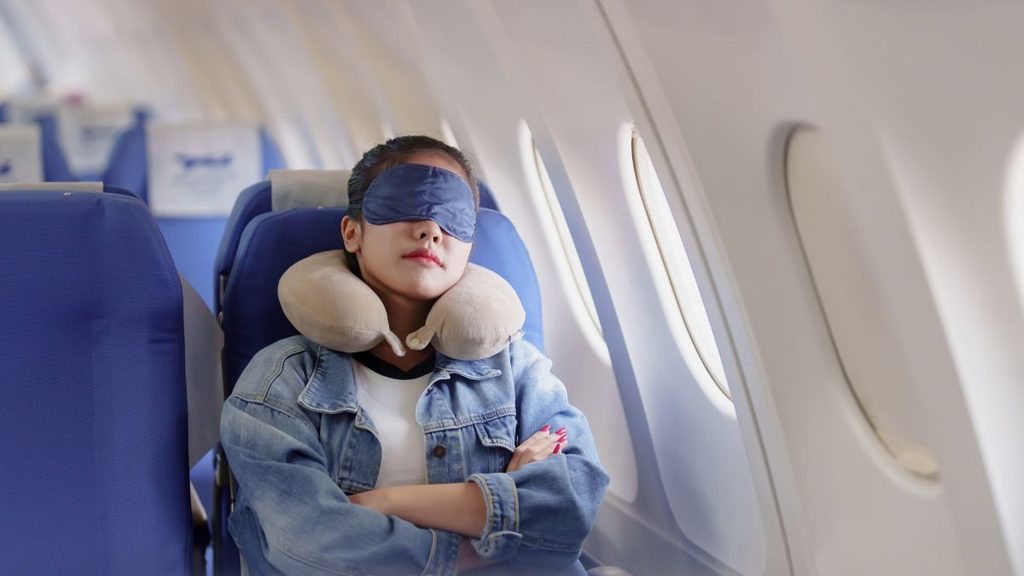
You may be physically sitting still while your brain is surrounded by engine sound, conversations, screens, announcements, and cabin lights.
Make rest easier.
CDC sleep guidance suggests tools such as earplugs and eye masks when creating a quieter and darker sleep setting away from home.
For a flight, that might mean simple foam earplugs, an eye mask, or noise reducing headphones.
You do not need expensive equipment. Current 3M E A Rsoft foam earplugs, for example, are designed to reduce noise and come in soft foam versions.
Keep the volume at a safe level if you listen to audio.
And stay able to respond to safety announcements or cabin crew instructions when required.
The goal is not total isolation. It is reducing enough stimulation to make rest easier.
14. Do Not Experiment With Sleep Medicine in the Air

A ten hour flight is a poor place to discover how a new sleep drug affects you.
The 2026 CDC Yellow Book advises avoiding sedative medications with long half lives when managing jet lag.
For older adults, medication plans can already be complicated. Adding an unfamiliar pill because you want six hours of aircraft sleep can create problems rather than solve them.
Do not double a normal dose because the first dose did not make you sleepy quickly enough.
Do not borrow someone else’s medicine.
And do not assume an over the counter sleep product is risk free just because it does not require a prescription.
If you regularly struggle to sleep during travel, discuss the issue with your doctor before the trip.
A dark eye mask, lower noise, destination based sleep timing, and a comfortable position may be enough without adding another drug.
15. Support Your Back and Keep Changing Position
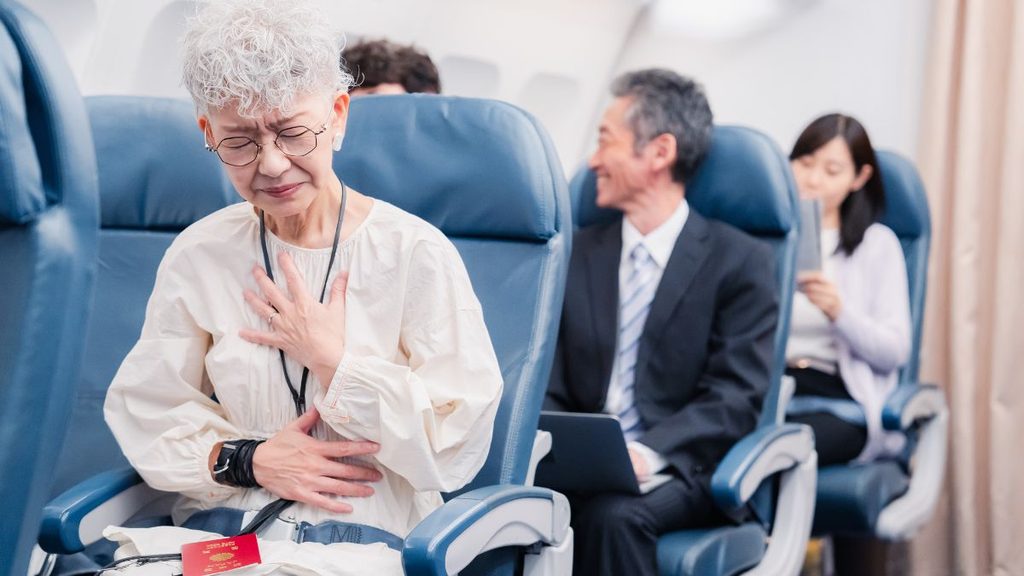
There is no perfect economy seat position for ten straight hours.
That is why changing position matters more than trying to sit like a statue.
A small folded sweater or travel cushion behind your lower back can help if the seat leaves a large gap there. Keep your feet supported instead of letting them hang if the seat height is uncomfortable.
Move your shoulders occasionally. Change the angle of your hips. Adjust your neck pillow if it pushes your head forward.
Then stand and walk when conditions allow.
The common mistake is spending money on a complicated seat gadget while ignoring the simplest comfort tool available: changing position regularly.
If you already have serious back, hip, or neck problems, ask your healthcare professional what positions or supports are appropriate before a very long trip.
16. Control Cabin Temperature With Simple Layers

Aircraft temperature can change several times during one flight.
You may feel warm during boarding, cool once the cabin settles, and cold when you are trying to sleep.
One huge sweater gives you two choices: wear it or remove it.
Several light layers give you more control.
Try a breathable shirt with a cardigan, light jacket, or wrap. Keep warm socks nearby if your feet get cold.
Avoid clothing that is so bulky that it makes movement harder.
Your outfit should also work after landing. Walking through a warm terminal while carrying coats, neck pillows, and blankets can quickly become tiring.
Dress so you can add or remove one piece at a time.
That simple rule works at almost any altitude.
17. Keep Power Banks in Your Carry On
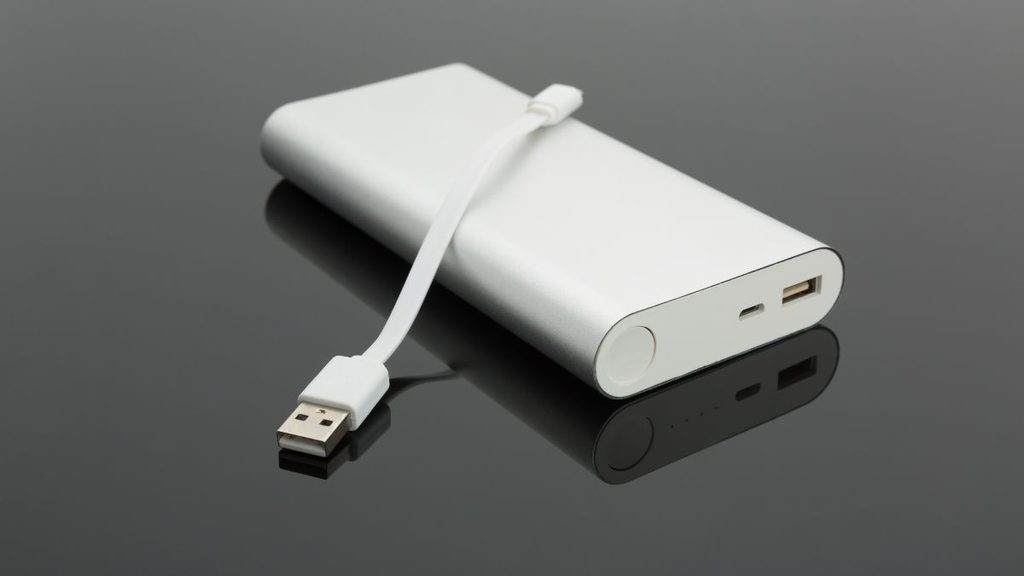
Your phone may hold your boarding pass, hotel details, family contacts, translation apps, maps, and airline notifications.
Keeping it charged matters.
But there is a safety rule many passengers still miss.
The FAA says spare lithium batteries and power banks must be carried in the aircraft cabin rather than checked baggage. Current FAA guidance also says most ordinary rechargeable batteries up to 100 Wh are permitted, while larger batteries can face added restrictions or airline approval requirements.
If your carry on gets checked at the gate, remove the power bank first.
Keep battery terminals protected and check your airline’s rules because airlines may set tighter limits.
This is one rule worth checking before every major trip because battery policies can change.
18. Use Airport Assistance Before You Are Exhausted
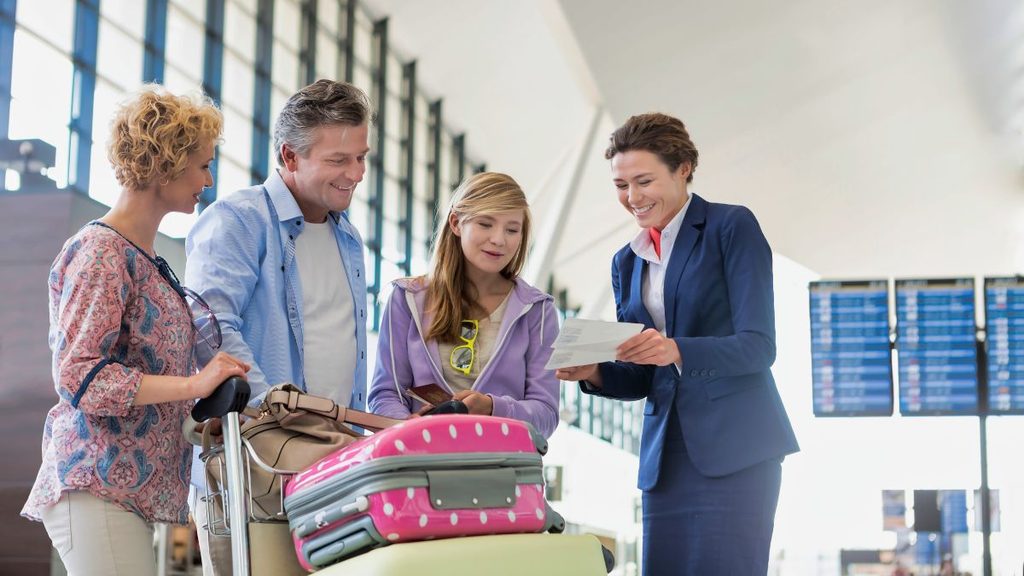
There is no prize for reaching the gate completely worn out.
Large airports can require long walks, trains between terminals, security lines, and distant connection gates.
If a mobility limitation makes those distances difficult, arrange assistance.
The U.S. Department of Transportation says airlines covered by the Air Carrier Access Act must provide several forms of disability assistance, including help with boarding, leaving the aircraft, and making connections.
TSA also operates TSA Cares for travelers with disabilities and medical conditions. Its guidance says passengers can contact the service before travel and request help from a Passenger Support Specialist at the checkpoint.
Using assistance can preserve your energy for the flight itself.
That can be especially useful when a long connection requires crossing a huge terminal.
Save your legs for the destination rather than using all your energy before takeoff.
19. Start Following Destination Time During the Flight
Jet lag is more than being tired.
The CDC says it can affect sleep, concentration, daytime alertness, physical performance, mood, and the digestive system.
One useful rule is to begin thinking in destination time during the flight.
Change your watch.
If it is nighttime at your destination, create a sleep friendly setting when practical. If it is daytime there, avoid turning a short rest into an eight hour sleep session.
The 2026 CDC Yellow Book recommends timing activities such as eating, sleep, and light exposure around the destination time zone when trying to adapt.
After landing, natural light can help your body clock adjust. CDC also advises avoiding long daytime naps because they can make nighttime sleep harder.
You may still feel jet lag.
The aim is to reduce how much of your first few vacation days it controls.
20. Know the Blood Clot Warning Signs After Landing
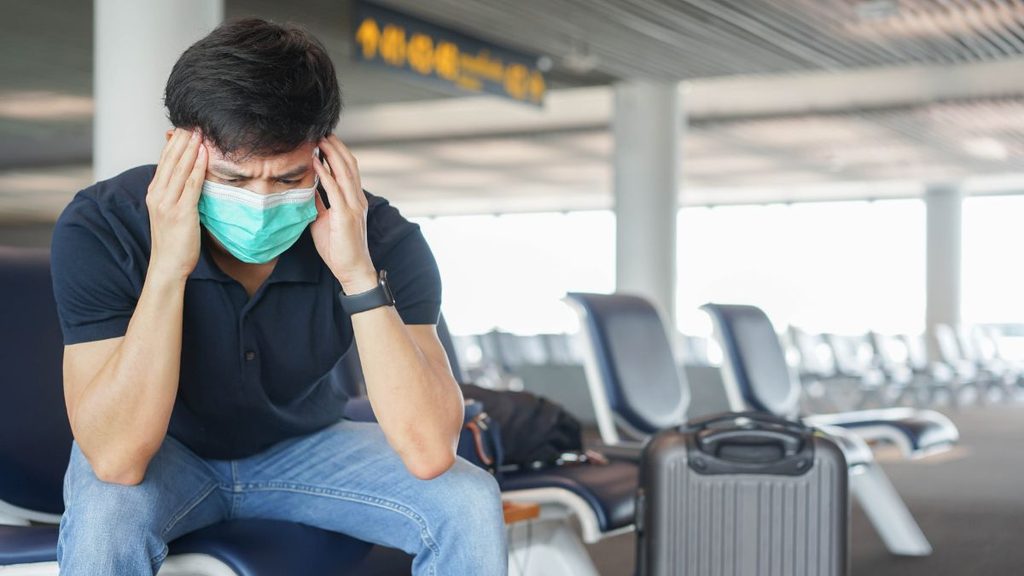
This final rule matters because blood clot symptoms may appear after the aircraft has landed.
The overall risk of travel related VTE is low, but prolonged immobility can raise risk, especially when other factors are present.
CDC lists older age, previous blood clots, recent surgery or injury, active cancer, limited mobility, obesity, hormone therapy, and certain clotting conditions among the factors that can increase risk.
Possible DVT symptoms include:
- Swelling in one leg or arm
- Unexplained pain or tenderness
- Warm skin
- Redness or unusual discoloration
A pulmonary embolism can occur when part of a clot travels to the lungs. Warning signs can include unexplained shortness of breath, chest pain, coughing blood, fainting, or other sudden breathing problems.
Those symptoms need prompt medical assessment.
Do not assume one sided leg swelling plus unusual pain is simply normal post flight stiffness.
For travelers with higher clot risk, prevention should be planned with a healthcare professional before departure rather than invented during the flight.