
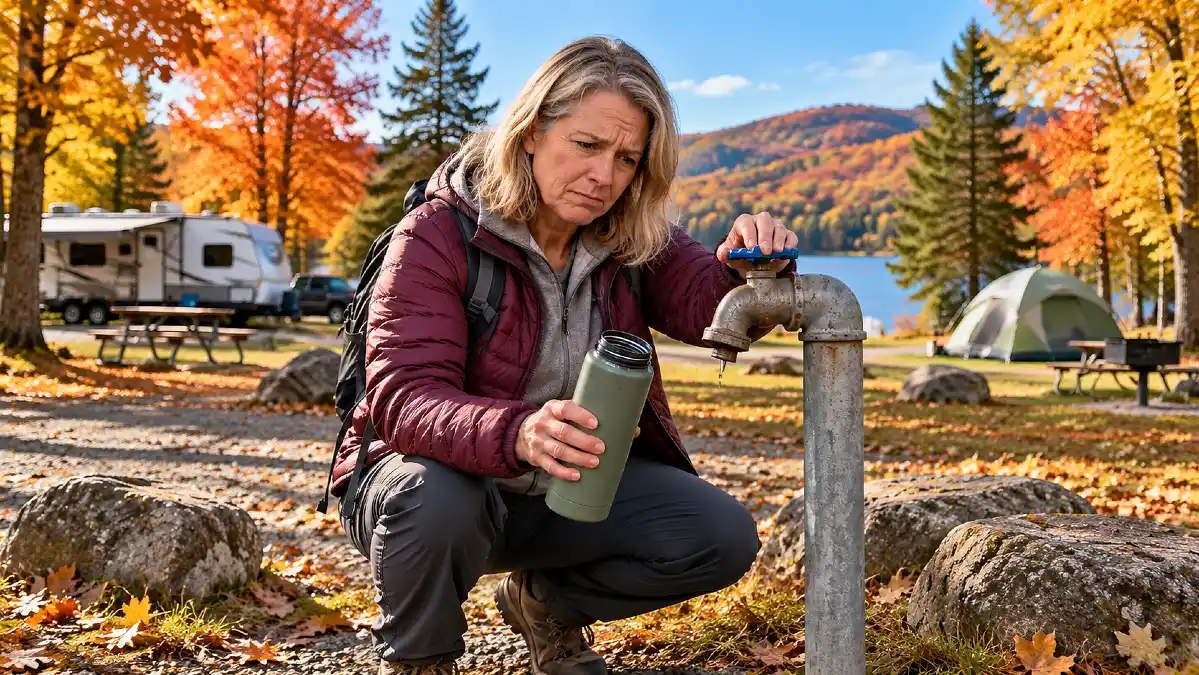
You booked a quiet fall campsite. The leaves are changing, summer crowds are gone, and the campground website says open. Then you arrive, walk over to the water spigot, turn the handle, and get nothing.
That situation is more common in fall than many campers expect. A campground may remain open after its drinking water, showers, flush toilets, hookups, or dump station water have shut down for the season.
Current federal campground pages make this clear. Steel Creek Campground at Buffalo National River stays open year round, yet potable water is unavailable during its winter service period. Echo Lake in Superior National Forest tells campers that drinking water is turned off in October and November.
Why Can an Open Fall Campground Have No Running Water?
The word “open” can tell you that camping is allowed. It does not promise that every summer amenity is still working.
Public campgrounds often change their services as the main camping season ends. Water may disappear first. Flush toilets, showers, trash collection, ranger services, and dump station facilities can also change.
Steel Creek Campground in Arkansas is a good example. The National Park Service says the campground remains open, but its potable water system closes from November 15 through March 15. A vault toilet remains available during that period.
North Cascades National Park shows another version of the same issue. Some campsites at Colonial Creek South can remain available during the colder season while water and regular campground services are unavailable.
Even before full winter operations begin, water can become uncertain. Atwell Mill Campground in Sequoia and Kings Canyon National Parks tells visitors that potable water is not always available during spring and fall.
The lesson is simple: check the campsite and the water as two separate things.
A reservation confirmation proves that you have a place to camp. It does not prove that a faucet will work when you arrive.
Check These 5 Water Services Before You Leave Home
Water service is not one single campground feature. Several separate systems may be involved.
Checking each one makes your trip much easier to plan.
1. Is Potable Drinking Water Available?
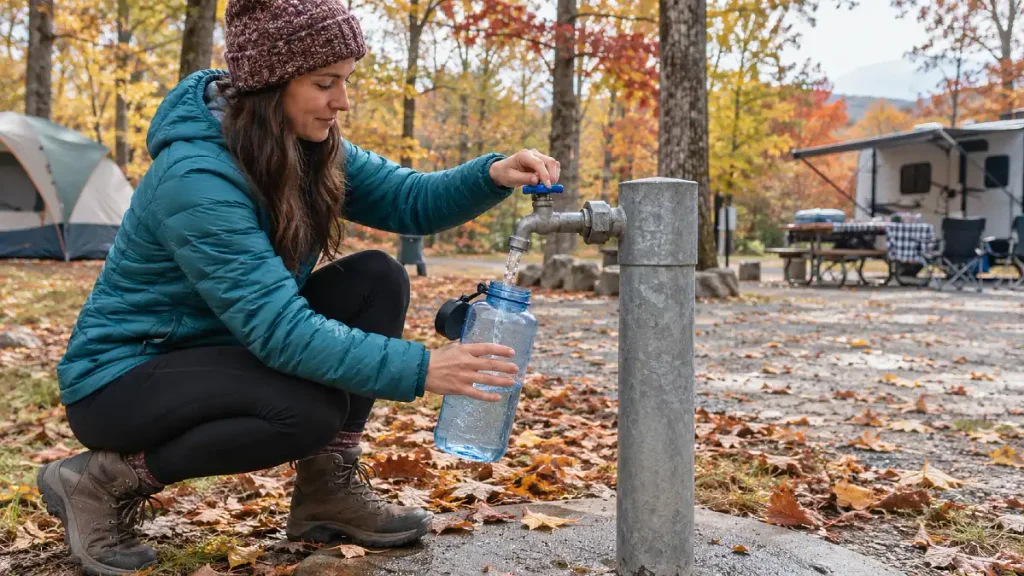
Look specifically for the words potable water, drinking water, or hydrant.
Do not assume that a lake, bathroom sink, or nearby stream counts as safe drinking water. You want confirmation that the campground provides water meant for drinking.
Recreation.gov warns visitors to Mann Creek Campground in Idaho that drinking water is often unavailable in late summer and fall. Its listing tells campers to call ahead and confirm the current status.
That is exactly the kind of note worth finding before you drive several hours.
2. Are Individual Water Hookups Still Working?
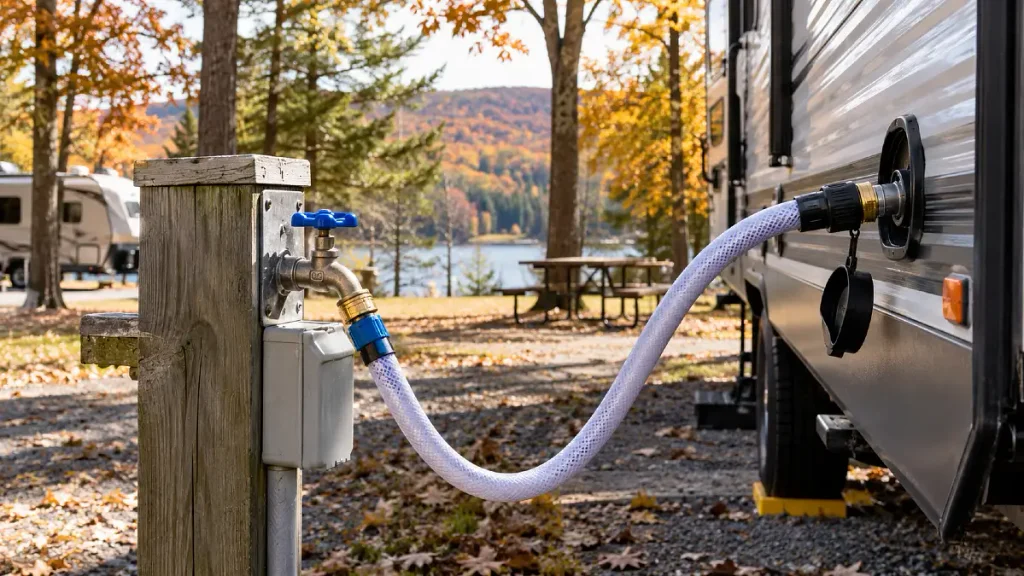
RV campers need to look beyond the general drinking water symbol.
A campground may have drinking water somewhere on the property without providing a working water connection at each campsite. The opposite can also happen at some facilities.
Read your exact campsite description. Do not rely only on the campground overview.
If your RV depends on a fresh water connection, fill your tank before arriving whenever the status is uncertain.
3. Are the Showers and Flush Toilets Open?
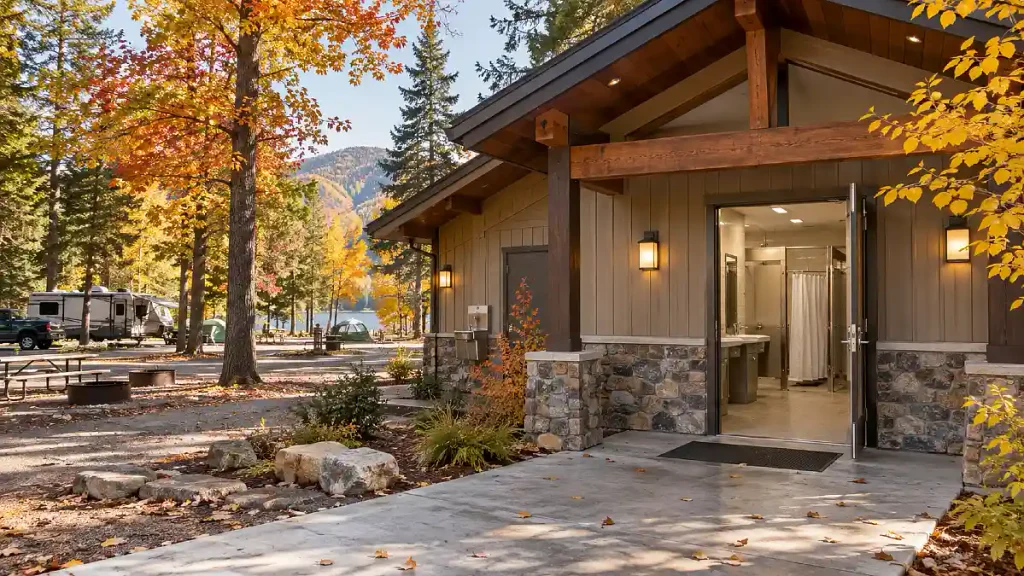
Water shutdowns can affect bathrooms too.
A campground might replace flush toilets with vault toilets during the colder months. Showers may close even while campsites remain available.
Buffalo Point Campground at Buffalo National River, for example, lists water systems, showers, dump facilities, and other amenities as seasonal. Its winter period operates with far fewer services.
Knowing this changes what you pack. You may want extra drinking water, hand cleaning supplies, washcloths, and a simple dish cleaning plan.
4. Does the Dump Station Still Have Water?
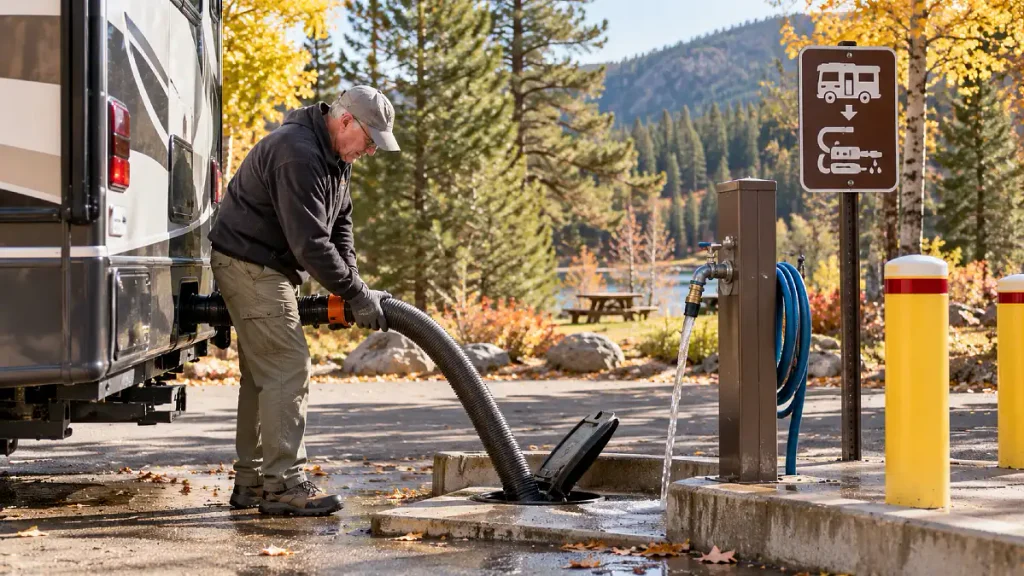
This one is easy to miss.
A dump station may physically remain at the campground even when its water supply has been shut down.
Juniper Campground at Bandelier National Monument states that water at its dump station is completely turned off from mid October to mid April. Campers cannot fill water tanks or use the station normally during that period.
If you travel in an RV, check both the campsite water and the dump station details.
5. Where Is the Nearest Reliable Refill Point?
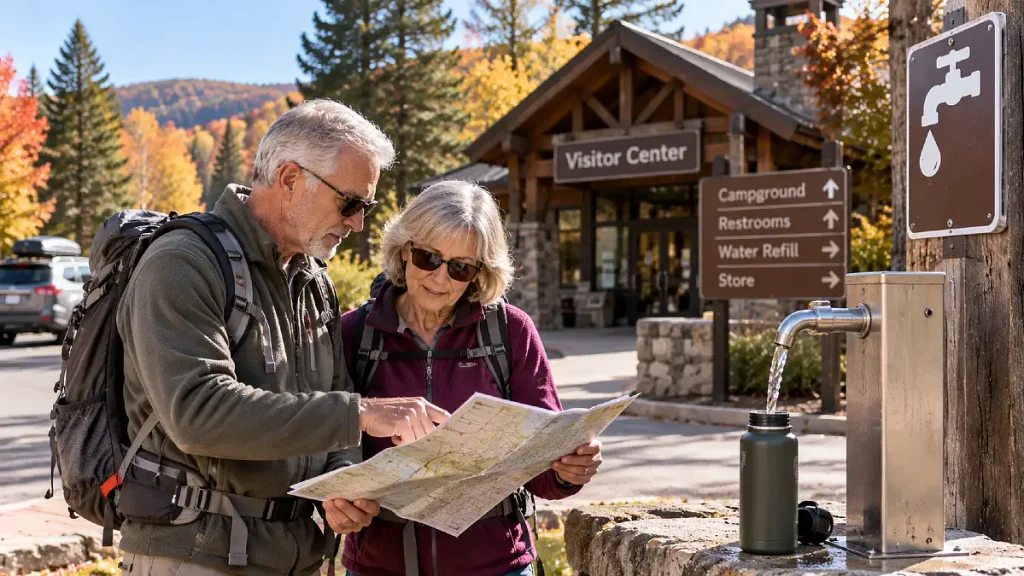
Always have a second source in mind.
That might be a visitor center, another campground, a grocery store, a gas station that sells bottled water, or a safe public drinking water point confirmed by the park.
Save the location before you leave home. Reception can be weak around remote campgrounds, so searching after arrival may be harder than expected.
How Much Water Should You Bring for Fall Camping?
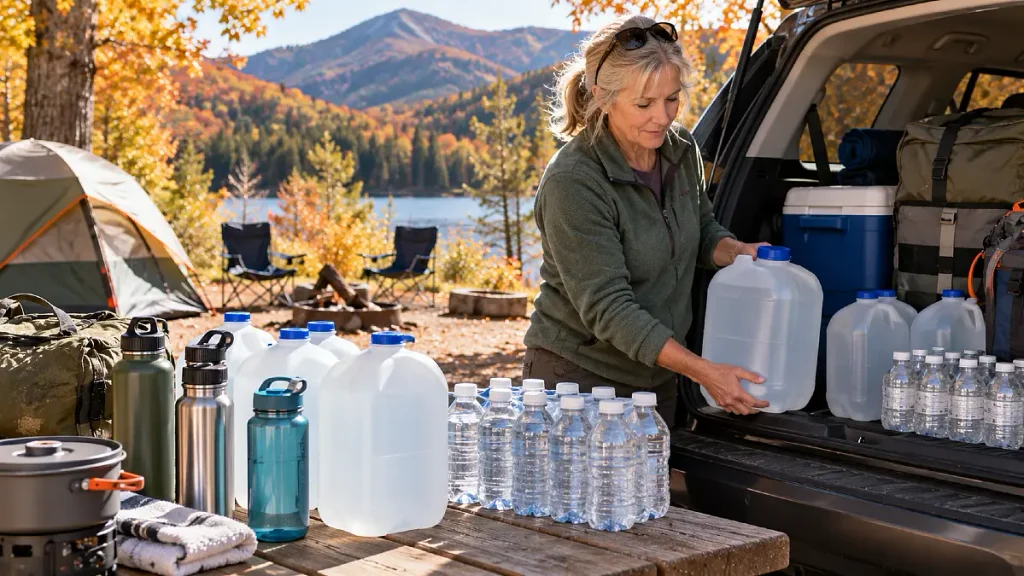
There is no perfect number for every camping trip. Your needs change with the weather, number of people, meals, pets, and whether you are tent camping or using an RV.
The CDC says households preparing an emergency water supply should store at least one gallon per person per day. That water is meant to cover drinking, cooking, brushing teeth, and other basic uses.
That figure is useful as a backup planning benchmark, but do not treat it as a complete camping allowance.
For example, two people staying through three days would start with at least six gallons using the CDC emergency benchmark. You may want more if you plan to cook several meals, wash dishes, make coffee, travel with pets, or use water inside an RV.
Think about your trip in separate buckets:
- Drinking water for each person
- Water for coffee and cooking
- Water for brushing teeth
- Water for basic washing
- Water for pets
- Extra water for unexpected delays
- RV water needs if you are carrying a fresh water tank
Carrying a little extra can be much easier than spending your first evening searching for an open refill point.
Do not forget the drive home either. A road closure, vehicle problem, or change in weather can keep you away from a store longer than planned.
Can You Just Use Water From a Creek or Lake?
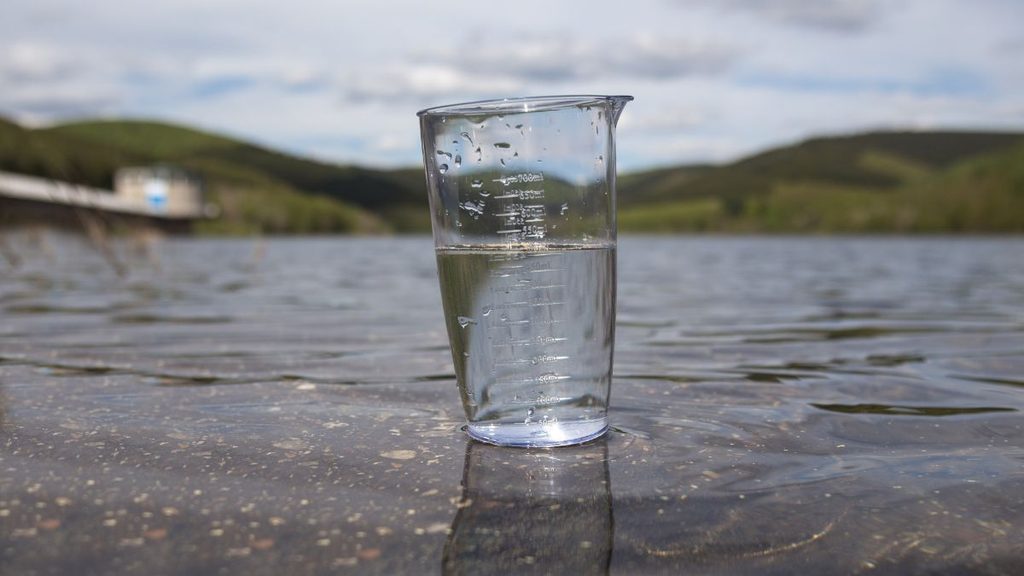
A clear mountain stream can look perfect. That does not mean the water is safe to drink.
The CDC warns that water from lakes, rivers, and streams can contain germs even when it looks clean. Those germs can cause vomiting, diarrhea, stomach pain, and other illness.
You can also get sick from unsafe water used for cooking, brushing your teeth, washing produce, or making drinks.
If you need to treat natural water, the CDC says boiling is the best method for killing germs. Bring clear water to a rolling boil for one minute. At elevations above 6,500 feet, boil it for three minutes.
The CDC lists filtering followed by disinfection as the next choice when boiling is not practical. Follow the directions for the treatment system you use.
There is one important limit.
Water that contains fuel, toxic chemicals, or certain other dangerous substances cannot be made safe simply by boiling or disinfecting it. You need another water source in that situation.
So a creek should never become your automatic backup plan just because the campground faucet is dry.
RV Campers Need to Check More Than the Faucet
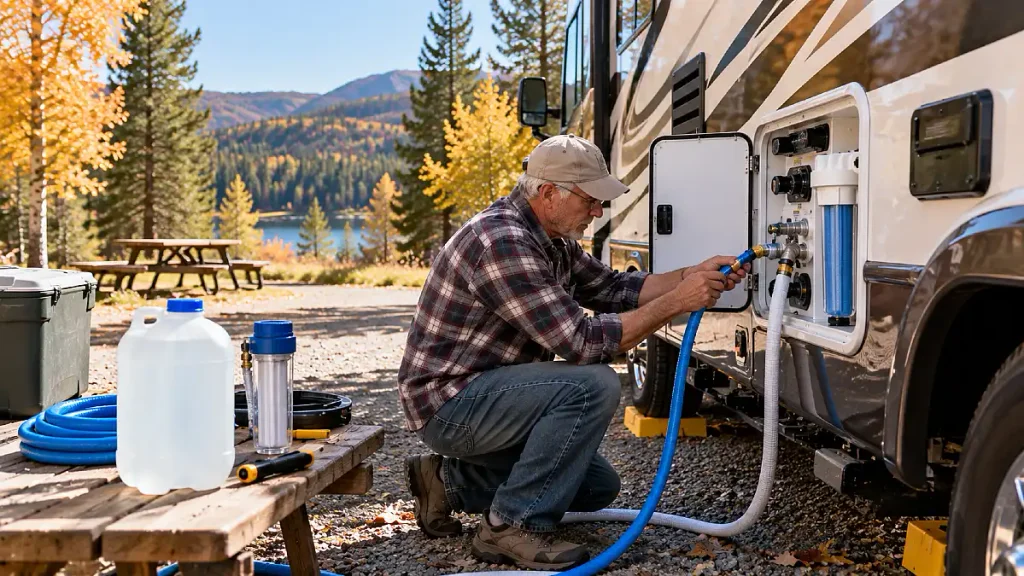
An RV gives you more storage, but it also gives you more water systems to think about.
CDC guidance for RV owners says to confirm that campground water is safe to drink before connecting to it. If you are camping without a water connection, the CDC recommends filling the RV tank from a safe drinking water source.
That makes your home water supply useful before a fall trip. You can arrive with a full fresh water tank rather than depending on a seasonal campground faucet.
Your RV water system also needs care.
The CDC advises RV owners to follow the vehicle maker’s directions for draining, disinfecting, and flushing the water system. It notes that many RV makers recommend doing this at least once each year and after the system has sat unused for several months.
Also check your water filter. A filter that improves taste does not automatically remove harmful germs.
Before leaving home, confirm four things:
- Your fresh water tank is ready to use.
- Your drinking water source is safe.
- The campground water status is current.
- The dump station and refill point are operating.
That small check matters much more during fall camping because seasonal changes can happen before the campground itself closes.
Use This 10 Minute Water Check Before Every Fall Trip
You do not need an hour of research. Follow these 10 quick checks before leaving home so a seasonal water shutdown does not surprise you at camp.
Open the Official Campground Page
Start with the National Park Service, Forest Service, state park agency, or other official manager. Check both operating dates and amenities.
Search the Page for “Water”
Do not stop when you see “open.” Look for potable water, seasonal water, drinking water, hookups, dump stations, showers, and flush toilets.
Read the Seasonal Notes
Fall water shutdowns may appear inside operating hours or winter service notes. Check for specific shutdown dates before you travel.
Check Your Exact Reservation
Different loops can have different closing dates and services. Read the details for your specific campsite, loop, and reservation period.
Check Current Park Alerts
Repairs, weather, fires, storms, or equipment problems can affect water service before the normal seasonal shutdown.
Check the Dump Station Separately
This is especially important for RV travelers. An open campground does not guarantee that its water fill or dump station is operating.
Find One Backup Water Source
Pick a real refill location before leaving home. Save the address or map location in case cell service is weak at the campground.
Carry Drinking Water Anyway
Even when campground water is listed as available, bring some safe water in your vehicle. It gives you a buffer if conditions change.
Call When the Wording Is Unclear
If your trip depends on campground water, call the park or campground. A quick confirmation can prevent a frustrating arrival.
Check Again Before Departure
Information from the day you booked may no longer be current. Review the campground page and alerts shortly before leaving home.
Confirm the campsite, water, restrooms, dump station, alerts, and one backup refill point before you start the drive.
When Is No Water a Reason to Pick Another Campground?
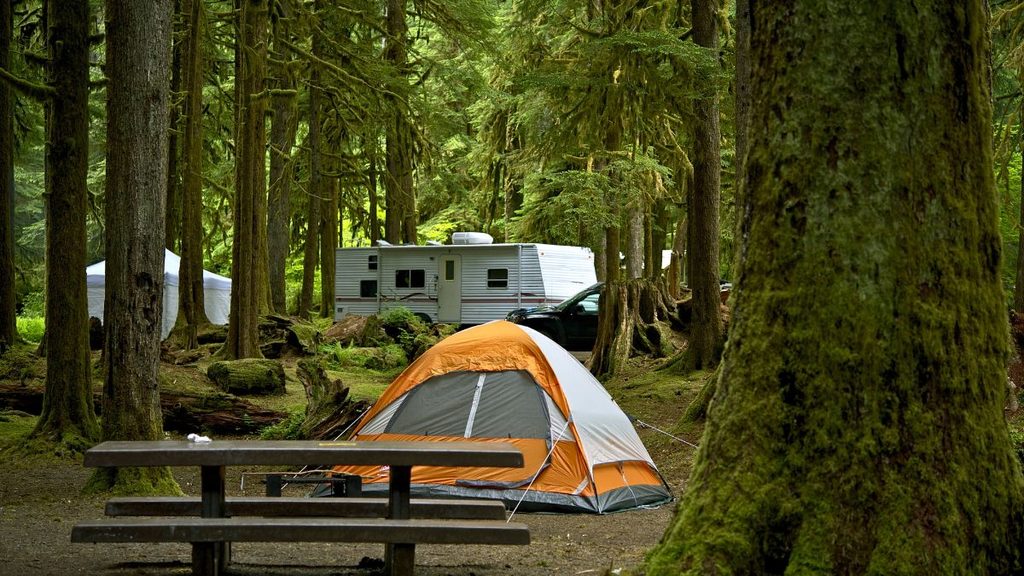
A dry campground is not automatically a bad campground.
For a short tent camping trip near town, bringing your own water may be easy. You may even prefer the quieter atmosphere that comes with reduced fall services.
But sometimes another campground makes more sense.
Consider changing your plan when:
- You cannot carry enough safe water for the full stay.
- You have no reliable refill point nearby.
- Your group is large.
- You are camping for several days.
- Your RV depends heavily on campground water.
- You have young children or older adults in your group.
- Someone in your group is more likely to become seriously ill from unsafe water.
- The only backup source is untreated natural water.
- The campground information is unclear and staff cannot confirm the current water status.
CDC guidance says children, adults 65 and older, pregnant people, and people with weakened immune systems can face greater risk from unsafe drinking water. For those groups, guessing about water quality makes even less sense.
Choosing a campground with confirmed water service may be worth giving up the quieter site.
An Open Gate Does Not Mean an Open Faucet
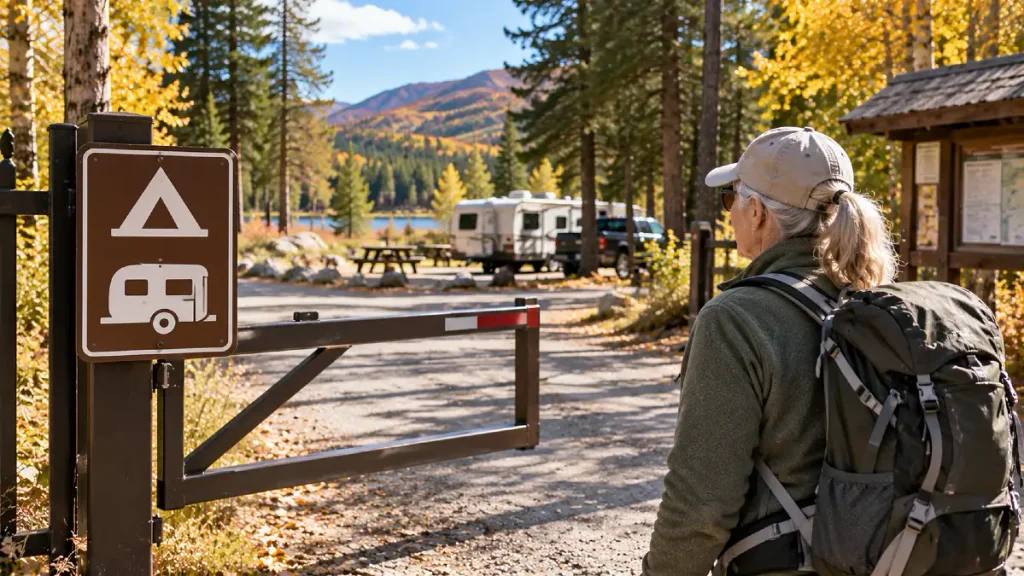
Fall camping can be one of the best times to sleep outdoors. Cooler evenings, quieter campgrounds, and changing leaves can make a familiar park feel completely different.
Just remember that the campground calendar and the utility calendar may not match.
Before leaving home, check campground water availability, potable water, bathrooms, showers, RV services, and dump station water separately. Bring enough safe water for your stay and keep a backup source in mind.